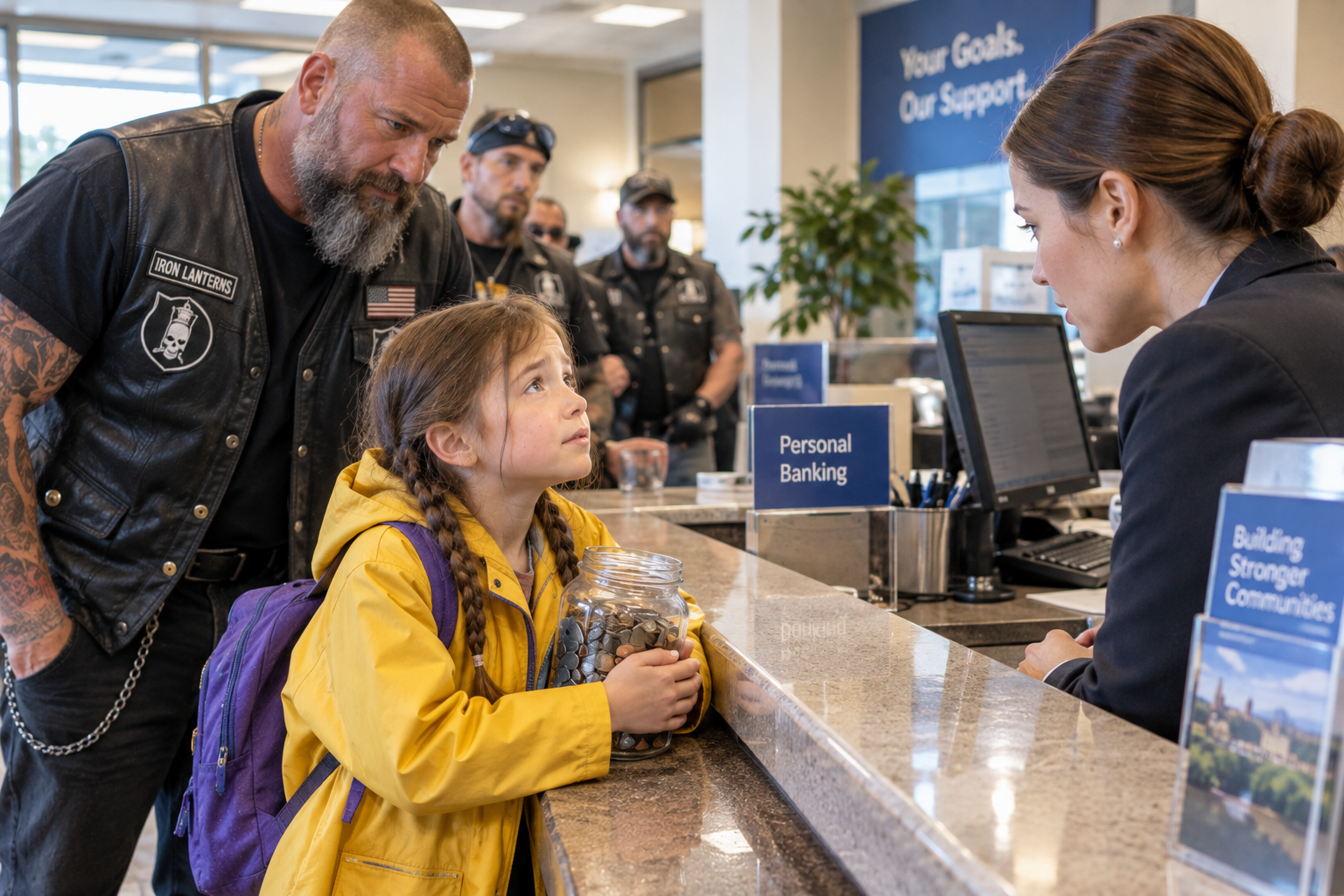
Part 2: The $62.17 Nobody Was Allowed to Touch
Part 2: The $62.17 Nobody Was Allowed to Touch
Rook didn’t call Mateo first.
He called our club treasurer.
“Bring me the denial letter from Marcus Hale’s claim.”
Forty minutes later, both documents were lying on the bank manager’s desk.
Different patients.
Different injuries.
Different employers.
But several paragraphs were nearly identical.
That didn’t prove wrongdoing.
Rook understood that.
So instead of threatening anyone or storming an insurance office, we called someone who actually knew what those documents meant.
Rebecca Shaw was an attorney who had helped veterans and injured workers with benefit disputes for years.
She read both letters twice.
“This deserves a closer look.”
Then she noticed something important in Mateo’s paperwork.
The denial wasn’t necessarily the end of his case.
There was an appeal process.
And the deadline was approaching.
Sophie didn’t understand any of that.
She sat beside her mother in our clubhouse that evening, still holding the jar.
Her father had been furious when he learned she’d walked nearly two miles alone.
Then Sophie explained why.
“I heard you tell Mommy we didn’t have enough money.”
Mateo looked away.
“I didn’t want you worrying about that.”
“But you’re my dad.”
“I know.”
“So I’m supposed to help.”
Mateo’s eyes filled.
He reached from the hospital bed and pulled her close.
“Helping doesn’t mean giving away everything you have.”
“But I want you to walk again.”
Mateo held her tighter.
“So do I, mija. But that’s an adult problem. You don’t have to buy your dad back.”
Nobody in the room spoke after that.
The Iron Lanterns organized a legitimate benefit ride to help the family with immediate expenses while Rebecca assisted Mateo in navigating the appeal and gathering medical documentation.
Then Marcus gave her permission to examine his case too.
One became two.
Two became six.
Rebecca began hearing from other injured workers who had received similar denials.
Some turned out to have completely different circumstances.
Others showed patterns worth examining.
Eventually, a workers’ advocacy organization and additional attorneys became involved.
It took months.
There were no dramatic arrests.
No biker kicking down an office door.
Just medical records.
Employment documents.
Appeal deadlines.
Independent evaluations.
Phone calls.
And stacks of paperwork thick enough to make Rook swear he’d rather rebuild the clubhouse roof again.
Mateo’s case was eventually reconsidered after additional documentation and review.
His recommended procedure was approved.
The surgery didn’t magically make him walk out of the hospital.
Recovery was slow.
There were complications.
Weeks of rehabilitation became months.
At first, standing between parallel bars for fifteen seconds exhausted him.
Then thirty.
Then a minute.
The first time he managed several supported steps, Sophie stood behind the rehabilitation-room glass with both hands covering her mouth.
Rook stood beside her.
“Is he better now?”
Rook thought carefully.
“He’s getting better.”
That was the more truthful answer.
Nearly a year after Sophie walked into the bank, Mateo came to an Iron Lantern benefit on two forearm crutches.
The entire clubhouse went silent when he entered.
Then somebody started clapping.
Mateo hated that.
“Sit down, you idiots.”
That made everyone laugh.
He found Rook near the bar.
“I heard you paid some of my early medical expenses.”
Rook shrugged.
“You fixed my roof.”
“That wasn’t worth this much.”
“You don’t get to decide what gratitude costs.”
Mateo shook his head.
Then Sophie appeared carrying the same glass jar.
It was heavier now.
The original $62.17 was still inside.
Not one coin had been spent.
Rook had insisted on that from the beginning.
But Sophie had added more money.
Birthday dollars.
Allowance.
Coins she found beneath couch cushions.
On the glass was a piece of masking tape.
She had written three words:
FOR SOMEONE ELSE.
“What does that mean?” I asked.
Sophie looked toward her father.
“Dad said I’m not allowed to pay for grown-up problems.”
Mateo smiled.
“So we compromised.”
With her parents’ help, Sophie eventually put the money toward a small community fundraiser supporting transportation and meals for families traveling to rehabilitation appointments.
Nothing grand.
Nothing that pretended sixty-two dollars could repair America’s healthcare system.
But it could buy gasoline.
It could buy lunch.
It could make one difficult day slightly easier.
Months later, Rebecca told us that several other workers had successfully pursued reviews or appeals of their own claims. Each case had to stand on its own evidence; Sophie’s jar hadn’t magically decided them.
It had simply started a conversation people had stopped having.
I still think about that afternoon at the bank.
A nine-year-old walked nearly two miles believing every coin she’d saved since kindergarten might be enough to repair her father’s spine.
She was wrong about the money.
But she was right about something else.
Sometimes the smallest person in the room is the one who finally makes the adults look at a problem they’ve learned to walk past.
Sophie never spent her $62.17 saving her father.
Instead, she reminded a room full of grown men that help doesn’t always begin with having enough.
Sometimes it begins when somebody places everything they have on the counter—and somebody else finally decides to pay attention.