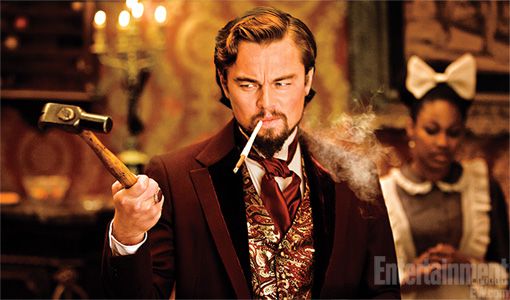
Django Unchained: Leonardo DiCaprio’s Terrifying Villain Turn as Calvin Candie
Django Unchained: Leonardo DiCaprio’s Terrifying Villain Turn as Calvin Candie
Leonardo DiCaprio built much of his career playing charismatic leading men, troubled dreamers, obsessive outsiders and morally complicated protagonists.
Then Quentin Tarantino gave him Calvin Candie.
In Django Unchained (2012), DiCaprio abandons his familiar heroic image to portray one of the most disturbing villains of his career: a wealthy Mississippi plantation owner whose elegant clothes, elaborate dinners and seemingly charming manners conceal extraordinary cruelty.
And when two mysterious visitors arrive at his estate with a carefully constructed story, Candie initially believes he controls everything.
He doesn’t realize their real objective could destroy the entire arrangement.
A Western Built Around a Dangerous Mission
Written and directed by Quentin Tarantino, Django Unchained takes place in the American South shortly before the Civil War.
Jamie Foxx stars as Django, an enslaved man whose life changes after he encounters Dr. King Schultz, played by Christoph Waltz.
Schultz is a German-born bounty hunter searching for several wanted men whom Django can identify. He frees Django and proposes an arrangement: help him locate his targets, and Django can join him in his work.
But Django has another objective.
He wants to find his wife, Broomhilda, played by Kerry Washington, from whom he was forcibly separated.
Their search eventually leads to a name that changes everything:
Calvin Candie.
Broomhilda is being held at Candyland, Candie’s enormous Mississippi plantation.
Simply arriving and asking for her freedom is not a realistic option. Django and Schultz therefore need another strategy.
They must enter Candie’s world, earn his attention and persuade him that they have come for an entirely different reason.
That means deceiving a man surrounded by people who understand his estate far better than they do.
Leonardo DiCaprio’s Calvin Candie Changes the Film
When Calvin Candie finally appears, DiCaprio immediately gives the movie a different energy.
Candie can be charming one moment and frightening the next.
He enjoys displaying his wealth and authority, and he initially welcomes Django and Schultz because he believes their supposed business interests could benefit him.
But beneath the elaborate hospitality is a character accustomed to holding enormous power over everyone around him.
DiCaprio plays that contradiction brilliantly.
Candie smiles.
He jokes.
He drinks with his guests.
Yet almost every interaction carries the possibility of sudden danger.
The longer Django and Schultz remain at Candyland, the greater the possibility that someone will recognize what they are actually trying to accomplish.
And someone does begin watching them carefully.
The Man Who Notices What Candie Misses
One of the movie’s most important characters is Stephen, played by Samuel L. Jackson.
Stephen has spent years inside Candyland and understands its people, routines and hierarchy intimately. While Candie enjoys entertaining his visitors, Stephen becomes suspicious.
Something about Django and Schultz does not make sense.
Their behavior around Broomhilda raises questions.
Small reactions begin revealing connections that their carefully prepared story was supposed to conceal.
That is where the movie becomes almost unbearably tense.
The danger does not emerge from an enormous action sequence.
It begins with observation.
A look held slightly too long.
A reaction that seems too personal.
A relationship that should not exist according to the visitors’ story.
Suddenly, the elaborate deception that brought Django and Schultz into Candyland begins falling apart.
The Dinner Scene That Changes Everything
Much of the tension eventually converges around a dinner table.
Candie now has reason to suspect that his guests have deceived him.
DiCaprio transforms accordingly.
The charming host begins disappearing, replaced by someone determined to demonstrate that he still controls the room.
One of the most famous details surrounding the sequence came from the filming itself. During an intense moment, DiCaprio injured his hand after striking the table, but continued performing as the cameras rolled.
The result contributes to a scene already filled with extraordinary tension.
But the power of the sequence is not simply its physical intensity.
It is the moment when the balance of power changes.
Django and Schultz entered Candyland believing they could manipulate Candie without revealing their true purpose.
Now Candie understands that something much more personal is happening.
And he intends to make them pay for attempting to deceive him.
Christoph Waltz and Jamie Foxx Complete the Showdown
DiCaprio’s performance works partly because of the characters standing opposite him.
Jamie Foxx gives Django a controlled intensity. He cannot simply reveal what he feels because doing so could destroy the mission.
Christoph Waltz brings a completely different energy to Dr. Schultz.
Schultz is articulate, sophisticated and normally capable of talking his way through dangerous situations. His calm intelligence makes him an effective counterweight to Candie.
Yet Candyland increasingly tests the limits of that composure.
The deeper Schultz sees into Candie’s world, the more difficult it becomes for him to treat their mission as merely another transaction.
That conflict becomes crucial when the characters finally reach the moment they have been working toward.
Tarantino Turns the Western Inside Out
Django Unchained combines elements of the Western, revenge film, dark comedy and historical fantasy.
Tarantino uses those genres to tell a deliberately stylized story set against the brutality of American slavery.
The result is intentionally provocative and extremely violent, with the director moving between uncomfortable humor, extended dialogue and explosive confrontations.
The film also assembled a remarkable cast beyond its central performers, including Kerry Washington, Samuel L. Jackson, Walton Goggins and Don Johnson.
Christoph Waltz received the Academy Award for Best Supporting Actor, while Tarantino won the Oscar for Best Original Screenplay.
The film itself was also nominated for Best Picture.
DiCaprio’s Villain Remains Difficult to Forget
Leonardo DiCaprio did not need to dominate every minute of Django Unchained to make Calvin Candie memorable.
His impact comes from what happens whenever Candie enters the story.
At first, he appears confident enough to believe nobody in the room could possibly outmaneuver him.
Then suspicion begins spreading.
The visitors are hiding something.
Stephen has noticed it.
Candie begins putting the pieces together.
And the seemingly sophisticated gathering at Candyland turns into a psychological confrontation where a single wrong word could destroy Django’s entire plan.
That transformation is what makes DiCaprio’s performance so effective.
The smile remains.
The elegant clothes remain.
The luxurious surroundings remain.
But once Calvin Candie realizes why Django and Schultz have really entered his home, the atmosphere changes completely.
And from that moment forward, Django Unchained becomes much more than a rescue mission.
It becomes a showdown between men who have finally stopped pretending they believe each other’s lies.