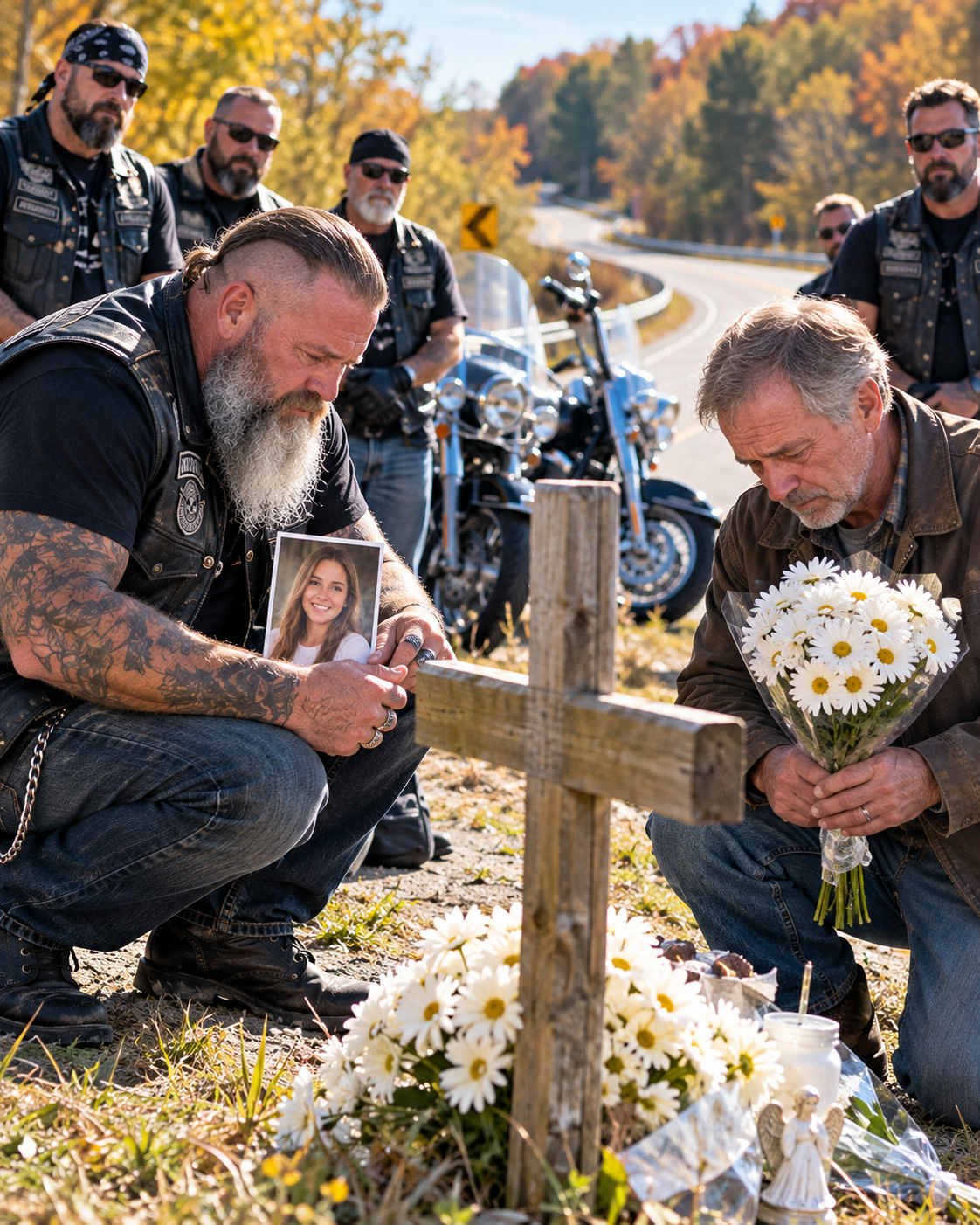
Part 2: The Conversation at Mile Marker 47
Part 2: The Conversation at Mile Marker 47
Cole didn’t open the envelope beside the highway.
“Then talk.”
Samuel looked at Emily’s cross.
“The police report says I fell asleep.”
“I’ve read it.”
“That part is true.”
Cole’s jaw tightened.
“Then what doesn’t my family know?”
Samuel swallowed.
“I’d been awake almost twenty-two hours.”
The warehouse had kept him through a double shift after another worker failed to report. Samuel told his supervisor twice that he was too exhausted to continue.
The second time, he’d asked permission to sleep in the break room before driving.
He was told the building was being locked after shift.
So he left.
“That doesn’t make the crash their fault,” Samuel said immediately. “I turned the key. I drove.”
Cole said nothing.
Samuel continued.
What Emily’s family had never known was that, after the crash, Samuel had spent years trying to persuade his former employer to change its fatigue practices.
The envelope contained copies of his old timecard, a letter he’d written from prison, and a reply from the company.
Nothing erased his responsibility.
But Samuel wanted Emily’s family to understand why he kept returning.
“I wasn’t coming here to make myself feel better.”
He looked toward the highway.
“I kept thinking about the next tired guy driving home.”
Cole finally opened the envelope.
He read every page.
Then folded them again.
“You want me to hate the warehouse instead?”
“No.”
Samuel shook his head.
“Hate me if you need to.”
Cole stepped toward him.
Every biker behind us went still.
For eleven years, Cole had imagined this man.
Faceless.
Careless.
Easy to despise.
Now Samuel stood three feet away looking older than his years.
Cole’s fist tightened.
Then opened.
“My mother waited by the window until sunrise,” he said.
Samuel closed his eyes.
“Cole—”
“Don’t say my name.”
Samuel stopped.
“My father stopped driving that road.”
Silence.
“I identified Emily’s body.”
Samuel’s face crumpled.
Cole kept going.
“You got six years.”
He touched the photograph inside his wallet.
“We got every year after.”
“I know.”
“No.”
Cole’s voice sharpened.
“You know your part.”
Then something unexpected happened.
Samuel nodded.
“You’re right.”
No excuses.
No request for forgiveness.
No demand that Cole acknowledge how much Samuel had suffered too.
Just:
“You’re right.”
Cole walked to his motorcycle.
I thought he was leaving.
Instead, he removed his bouquet and placed the daisies beside Samuel’s.
“I’m not forgiving you.”
“I didn’t ask.”
“Good.”
Cole mounted his Harley.
Before starting it, he looked toward Samuel.
“Next month. Fourteenth. Three o’clock.”
Samuel stared at him.
“Why?”
“Because I’m not finished talking.”
Then Cole rode away.
He returned the next month.
And the month after that.
Some meetings lasted ten minutes.
Others lasted two hours.
Cole asked questions he’d carried for eleven years.
Was Emily conscious?
Had Samuel seen her?
Did he remember the weather?
What did he do immediately afterward?
Some answers hurt.
Some offered nothing.
But uncertainty slowly disappeared.
Eventually, Samuel showed Cole records from the warehouse.
Cole didn’t turn them into a revenge campaign.
Instead, he asked a practical question.
“What would have stopped you?”
Samuel answered immediately.
“Somebody telling me going home alive mattered more than finishing the shift.”
That sentence became the beginning of something neither man had planned.
With Emily’s parents’ permission, Cole and Samuel began speaking at local driver-safety meetings.
Then warehouses invited them.
Then vocational programs.
Cole always spoke first.
He showed Emily’s photograph.
Twenty-two years old.
New nursing job.
Bad singer.
Obsessed with strawberry milkshakes.
A person, not a statistic.
Then Samuel spoke.
He never called what happened an “accident” to make it sound harmless.
He described the choices that led to the collision, including his own decision to drive when he knew he was dangerously tired.
Their message wasn’t complicated:
Fatigue changes judgment before exhausted people realize how impaired they’ve become.
If you’re too tired to drive, don’t drive.
Three years later, they’d spoken to thousands of workers.
But Cole still hadn’t forgiven Samuel.
People sometimes found that confusing.
Samuel didn’t.
One afternoon after a presentation, a young driver asked:
“How can you stand beside the guy who killed your sister if you haven’t forgiven him?”
Cole thought before answering.
“Because preventing the next Emily doesn’t require me to pretend mine came home.”
Samuel lowered his eyes.
That became the sentence people remembered.
Eventually, Emily’s parents agreed to replace the deteriorating wooden roadside cross with a small stone marker set safely away from traffic.
They asked Cole what should be engraved beneath her name.
He called Samuel.
Not because Samuel deserved to decide.
Because eleven years earlier, two families had been permanently changed at the same curve.
They chose six words:
GET HOME SAFE. SOMEONE IS WAITING.
On the first fourteenth after the marker was installed, Cole arrived shortly before sunset.
Samuel was already there.
Two bouquets rested beside the stone.
White daisies.
Exactly one arm’s length apart.
Samuel started to leave.
Cole stopped him.
“Coffee?”
Samuel looked surprised.
“Are you sure?”
“No.”
Cole walked toward his motorcycle.
“But there’s a diner three miles north.”
Samuel followed.
That wasn’t forgiveness.
It wasn’t friendship yet, either.
It was simply the next step.
And maybe that was what Cole had needed to understand all along.
Some wounds don’t close because somebody apologizes.
Some losses cannot be balanced.
Some people never owe forgiveness, no matter how sincerely someone regrets what they did.
But hatred doesn’t have to decide what happens next.
For eleven years, Cole carried Emily’s photograph because he refused to let the world forget his sister.
Eventually, he discovered another way to carry her.
Not by erasing the night she died—but by making sure somebody else got home alive.