Old Henry: The Western Where a Quiet Farmer’s Hidden Past Changes Everything
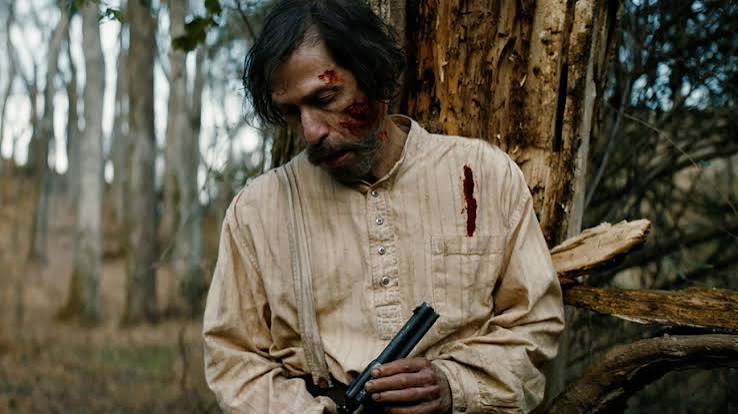
Old Henry: The Western Where a Quiet Farmer’s Hidden Past Changes Everything
They see an aging farmer living quietly with his teenage son.
They assume he is harmless.
Then armed men arrive at his isolated Oklahoma homestead — and suddenly, the way this “ordinary” farmer handles danger suggests he has spent years hiding something extraordinary.
That mystery drives Old Henry (2021), a stripped-down American Western written and directed by Potsy Ponciroli and starring Tim Blake Nelson in one of the most memorable performances of his career.
At first, Henry McCarty appears to want nothing more than isolation.
A widower raising his teenage son Wyatt, Henry spends his days working the land and trying to keep the boy away from the violence and recklessness associated with the Old West.
But Wyatt is frustrated.
To him, his father seems overly cautious and unwilling to let him experience the wider world.
What Wyatt doesn’t understand is that Henry may have very good reasons for wanting the past to remain buried.
A Wounded Stranger Changes Everything
The story shifts when Henry discovers an injured man named Curry near his property.
Nearby is something even more troubling: a bag containing a large amount of money.
Henry immediately senses danger.
Bringing Curry home means inviting whatever happened to him directly onto the farm. But abandoning a wounded man presents another choice Henry is unwilling to make.
Then the riders arrive.
A group of armed men led by Ketchum, played by Stephen Dorff, appears at Henry’s property searching for Curry and the missing money.
They claim to represent the law.
Henry isn’t convinced.
And almost immediately, the supposedly simple farmer begins behaving differently.
He asks the right questions.
He watches the riders carefully.
He notices inconsistencies.
Most importantly, he handles himself with a confidence that seems completely incompatible with the quiet life Wyatt has always known.
The question gradually changes from “Who are these strangers?” to something much more intriguing:
Who exactly is Henry?
Tim Blake Nelson Reinvents the Western Hero
Tim Blake Nelson is the heart of Old Henry.
There is nothing flashy about his performance.
Henry speaks carefully, moves deliberately and rarely reveals more emotion than necessary. He looks weathered by years of difficult living rather than designed to resemble a conventional movie gunslinger.
That makes what follows far more effective.
As the threat surrounding the farm grows, small details begin exposing another side of Henry.
He understands violence.
He understands weapons.
He understands how dangerous men think.
Those abilities clearly did not come from spending his entire life farming.
Wyatt begins noticing it too.
For years, he has viewed his father as a restrictive old man standing between him and adventure. Now he is seeing flashes of someone completely different.
And Henry desperately wants to keep that man buried.
The Western Mystery Hidden Beneath the Gunfight
One of the smartest things about Old Henry is how long it allows uncertainty to build.
The film does not immediately explain Henry’s history.
Instead, it scatters clues throughout the story.
His instincts reveal something.
His reactions reveal something else.
Even the way other characters begin looking at him suggests that his identity may carry significance far beyond this isolated farm.
Meanwhile, Curry has secrets of his own.
So does Ketchum.
Henry therefore faces two mysteries simultaneously: determining which stranger is telling the truth while preventing them from discovering too much about him.
The bag of money may have brought the conflict to his doorstep.
But it is Henry’s past that gradually becomes the film’s greatest mystery.
A Father Trying to Protect His Son From More Than Outlaws
Beneath the Western action is a story about a father and son who fundamentally misunderstand each other.
Wyatt wants independence.
He wants excitement.
Most importantly, he wants his father to stop treating him like a child.
Henry knows something his son does not.
The romantic stories surrounding gunslingers and frontier legends leave out what violence actually costs.
His strictness therefore begins to take on another meaning.
Perhaps Henry isn’t afraid that Wyatt will be unable to survive the violent world beyond their farm.
Perhaps he is afraid Wyatt will become too comfortable inside it.
That tension gives the approaching confrontation much more emotional weight.
Henry isn’t simply defending a house.
He is trying to protect his son from inheriting a life Henry himself may have spent years attempting to escape.
Then the Quiet Farmer Stops Hiding
Eventually, the men surrounding the farm leave Henry with fewer and fewer options.
And this is where Old Henry delivers the transformation it has been quietly preparing from the beginning.
The hesitant farmer disappears.
In his place is someone frighteningly composed.
Every movement suggests experience.
Every decision feels calculated.
The same son who once questioned his father’s courage is suddenly forced to reconsider everything he thought he knew about him.
But the film still holds back its biggest card.
Because being unusually skilled with a gun does not explain why Henry has hidden his past so carefully.
There is still the matter of his identity.
And when the final pieces begin coming together, the story connects its fictional farmer to one of the most famous legends of the American frontier.
The Name That Changes the Entire Movie
This is the revelation Old Henry wisely saves until late in the story.
Henry McCarty isn’t merely a retired gunman who disappeared into rural obscurity.
The film strongly reveals him to be Henry McCarty — better known to history as Billy the Kid.
It is a fictional alternate-history twist built around the legendary outlaw, imagining that Billy survived his supposed death and eventually disappeared into a quiet life under his birth name.
Suddenly, earlier details make sense.
His extraordinary ability.
His reluctance to discuss the past.
His determination to keep Wyatt away from violence.
Even the name Henry McCarty itself was sitting there as a clue.
The quiet farmer wasn’t afraid because he had never encountered dangerous men before.
He was afraid because he understood them better than almost anyone.
Why Old Henry Stands Out
Rather than attempting to compete with enormous modern Western productions, Old Henry keeps its world deliberately small.
A farmhouse.
A father and son.
A wounded stranger.
A bag of money.
A handful of dangerous riders.
From those elements, Ponciroli creates a Western built as much around identity and suspicion as gunfights.
Tim Blake Nelson’s restrained performance makes the central revelation work because Henry never feels like a superhero waiting to reveal himself. He feels like an exhausted man who has already experienced enough violence for several lifetimes.
That makes the movie’s central idea surprisingly poignant.
Legends usually end with the gunfighter riding into history.
Old Henry asks a different question:
What if one of the West’s most infamous legends survived long enough to become an old man — and spent the rest of his life desperately trying to make sure his son never became anything like him?