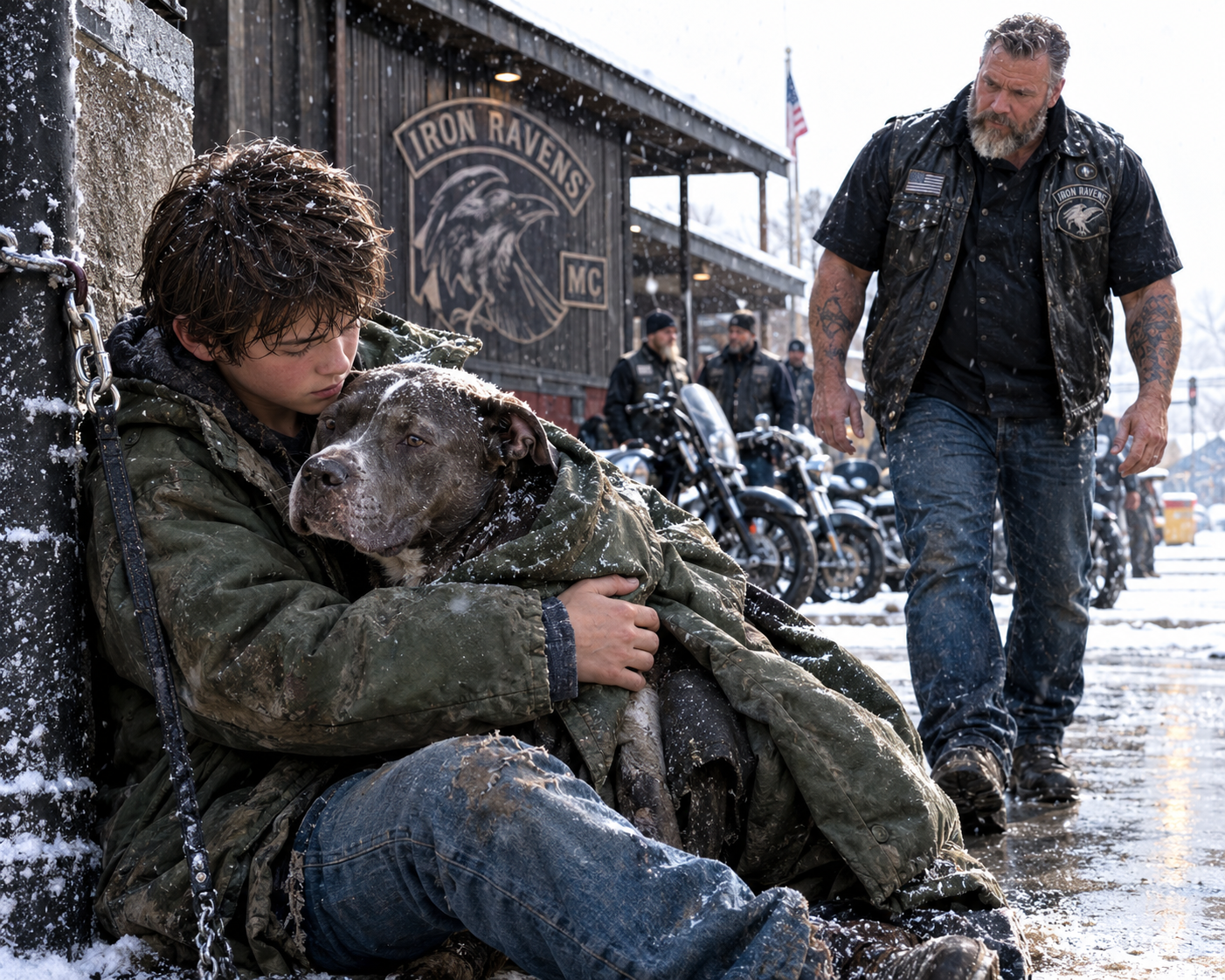
Part 2: The File That Changed Where Eli Would Sleep
Part 2: The File That Changed Where Eli Would Sleep
Nobody blocked the police cars.
Nobody threatened the caseworker.
The bikers simply stepped back while the woman placed the thick folder on the cruiser.
“My name is Karen Mitchell,” she said. “I worked nights at Brookside for three years.”
The child-welfare worker opened the file.
Inside were incident reports, copies of emails, shift schedules, photographs of damaged fixtures, and notes Karen said she’d preserved after repeatedly raising concerns about supervision.
Bear looked at Eli.
The boy was trembling again.
Not from cold this time.
“You knew about this?” the caseworker asked Karen.
“I reported what I personally witnessed. Some complaints were addressed. Others weren’t. Eli’s allegations need an independent review.”
That distinction mattered.
Nobody standing on that street could determine guilt from a folder.
But there was enough documented information to make one thing clear:
Sending Eli directly back before assessing his safety concerns would be reckless.
The officer stepped away and called his supervisor.
The caseworker made several calls of her own.
Bear never interrupted.
Eli finally whispered, “Are they still taking me?”
“Yes,” Bear said.
The boy’s face collapsed.
Bear immediately continued.
“Listen to the whole sentence. You’re still a minor under state responsibility. That doesn’t mean you’re automatically going back to Brookside.”
Eli stared at him.
For perhaps the first time, an adult had told him the truth without pretending to control something he didn’t.
Two hours later, an emergency alternative placement was arranged while Eli’s allegations were reviewed.
It wasn’t the clubhouse.
Bear couldn’t simply decide to keep him.
Instead, Eli would temporarily stay with a licensed foster family experienced with teenagers while his case was reassessed.
Eli hated the idea.
“Another foster house?”
“I know,” Bear said.
“No, you don’t.”
Bear accepted that.
“You’re right.”
Eli looked toward the motorcycles lining the street.
“Then what was all this for?”
Bear smiled faintly.
“To make sure people listened before deciding.”
The riders hadn’t arrived to intimidate the state.
Karen had contacted a local motorcycle charity after hearing Eli had been found. Riders from several clubs brought information from former residents and families willing to provide statements to investigators.
Some brought nothing more than coffee and winter clothes.
They stood in freezing slush because a kid who believed nobody would believe him needed witnesses while the adults responsible for his welfare reconsidered the next step.
Before Eli left, he crouched beside Atlas.
His old green coat was still wrapped around the dog.
“You can keep it.”
Bear shook his head.
“Absolutely not.”
He removed it and handed it back.
Eli looked at the brand-new coat someone had bought him that morning.
“I don’t need two.”
“Good.”
Bear pointed toward a donation box near the clubhouse.
“Then you decide where the old one goes.”
Eli thought about it.
Then placed the coat inside.
Three weeks later, the review expanded.
Investigators interviewed former residents and staff members. Some allegations couldn’t be substantiated. Others revealed failures in supervision, reporting, and staff conduct serious enough to trigger corrective action and further oversight.
Eli wasn’t returned there.
That didn’t magically solve his life.
He still had nightmares.
He still hid food in his bedroom.
At his new foster home, he slept the first week wearing his boots because some part of him expected to run again.
His foster parents, Maria and Thomas Bennett, didn’t force trust.
They gave him a key.
A bedroom door he could close.
A predictable schedule.
And time.
Bear visited only after the caseworker and foster parents approved it.
Usually he brought Atlas.
That was important.
Eli trusted the dog before he trusted any of them.
Months passed.
Then came the afternoon Bear had secretly been waiting for.
Eli walked into the Iron Ravens clubhouse carrying a backpack.
Bear immediately frowned.
“You running again?”
“No.”
Eli placed a document on the table.
It was an application for a weekend youth mechanics program.
“You need an adult reference.”
Bear read it.
“You asking me?”
“No. Atlas can’t write.”
Bear stared at him.
Eli almost smiled.
“So yeah.”
Bear signed.
A year later, Eli was still with the Bennetts.
Not because hundreds of bikers had “saved” him from the system.
The truth was less cinematic and more important.
Professionals investigated.
Evidence was documented.
A safer placement was found.
Adults followed through.
And Eli slowly discovered that asking for help didn’t always end with someone using that trust against him.
On the anniversary of the freezing night, he returned to the clubhouse.
Atlas was asleep beside the heater.
Eli carried a package.
Inside was a heavy new dog coat.
Bear unfolded it.
“You bought my dog a coat?”
Eli shrugged.
“Apparently I’m still bad at keeping mine.”
Bear laughed.
Then Eli noticed something framed behind the bar.
His old green coat.
Bear had retrieved it from the donation box before it was collected.
Not to keep forever.
He’d photographed it first.
Beside the photograph was a handwritten sentence:
THE NIGHT A KID WITH NOTHING STILL FOUND SOMETHING TO GIVE.
Eli stared at it.
“You made that about me?”
Bear shook his head.
“No.”
He pointed toward the photograph.
“I made it about what everybody in this room is supposed to remember.”
Eli waited.
Bear looked around at the bikers.
“When somebody vulnerable tells you they’re unsafe, being tough isn’t believing everything without question.”
He looked back at Eli.
“It’s making damn sure somebody checks.”
Eli never forgot that.
Neither did the Iron Ravens.
Because hundreds of motorcycles hadn’t surrounded that block to keep a child away from lawful authorities.
They had come for something much simpler.
To make certain that before another decision was made about Eli’s life, somebody finally listened to him.