The Reader: Kate Winslet’s Oscar-Winning Drama Where a Courtroom Reveals a Devastating Hidden Past
The Reader: Kate Winslet’s Oscar-Winning Drama Where a Courtroom Reveals a Devastating Hidden Past
A young man walks into a courtroom expecting to observe a trial.
Then he looks toward the defendants.
Sitting there is the woman who disappeared from his life years earlier without explanation.
But the shock of seeing her again is nothing compared with discovering what she is accused of having done.
That extraordinary collision between memory, guilt and history drives The Reader (2008), the powerful romantic drama that earned Kate Winslet the Academy Award for Best Actress.
Directed by Stephen Daldry and written by David Hare, the film was adapted from Bernhard Schlink’s acclaimed 1995 German novel Der Vorleser. It begins as an intimate story about a formative relationship before transforming into something far more morally disturbing.
At its center is Hanna Schmitz — one of the most complicated characters of Winslet’s career.
Michael Meets the Mysterious Hanna
The story begins in postwar West Germany.
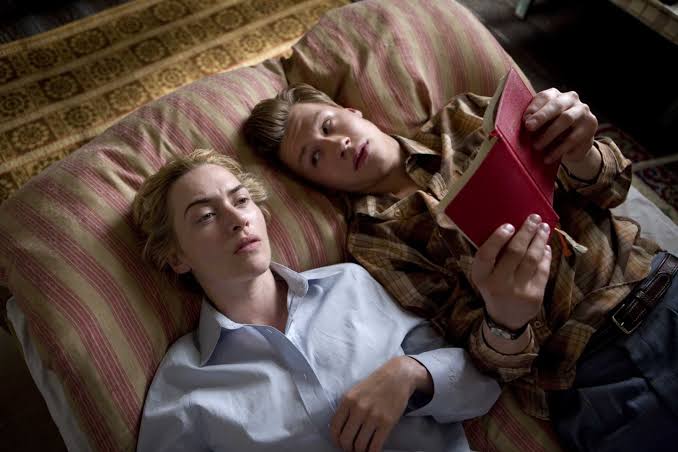
Teenager Michael Berg, played in his younger years by David Kross, becomes ill while returning home. Hanna Schmitz, an older woman living alone, helps him.
When Michael later returns to thank her, an intense and deeply unequal relationship develops between them.
One ritual becomes particularly important.
Michael reads books aloud to Hanna.
Literature becomes woven into their encounters, creating memories that will remain with Michael long after their relationship ends.
Then Hanna suddenly disappears.
There is no proper goodbye.
Michael is left confused and emotionally scarred, unable to fully understand why the woman who had become such a powerful presence in his life simply vanished.
Years pass.
Then he sees her again.
The Woman From His Past Is Now on Trial
Michael is now studying law.
As part of his education, he attends the trial of several women accused of crimes committed while serving as guards at a Nazi concentration camp.
Then he recognizes one of the defendants.
Hanna.
The woman Michael remembers from his youth is now being confronted with allegations concerning horrific events during the Holocaust.
The revelation completely transforms his memories.
Suddenly, Michael must reconcile the private Hanna he knew with the historical crimes being examined in the courtroom.
The film does not offer him — or the audience — an easy way to do that.
But as Michael listens to the testimony, he notices something unusual.
Hanna appears to be hiding something.
And strangely, the secret she is protecting does not absolve her of the larger moral responsibility surrounding the case.
Instead, it reveals another layer of her character.
Michael Realizes the Secret Before Everyone Else
A crucial moment arrives when handwriting becomes important to the proceedings.
Hanna is asked to provide a writing sample.
Her reaction immediately means something different to Michael than it does to everyone else in the courtroom.
Pieces of his past begin connecting.
The books.
The reading.
The strange moments he never completely understood.
Her behavior.
Her refusal to do certain things.
Michael finally realizes that Hanna is illiterate.
It is a secret she has protected for years.
And her shame is so profound that she appears prepared to endure severe consequences rather than publicly admit it.
For Michael, the discovery creates an agonizing dilemma.
He possesses information that could affect how particular evidence against Hanna is understood.
But revealing it would mean exposing the secret she has spent much of her life desperately protecting.
More importantly, that secret does not erase her involvement in Nazi persecution.
That distinction is essential to understanding The Reader.
The Film Refuses to Give Hanna an Easy Excuse
Hanna’s illiteracy helps explain certain decisions and behaviors.
It does not excuse her crimes.
That tension is one of the reasons the film remains so uncomfortable.
The Reader asks audiences to understand a character without requiring them to forgive her.
Winslet portrays Hanna as emotionally guarded, sometimes vulnerable and frequently difficult to understand.
But the film places those human qualities beside the terrible historical reality of her actions.
The result is deliberately unsettling.
Michael experiences the same conflict.
The woman connected to some of his most intimate youthful memories is also connected to crimes he finds morally horrifying.
He cannot easily separate those two versions of Hanna because, ultimately, they are the same person.
Kate Winslet Gives One of Her Most Challenging Performances
Hanna Schmitz required Winslet to portray the same character across dramatically different stages of life.
The physical transformation is striking, particularly as Hanna grows older.
But the performance depends on more than makeup.
Winslet gives Hanna a guarded physicality. Even when she says relatively little, shame, stubbornness and emotional isolation remain visible.
Hanna is not constructed as a conventional sympathetic protagonist.
She can be harsh.
She makes devastating choices.
She refuses opportunities to explain herself.
And the more audiences learn about her, the more complicated their reaction becomes.
Winslet’s performance received enormous recognition during the 2009 awards season, culminating in her winning the Academy Award for Best Actress.
It remains one of the defining performances of her career.
Ralph Fiennes Plays the Man Michael Becomes
The adult Michael is played by Ralph Fiennes.
Decades after his relationship with Hanna, he remains emotionally affected by what happened.
Time has moved forward.
Michael has not entirely escaped the past.
Eventually, he begins recording himself reading books aloud and sends the tapes to Hanna in prison.
The gesture recreates the ritual that once defined their relationship, but everything surrounding it has changed.
There is now distance between them.
There is history.
There is knowledge that cannot be forgotten.
And there are moral questions that affection cannot resolve.
The recordings become a bridge between two people whose relationship can never return to what it once was.
They also lead Hanna toward something she had spent decades avoiding.
The written word.
The Story Is Really About Memory
On the surface, The Reader moves between romance, courtroom drama and historical tragedy.
Underneath, it is deeply concerned with memory.
How should someone remember a person after learning something terrible about them?
Can private affection exist beside moral condemnation?
Does understanding why somebody behaved a certain way change responsibility for what they did?
And what happens when an entire generation inherits the burden of confronting crimes committed before they were old enough to understand them?
Michael cannot erase Hanna from his life.
Nor can he return to the innocence with which he once viewed her.
Knowledge changes the memory permanently.
That may be the film’s most painful idea.
Sometimes discovering the truth does not provide closure.
Sometimes it makes the past more difficult to carry.
More Than an Oscar-Winning Kate Winslet Performance
The Reader is not an easy film, nor is it designed to be.
Its central relationship is deliberately troubling, and its treatment of guilt and responsibility has generated substantial critical debate.
But that discomfort is inseparable from what the film attempts to examine.
Hanna’s secret explains something about her.
It does not erase what she did.
Michael’s memories explain why he cannot regard her as simply another defendant.
They do not eliminate the historical reality he is forced to confront.
That contradiction follows him into adulthood.
And it is why the courtroom revelation becomes so powerful.
Michael enters believing he already knows Hanna.
Then he discovers her hidden past.
Then he discovers the secret beneath that past.
By the end, he understands something much more difficult:
knowing someone’s secret is not the same as knowing who they truly are — and understanding them is not the same as forgiving them.