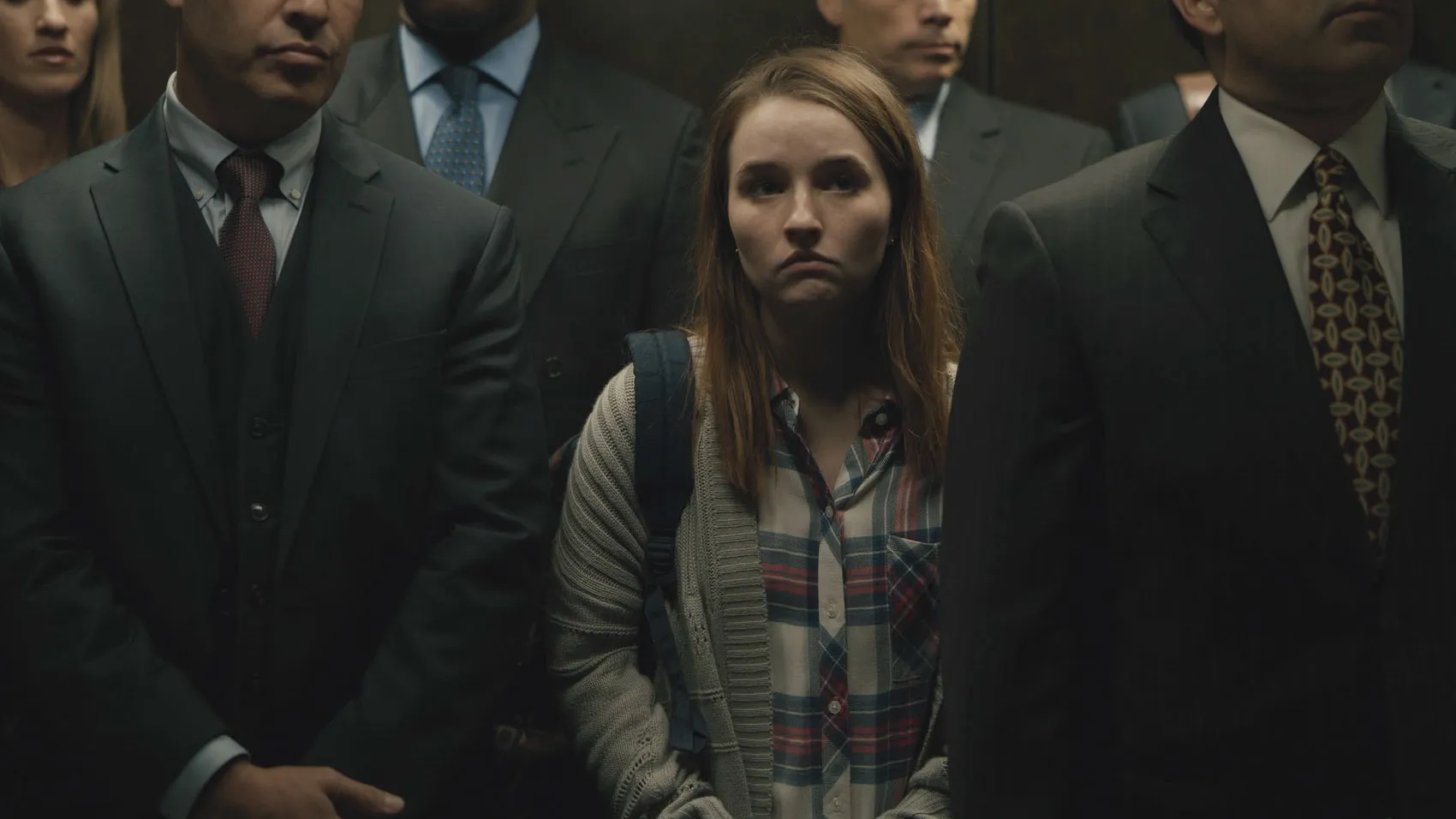
THE HIGH-STAKES DRAMA ON NETFLIX EXPOSING THE DEVASTATING TRUTH BEHIND A NATIONWIDE CRISIS
THE HIGH-STAKES DRAMA ON NETFLIX EXPOSING THE DEVASTATING TRUTH BEHIND A NATIONWIDE CRISIS
A young woman stands where she does not belong and feels the room decide she is lying. On Netflix, Kaitlyn Dever delivers a heartbreaking, critically acclaimed performance as a vulnerable eighteen-year-old whose report of rape is treated as an inconvenience, then as a crime she herself must have invented. In Unbelievable, the suffocating silence is not an elevator full of pharmaceutical executives. It is a police interview room, a foster-care file, a small apartment, and a country that has trained itself to doubt the person with the least power in the room. Behind her tired gaze lies a true story about institutional failure, dogged investigation, and the cost of being disbelieved.
Created by Susannah Grant, Ayelet Waldman, and Michael Chabon, the 2019 limited series is adapted from a Pulitzer Prize–winning ProPublica and Marshall Project investigation. It follows two braided tracks. In Washington state, Marie Adler, played by Dever, tells police she was attacked in her apartment. The detectives do not like her affect. She is a former foster youth. She does not perform trauma the way they expect. They lean on her until she recants. She is charged with false reporting. Her name, her housing, her sense of reality begin to collapse. Meanwhile, in Colorado, Detectives Karen Duvall and Grace Rasmussen, played by Toni Collette and Merritt Wever, are working a different rape with the same terrifying signature. They do not start with the assumption that the woman in front of them is a problem. They start with the assumption that a predator is still hunting.
That split is the series’ moral engine. Unbelievable is not a puzzle about whether the assault happened. It is an anatomy of why so many cases die in the first hour. Dever plays Marie with a raw, almost unbearable stillness. She is not written as a perfect witness. She is awkward, angry, inconsistent in the ways traumatized people often are. The show asks the audience to sit with that discomfort instead of sanding it into a tidy victim. When the system decides she is a liar, it does not merely close a file. It conscripts her into her own erasure.
Collette and Wever give the investigation its spine. Duvall is a grounded local detective and mother who notices patterns other people miss. Rasmussen is sharper, more restless, attached to a federal task-force energy and a marriage that has to compete with the job. Together they do the unglamorous work the first department refused: compare details, follow evidence, treat the crime scene as a crime scene. Their partnership is one of the great quiet duos in recent television. They argue. They respect each other. They keep going after the easy narrative has already been sold to the public.
The nationwide crisis named in the caption is real, even if the mining-and-pill imagery belongs to another story. Rape remains among the least prosecuted violent crimes in the United States. Victims are asked to be consistent, composed, and immediately coherent. They are asked to remember dates, smells, exact words, the order of rooms. They are asked to do this while sitting across from officers who may already believe that young women lie for attention, housing, or revenge. Unbelievable makes that process visible without turning it into a lecture. A recantation is extracted. A charge is filed against the accuser. The man who attacked her remains free to attack again.
Director and writers keep the style restrained. There is no glossy courtroom carnival in the early going. There are fluorescent lights, parking lots, case boards, and the particular dread of a knock from the state. When the series does show the assault’s aftermath, it is careful and specific. The horror is in the bureaucracy as much as in the violence: the way a teenager can be processed, discredited, and left to live inside a story that is not hers.
Supporting performances deepen the world around Marie. Her foster connections, her friends, the officers who double down rather than reopen their minds: all of them feel observed rather than invented. The Colorado victims, encountered through Duvall and Rasmussen’s work, form a map of a serial offender who counted on exactly this institutional shrug. The more the detectives compare notes, the clearer the pattern becomes. Same methods. Same assumptions by local police. Same window of time in which a woman is treated as unreliable because she is poor, young, unsettled, or simply not the kind of complainant a department wants to take to trial.
Unbelievable arrived on Netflix as a limited series and remains one of the platform’s most important true-crime dramas precisely because it is not addicted to twists for their own sake. The twist, if there is one, is procedural and human: what happens when two women with badges refuse to accept the first convenient ending. The title works on every level. Marie is told her account is unbelievable. The detectives find the crime all too believable once they look. The audience is asked to sit with how ordinary the disbelief looks. No cartoon villains required. Just tired men in a small office who would rather close a case than admit they got it wrong.
Dever’s performance is the reason the show cannot be shrugged off as another procedural. She makes Marie’s isolation physical. Shoulders inward. Voice thin, then suddenly sharp. A person who has already been failed by systems now being failed by the one that was supposed to protect her. When the investigation elsewhere begins to catch up with her life, the series does not offer cheap catharsis. Vindication, when it comes, cannot rewind the months in which she was punished for telling the truth.
Streaming now, Unbelievable still feels like a public document as much as a drama. It is about sexual violence, yes. It is also about class, foster care, gender, and the stories institutions tell to protect themselves. The caption’s image of a lone working-class woman swallowed by a crowd of suits is emotionally accurate even if the industry is different. Marie is outnumbered by official confidence. She is the smallest person in the room and the only one who knows what happened in the dark.
That is the heavy silence the series captures. Not a boardroom. A statement that should have opened a manhunt and instead opened a case against the girl who spoke. Unbelievable asks a simple, devastating question and then spends eight episodes refusing to look away from the answer. What if the most dangerous lie is not the one a traumatized teenager tells under pressure, but the one a system tells itself so it can go home on time?