Steve Jobs: Kate Winslet Became the One Person Who Could Challenge Michael Fassbender’s Tech Visionary
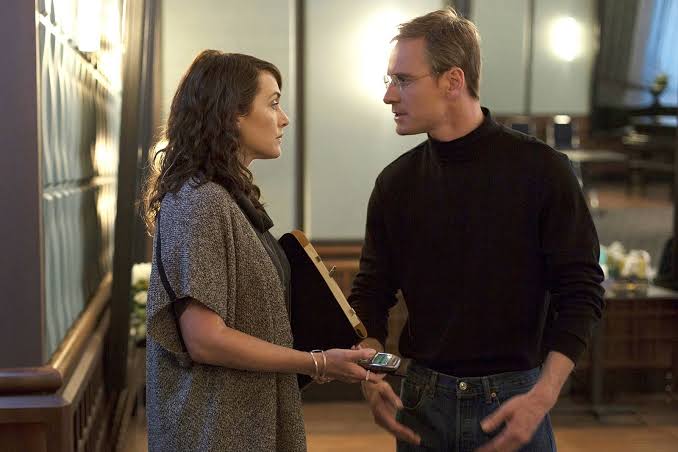
Steve Jobs: Kate Winslet Became the One Person Who Could Challenge Michael Fassbender’s Tech Visionary
Minutes before a major product launch, Steve Jobs is preparing to walk onto a stage and convince an audience they are about to see the future.
Backstage, everything is falling apart.
Engineers are under pressure. Old colleagues want answers. Personal relationships collide with professional ambition. And while almost everyone around Jobs struggles to challenge him, one woman repeatedly refuses to back down.
That woman is Joanna Hoffman, played by Kate Winslet in the acclaimed 2015 biographical drama Steve Jobs.
Directed by Danny Boyle from a screenplay by Aaron Sorkin, the film does not attempt to tell Jobs’ life as a conventional cradle-to-grave biography. Instead, it constructs its story around the tense backstage periods preceding three important product presentations across roughly 14 years.
The result feels less like a traditional biopic and more like an extended psychological confrontation.
And Winslet’s Joanna Hoffman becomes one of the few people capable of standing directly in the path of Michael Fassbender’s formidable Steve Jobs.
Three Launches, One Complicated Man
The structure of Steve Jobs is unusual.
Rather than moving chronologically through every milestone in Jobs’ career, the film concentrates on three specific moments: the launch of the Macintosh in 1984, the NeXT Computer presentation in 1988, and the introduction of the iMac in 1998.
Each section unfolds largely behind the scenes before Jobs steps in front of an audience.
That choice transforms product launches into pressure cookers.
Problems arrive one after another.
Jobs argues with Apple co-founder Steve Wozniak, played by Seth Rogen.
He clashes with former Apple CEO John Sculley, played by Jeff Daniels.
His relationship with his daughter Lisa and her mother, Chrisann Brennan, repeatedly forces personal issues into moments when Jobs would rather concentrate entirely on the stage ahead.
And almost constantly moving between those conflicts is Joanna Hoffman.
She is part colleague, part confidante and part moral counterweight.
Kate Winslet Disappears Into Joanna Hoffman
Winslet looks and sounds strikingly different from many of her best-known roles.
Her portrayal of Hoffman is practical rather than glamorous.
She moves through backstage corridors solving problems, confronting Jobs and attempting to prevent his relentless personality from causing unnecessary damage.
Hoffman understands his brilliance.
She also understands his weaknesses.
That combination gives her unusual power.
She does not need to defeat Jobs intellectually.
She needs to make him listen.
Sometimes that requires patience.
Sometimes it requires confrontation.
And sometimes it means telling him precisely what everyone else is too intimidated to say.
The dynamic between Winslet and Fassbender quickly becomes one of the movie’s greatest strengths.
She Is More Than His Assistant
Calling Joanna Hoffman merely Steve Jobs’ assistant would dramatically undersell her position in the story.
The real Hoffman worked closely with Apple’s Macintosh team and later at NeXT. In the film, Sorkin uses her as one of Jobs’ closest professional sounding boards.
She understands the products.
She understands the presentation.
But perhaps most importantly, she understands the man preparing to walk onto the stage.
While Jobs is obsessed with controlling what audiences see, Hoffman repeatedly forces him to confront what is happening where audiences cannot see.
That includes his treatment of colleagues.
It also includes something much more personal.
His relationship with Lisa.
The Most Difficult Problem Isn’t Technological
Throughout the film, Jobs can approach technical and business problems with extraordinary confidence.
Human relationships are different.
His complicated relationship with Lisa becomes one of the movie’s central emotional threads.
Jobs initially resists acknowledging paternity, and the tension surrounding Lisa and Chrisann repeatedly intrudes upon the controlled environment he attempts to create backstage.
Hoffman watches this unfold over the years.
Eventually, professional diplomacy is no longer enough.
Her frustration with Jobs becomes deeply personal because she can see the emotional consequences of his behavior.
That is where Winslet’s performance becomes particularly powerful.
Hoffman isn’t confronting him because she wants control.
She is confronting him because there are moments when somebody has to tell an extraordinarily powerful man that being brilliant does not excuse everything else.
Michael Fassbender Makes Jobs Intimidating and Magnetic
Opposite Winslet, Michael Fassbender delivers a fiercely controlled performance as Jobs.
The film is not primarily interested in physical impersonation.
Instead, Fassbender focuses on intensity.
His Jobs is quick, demanding and capable of transforming an ordinary conversation into an intellectual battle.
He wants control over the products.
He wants control over the launches.
Often, he appears to want control over the people around him as well.
Yet Sorkin’s screenplay gradually exposes the contradictions underneath that confidence.
The man who can anticipate what consumers will want years before they understand it themselves often struggles to understand what the people closest to him need emotionally.
That contradiction fuels many of the movie’s best scenes.
Aaron Sorkin Turns Backstage Arguments Into Action Scenes
There are no car chases required.
The action in Steve Jobs is verbal.
Characters race through corridors.
Arguments overlap.
Old resentments suddenly reappear minutes before a curtain is supposed to rise.
A technical problem can lead directly into an argument about loyalty, fatherhood or betrayal.
Sorkin’s rapid dialogue gives these exchanges an almost musical rhythm.
Meanwhile, Boyle keeps the camera moving, preventing the backstage environments from feeling static.
The result is a film about computers in which the computers frequently seem less complicated than the people standing beside them.
Steve Wozniak Wants Recognition
Seth Rogen’s Steve Wozniak provides another important challenge to Jobs.
Their conflict centers partly on recognition.
Wozniak repeatedly pushes Jobs to acknowledge the Apple II team, raising questions about who deserves credit when revolutionary technology becomes associated with one famous figure.
Their confrontations expose another side of the film’s central character.
Jobs is extraordinarily skilled at controlling narratives.
But the people who helped build his career remember versions of that history he cannot completely control.
The same is true of John Sculley.
Jeff Daniels’ scenes with Fassbender gradually reveal the emotional and professional history behind Jobs’ departure from Apple.
Again, the movie is interested less in a simple hero-versus-villain narrative than in conflicting memories of the same events.
Winslet’s Performance Became an Awards Highlight
Kate Winslet received major acclaim for her portrayal of Joanna Hoffman.
Her performance earned the Golden Globe for Best Supporting Actress and the BAFTA Award for Best Supporting Actress, along with an Academy Award nomination in the supporting actress category.
Fassbender was also nominated for the Academy Award for Best Actor.
The recognition reflected one of the film’s greatest strengths: although its title belongs to Steve Jobs, its drama depends heavily on the people willing to challenge him.
Hoffman is arguably the most persistent among them.
She can appreciate Jobs’ vision without worshipping him.
That distinction makes their relationship fascinating.
Not a Conventional Steve Jobs Biopic
Anyone approaching Steve Jobs expecting a straightforward historical account may be surprised.
The movie is highly dramatized and structurally stylized.
Its three-act backstage construction compresses relationships and confrontations into an intentionally theatrical form.
That is important because the film works best not as a comprehensive documentary record of Jobs’ life, but as a character study inspired by important people and events surrounding him.
Its central question isn’t simply how Steve Jobs helped transform personal technology.
It is what extraordinary ambition can demand from the people living closest to it.
Why Kate Winslet Is Essential to Steve Jobs
Without Joanna Hoffman, the movie could easily become a parade of people arguing with one difficult genius.
Winslet gives those confrontations an emotional center.
Hoffman knows when Jobs is performing.
She knows when he is deflecting.
She knows when he is being unreasonable.
And because she has remained beside him through years of triumphs and failures, she can challenge him in ways few others can.
That becomes the quiet power of Kate Winslet’s performance.
Michael Fassbender plays the man everyone has come to see.
Kate Winslet plays the woman who sees the man after everyone else has left.
And in Steve Jobs, what happens backstage ultimately reveals far more about him than anything presented beneath the lights.