The Secret of the Morning Paperboy
The first time my Golden Retriever, Barnaby, bolted onto the neighbor’s porch, the old man sitting there was holding a loaded .38 revolver in his lap. I didn’t call 911. Instead, I bought a newspaper subscription I didn’t need.
That was five years ago.
Mr. Miller lived in the gray Victorian house next to mine. The paint was peeling, the lawn was overgrown, and the shades were always drawn. The neighborhood kids called it the Haunted House; the adults just called it an eyesore. Miller was a widower, a Korean War vet, and according to the local gossip, the meanest son of a gun in the county. He yelled at mail carriers and threatened to hose down anyone who stepped on his driveway.
But Barnaby didn’t know the gossip. He only knew that the wooden steps next door smelled like cedar and old rain.
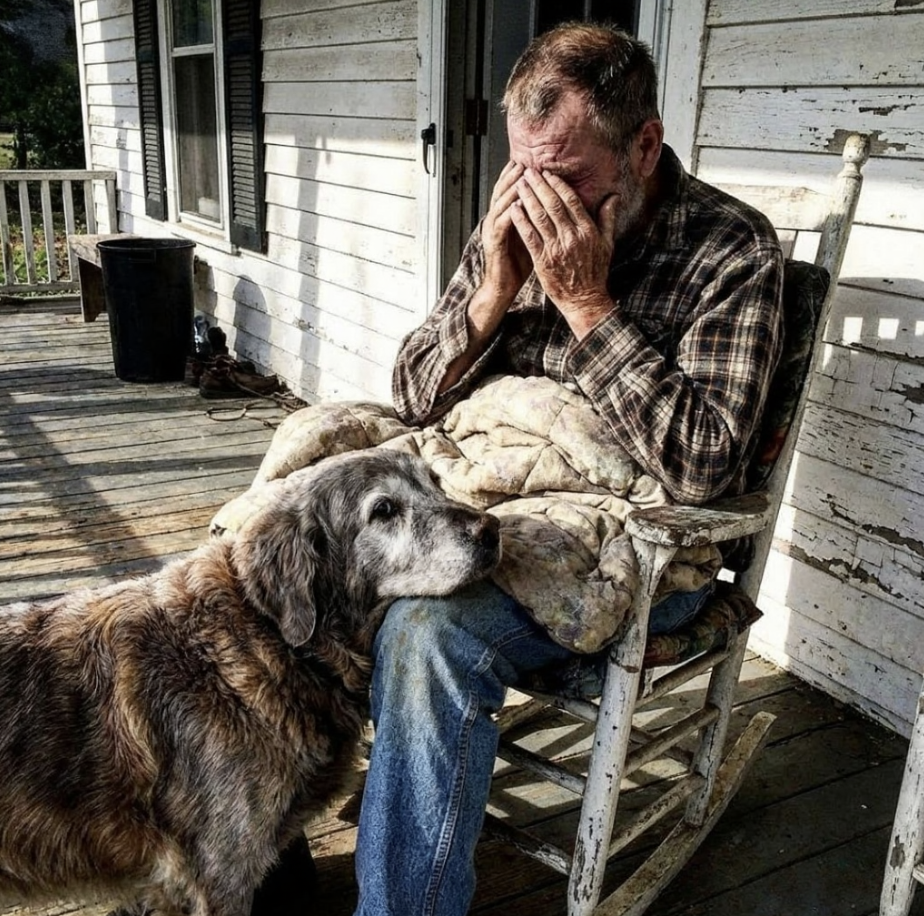
That Tuesday morning, I had been chasing Barnaby, shouting his name, when I froze at the edge of the hedge. I saw Miller in his rocking chair. He wasn’t looking at the street. He was staring at the gun in his trembling hands, weeping a soundless, dry sort of cry that rattles in the chest.
Barnaby trotted up the steps, tail wagging with that oblivious, joyful rhythm dogs have. He didn’t growl at the weapon. He simply shoved his wet, cold nose under Miller’s elbow and nudged the hand holding the steel.
Miller gasped. The gun clattered onto the floorboards.
He looked down at the dog, then up at me, frozen by the hedges. The shame in his eyes was heavier than the weapon. He quickly kicked the gun under a blanket with his heel.
“He… uh,” Miller’s voice was like gravel in a mixer. “He brought me the paper?”
I looked at Barnaby’s mouth. He was holding a flyer for a local pizza place he’d snagged off my driveway.
“Yes,” I lied. My heart was hammering against my ribs. “He thinks you’re the morning editor. He’s the new delivery boy.”
Miller stared at the dog for a long time. Then, with a shaking hand, he reached into his flannel pocket and pulled out a stale, half-eaten distinct cracker. “Well. Tell him the pay is lousy, but the benefits are okay.”
From that day on, we had a routine.
I subscribed to the Daily Chronicle, a paper I never read. Every morning at 6:45 AM, I’d open the back door. Barnaby would trot out, grab the rolled-up paper from my mat, and march next door.
Miller would be waiting. Rain, snow, or shine. He sat in that rocker, a mug of black coffee steaming on the railing.
“Morning, Paperboy,” Miller would say.
Barnaby would drop the paper. Miller would produce a high-quality dog treat—he’d upgraded from crackers to premium beef jerky within a week.
They would sit there for exactly fifteen minutes. I’d watch from my kitchen window, hidden behind the curtains. Miller would talk to the dog. He never talked to people, but he told Barnaby everything. I could hear snippets through the screen door. He talked about his late wife, Martha. He talked about the ’53 armistice. He talked about how much he hated the new streetlights.
“They don’t make ’em like they used to, buddy,” he’d tell Barnaby, scratching the spot behind the dog’s ears. “Used to be, folks sat on porches. Now they just sit on screens. Nobody knows how to just be anymore.”
Barnaby was the bridge. He was the only living thing allowed inside Miller’s fortress of solitude. And in return, Miller stayed on the porch. He stayed away from the dark thoughts that kept the shades drawn.
Two years ago, Barnaby started slowing down. His hips got bad. The vet prescribed pain meds and shorter walks. But every morning at 6:45, Barnaby would whine at the door, pacing until I let him out.
Seeing the dog limp, Miller started meeting him halfway down the walk. He installed a ramp over his porch steps so Barnaby wouldn’t have to jump.
“Can’t have the staff getting injured on the job,” Miller told me one morning, the first time he’d spoken directly to me in months. “Union rules.”
We never mentioned the gun. We never mentioned the “pizza flyer” incident. We just talked about the dog. It was a comfortable silence, filled with the unspoken understanding that we were keeping each other alive.
Last week, the ambulance came at 3:00 AM. No sirens, just flashing lights that painted the cul-de-sac in eerie reds and whites.
I stood on my lawn, holding Barnaby’s collar. He let out a low, mournful howl that I’d never heard before.
Miller didn’t come home.
Yesterday, a woman pulled into the driveway next door. She looked just like him—same sharp jawline, but with softer eyes. She was carrying a box of Miller’s things.
She saw me in the yard and walked over. Barnaby didn’t bark; he just sat down and thumped his tail weakly.
“You’re the neighbor,” she said. “And this must be the famous Paperboy.”
“I am. And he is,” I said. “I’m sorry for your loss.”
She smiled sadly. “I found this on his nightstand. I think he wanted you to have it.”
She handed me a jar. It was full of the premium beef jerky.
“My dad… he was a difficult man,” she said, looking at the peeling paint of the house. “After Mom died, he pushed everyone away. Me, my brother, the church. He said he was done with the world.”
She paused, wiping a tear. “But every time I called him, he’d say, ‘Can’t talk long, Sarah. The Paperboy is coming at 6:45. Gotta be ready.’ He told me that dog was the only one who didn’t look at him with pity. The dog just gave him a job to do. To receive the news.”
I looked at the stack of unread Daily Chronicles piling up on his porch. “I’m glad we could help him keep up with current events,” I said.
Sarah looked at me, a confused expression on her face. Then, she let out a short, choked laugh.
“Current events?” she asked.
“Yeah. The newspaper.”
She shook her head, tears streaming freely now. “Sir, my father lost his sight to macular degeneration four years ago. He hasn’t been able to read a word of print since 2020.”
I froze. I looked at the porch. I looked at the newspapers that were never opened, just stacked neatly by the chair.
“He couldn’t read?” I whispered.
“No,” she said. “He couldn’t see the paper. But he could feel the dog. He could hear the paws on the steps. He told me, ‘That dog thinks I’m important. He thinks I’m the guy who needs to know what’s happening. If I stop waiting on the porch, he’ll think he failed. I can’t break the boy’s heart.'”
I looked down at Barnaby. He was chewing on a blade of grass, completely unaware of the weight of his legacy.
Miller didn’t wait on that porch for the news. He waited for the connection. He pretended to read so my dog would have a purpose, just as I pretended to buy the paper so Miller would have a morning.
We were all acting. We were all playing a part in a play called “Neighborhood,” just to keep the darkness at bay.
This morning, I didn’t cancel the subscription.
At 6:45, I brewed two cups of coffee. I walked over to Miller’s empty porch and sat in the rocking chair. Barnaby followed me, carrying the paper. He dropped it at my feet, ate a piece of jerky from the jar, and laid his head on my boots.
I sat there for fifteen minutes, watching the sun come up over the quiet American suburbs. I didn’t read the paper. I just watched the world wake up.
Because the truth is, we don’t need a reason to check on each other. We don’t need a subscription, or an excuse, or a biological relation.
Sometimes, the only thing that saves a life is the simple, stubborn commitment to show up.
Same time. Same porch. No matter what.