The Farmer’s Clock
The Doctors told me my heart would stop if I stepped out into that blizzard. They didn’t say anything about my dog’s heart breaking if he didn’t go in my place.
My name is Eleanor. I’m 75 years old, and my joints predict the weather better than the nightly news. For fifty years, I’ve worked this land in the Midwest, battling droughts, floods, and market crashes. I’ve always won. But last night, on Christmas Eve, I finally met an opponent I couldn’t beat: my own body.
The weatherman called it a “historic bomb cyclone.” I called it a nightmare. The wind was howling like a banshee, rattling the sash windows of our farmhouse until I thought the glass would shatter. The thermometer on the porch had bottomed out at twenty below zero, not counting the wind chill.
Inside, the house was a sanctuary. My husband, Henry, had the fireplace roaring. The smell of cinnamon rolls and pine needles filled the living room. It was the kind of scene you see on a greeting card. But I couldn’t enjoy it.
My eyes kept drifting to the window, staring into the swirling white abyss.
“Eleanor, stop it,” Henry said gently, placing a hand on my shoulder. His touch was warm, but his eyes were worried. “The boys checked the herd this afternoon. They’re fine.”
“Not Number 402,” I grumbled, rubbing my left arm. It had been aching all day—a dull, thumping warning sign. “She’s a first-time heifer. She was looking heavy this morning. If she drops that calf tonight in this cold, they’ll both be blocks of ice by morning.”
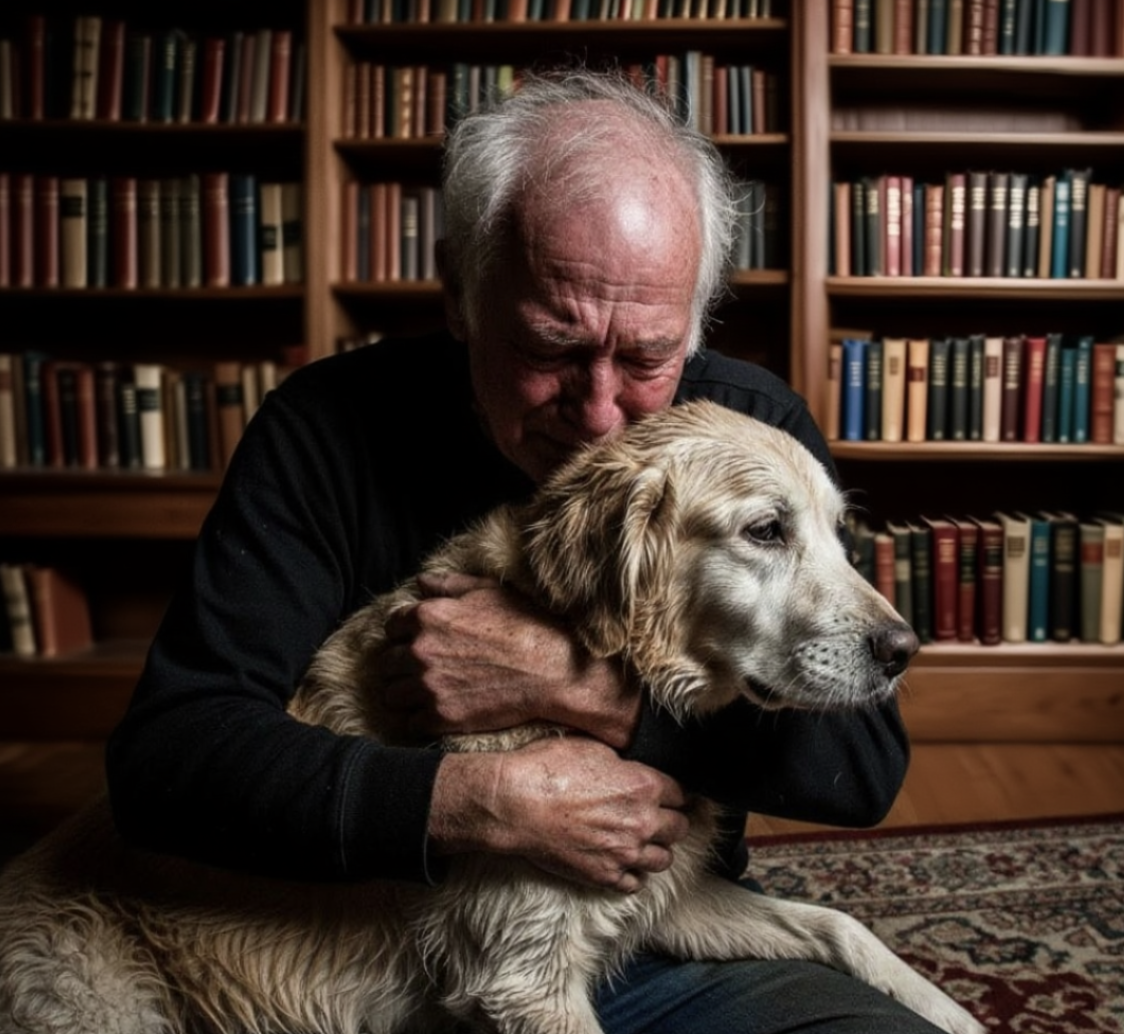
Duke, my thirteen-year-old Golden Retriever, lifted his head from the rug. His muzzle was as white as the snow outside. He had arthritis in his hips that made him walk with a stiff, rolling gait, but his eyes were still sharp. He let out a low whine, sensing my anxiety. He was more than a pet; for over a decade, he’d been my shadow. He knew the rhythm of the farm better than my own sons did.
“I have to go check,” I said, pushing myself up from the armchair. My knees popped loudly.
“Eleanor, no,” Henry’s voice was firm. “Doctor Evans said—”
“I don’t care what Evans said. I’m not losing a calf on Christmas,” I snapped, though I didn’t mean to be harsh. It was the fear speaking. The fear of being useless.
I grabbed my heavy canvas coat and reached for the door handle.
As soon as I cracked the door, the wind hit me like a physical blow. It took the breath right out of my lungs. The cold was a solid wall, instantly freezing the moisture in my nose. I took one step onto the porch, and then it happened.
It felt like an elephant had stepped on my chest.
I gasped, clutching the railing. My vision blurred. The pain radiated up my jaw. I stumbled back, collapsing just inside the entryway. Henry screamed.
I didn’t pass out, but I was on the floor, gasping for air, the room spinning. Henry was there in a second, fumbling for my nitroglycerin pills. Duke was there, too. He was licking my face, his tail tucked between his legs, making frantic, high-pitched barks.
“That’s it,” Henry cried, tears streaming down his face as he slammed the door shut against the storm. “You are staying right here. Do you hear me, Eleanor? Let nature take its course. I am not burying you on Christmas.”
He helped me to the sofa. I lay there, defeated. The pain subsided, leaving behind a hollow ache of shame. I was a farmer who couldn’t farm. I was a protector who couldn’t protect.
I watched the clock tick. 10:00 PM. 11:00 PM.
The wind screamed louder. I closed my eyes, picturing that heifer out in the freezing dark, alone, confused, maybe dying.
I must have dozed off from the exhaustion and the stress.
I woke up to a sudden draft. The clock read 2:15 AM. The fire had died down to embers. The house was silent, except for the wind.
I looked down at the rug. It was empty.
“Duke?” I whispered.
I looked at the back door. It was unlatched. The wind was whistling through a crack. Duke knew how to nudge the lever-style handle if it wasn’t deadbolted. He’d done it a hundred times to chase squirrels.
Panic, cold and sharp, flooded my veins.
I struggled to the window. The storm was at its peak. You couldn’t see five feet in front of you.
“Duke!” I yelled, but my voice was swallowed by the gale.
I wanted to run out there. God knows I wanted to. But as I stood up, my legs trembled, and my chest gave a warning throb. I knew if I went out there, I would die. And if I died, Henry would be alone in this storm.
I sat back down, tears of frustration stinging my eyes. I had to wait. I had to trust an old dog with bad hips to do what I couldn’t.
The next four hours were the longest of my life. I prayed. I paced. I stared into the dark until my eyes burned.
Around 6:30 AM, the wind finally died. The sun began to creep over the horizon, painting the snow in shades of brutal, beautiful pink and gold.
I didn’t wait for Henry. I pulled on my boots, ignoring the protest of my body, and grabbed the shotgun—not for a predator, but because I didn’t know what I would find.
I trudged through waist-deep drifts toward the calving barn. The silence was deafening. The world was buried under two feet of snow.
When I reached the barn, the sliding door was cracked open just enough for a dog to squeeze through. My heart hammered against my ribs.
I pushed the door open.
Inside, the air was still freezing, but free of the biting wind. I scanned the stalls.
“Duke?” I croaked.
There, in the corner stall, was the heifer. She was standing, licking something on the ground.
I moved closer, my breath catching in my throat.
A calf. A black-and-white bull calf, dry and wobbling on its legs. Alive.
And curled around the calf, almost completely buried in the straw, was a mound of snow-covered fur.
Duke.
He wasn’t moving.
I dropped my cane and fell to my knees in the straw. “No, no, no. Buddy, please.”
I brushed the snow off his coat. He was ice cold. His fur was matted with ice and afterbirth. He had used his own body—his old, aching, arthritic body—as a living blanket. He had cleaned the calf, stimulated it to breathe, and then curled around it to shield it from the sub-zero temperatures, absorbing the cold into his own bones.
I put my hand on his chest.
Nothing.
Then—a shallow, ragged hitch.
“He’s alive!” I screamed, my voice cracking. “Henry! Get the blankets!”
I don’t know where I found the strength. Adrenaline is a powerful thing. I scooped up that seventy-pound dog like he was a puppy. I ran. I ran through the snow, my chest burning, tears freezing on my cheeks.
We laid him in front of the fireplace. We piled every quilt we owned on top of him. I rubbed his paws until my own hands were raw. Henry heated towels in the dryer. We poured warm broth down his throat with a turkey baster.
For two hours, he didn’t move. I sat there, holding his paw, begging God to take the farm, take the house, take anything but him.
Then, a twitch.
His tail gave a weak, singular thump against the floor.
He opened one eye. It was cloudy and tired, but he looked at me. He let out a long sigh, as if to say, It’s handled, Boss. I took the watch.
I buried my face in his neck and wept. I cried for the relief, for the guilt, and for the overwhelming love I felt for this creature.
Later that afternoon, after the roads were cleared and the family had gathered, we sat down for Christmas dinner. The table was full of ham, mashed potatoes, and pies. But the mood was different this year.
The spot of honor wasn’t at the head of the table.
It was on the rug by the fire, where Duke was sleeping soundly, twitching as he chased dream-rabbits.
My grandson looked at me and asked, “Grandma, why did Duke go out there? He knows it’s cold.”
I looked at the dog, then at my hands—hands that were too old to do the work my heart still wanted to do.
“Because, son,” I said, my voice trembling, “Farmers don’t clock out. And Duke… he’s the best farmer I’ve ever known.”
I realized something profound that Christmas Day.
We live in a world that is obsessed with the new, the fast, and the strong. We overlook the old. We overlook the quiet. We overlook the ones who are tired but keep going anyway.
People see a steak on a plate. They don’t see the frozen fingers that carried the water buckets. People see a picture-perfect farm. They don’t see the sleepless nights. And they certainly don’t see the old dogs who break their own hearts to keep the world turning, asking for nothing but a pat on the head in return.
Tonight, when you sit down with your family, look at your dog sleeping in the corner. Look at your grandmother dozing in the chair.
Respect the gray hair. Respect the limp.
Because that limp is the receipt for a price they paid so you wouldn’t have to.
To the farmers, and the dogs who love them: Merry Christmas. The world is fed because you didn’t sleep.