
Dr. Dre and Eminem’s Unbreakable Bond: How a Risky Partnership Shaped Hip-Hop Despite Near Collapse
The Unbreakable Bond of Dr. Dre and Eminem
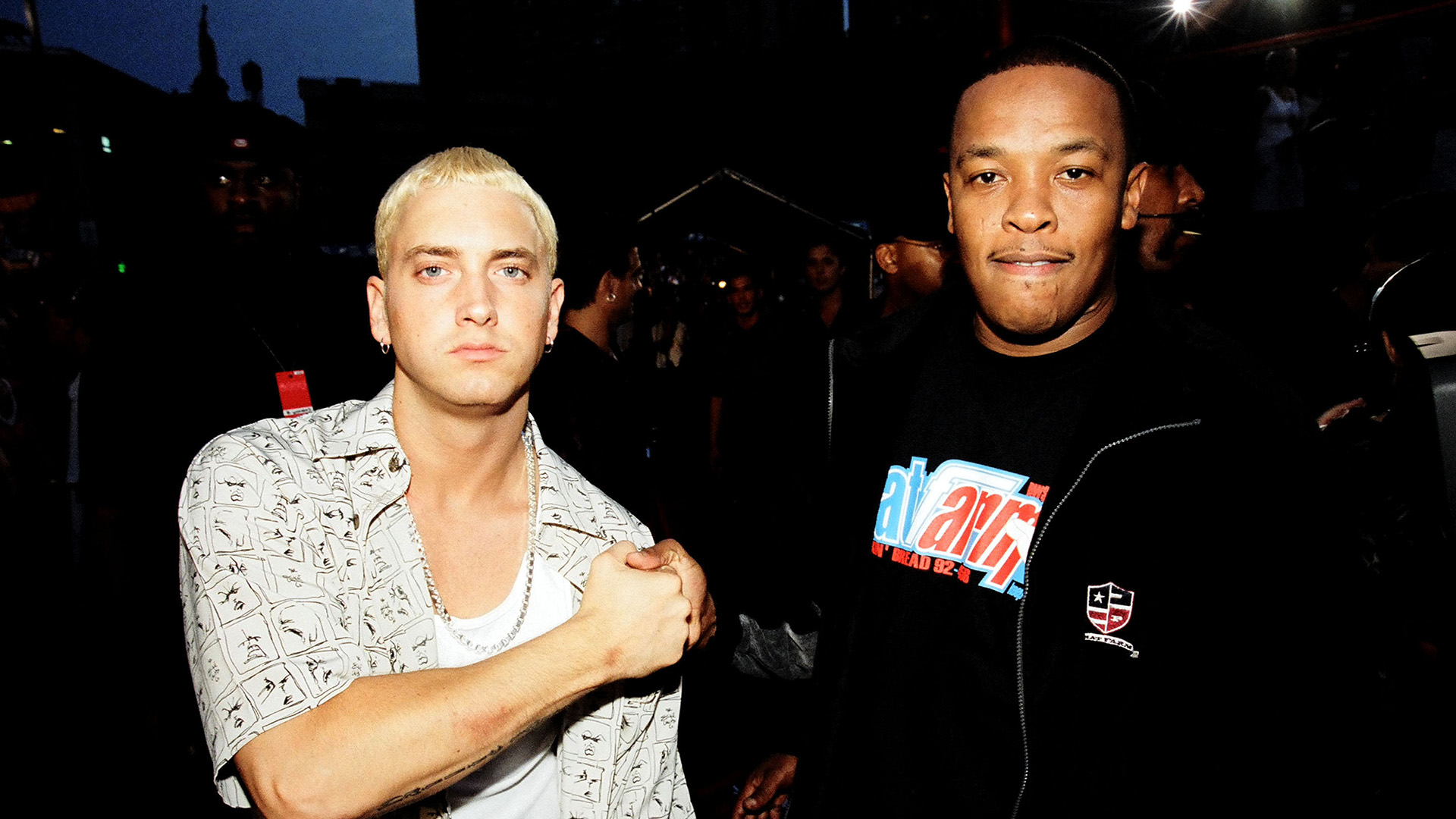
In the annals of hip-hop, few partnerships rival the seismic impact of Dr. Dre and Eminem. What began as a professional gamble in 1998—when Dre, a West Coast legend, took a chance on a brash, unknown rapper from Detroit—evolved into a brotherhood that redefined the genre. Their collaboration produced era-defining albums, reshaped cultural narratives, and forged a bond that endured pressures that nearly tore them apart. The story of Dre and Eminem is one of loyalty, genius, and resilience, with whispers of near collapse only amplifying its depth.
When Dr. Dre received Eminem’s demo tape, he was already a titan, having crafted N.W.A.’s gangsta rap blueprint and Snoop Dogg’s G-funk sound. Eminem, born Marshall Mathers, was a struggling artist with raw talent and a polarizing edge. Dre’s decision to sign him to Aftermath Entertainment was a risk; Eminem’s provocative lyrics and outsider status as a white rapper raised eyebrows. Yet, their chemistry was immediate. The Slim Shady LP (1999), produced largely by Dre, was a cultural earthquake, blending Eminem’s razor-sharp wordplay with Dre’s polished beats. Hits like “My Name Is” introduced a new sound, proving their synergy was more than a fluke.
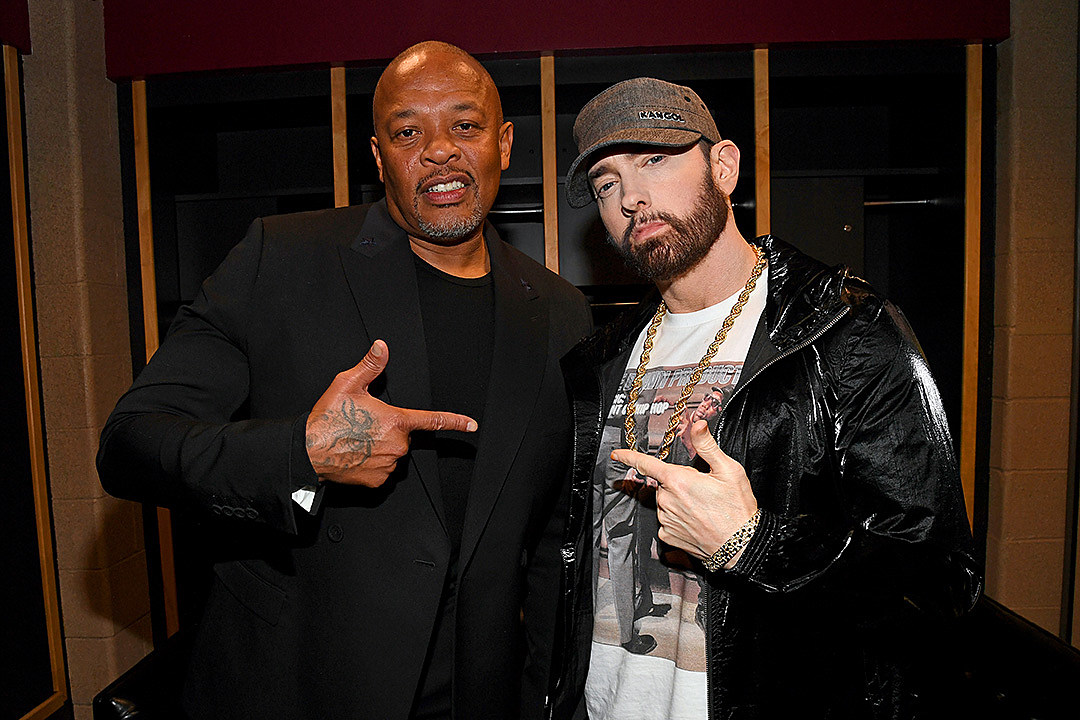
Their partnership deepened with The Marshall Mathers LP (2000) and The Eminem Show (2002), albums that cemented Eminem as a global force. Dre’s production—grandiose yet gritty—gave Eminem’s raw emotion a cinematic backdrop. Tracks like “Stan” and “Lose Yourself” showcased their ability to merge storytelling with sonic innovation, influencing a generation of artists. Beyond music, their bond grew personal. Eminem often spoke of Dre as a mentor, while Dre praised Eminem’s work ethic and authenticity. They shared a mutual respect, with Eminem crediting Dre for believing in him when few did, and Dre calling Eminem a “diamond in the rough.”
Yet, their relationship faced strains that tested their loyalty. In the early 2000s, as Eminem’s fame skyrocketed, tensions emerged. Industry insiders whisper of disagreements over creative control and business decisions. Eminem’s struggles with addiction added complexity; Dre, who had navigated his own battles, urged him to seek help. A rumored rift during the making of Encore (2004) hinted at a breaking point, with Eminem’s personal turmoil clashing with Dre’s perfectionist standards. “We’re both stubborn,” Eminem later admitted in a documentary. “There were moments we didn’t see eye to eye.” Though details remain scarce, the pressure of their high-stakes partnership—coupled with public scrutiny and personal demons—nearly fractured their bond.

What kept them together was a shared commitment to the craft and an unspoken understanding. Dre stood by Eminem during his recovery, and Eminem returned the loyalty, contributing to Dre’s long-delayed Detox project and defending him against critics. Their collaboration on tracks like “Forgot About Dre” and “Old Time’s Sake” reflected a defiance against doubters, proving their synergy endured. Offstage, their bond resembled family—Dre attended Eminem’s daughter’s events, while Eminem spoke at Dre’s Hollywood Walk of Fame ceremony in 2024.
Today, their legacy is undeniable. They’ve sold millions of records, won multiple Grammys, and shaped hip-hop’s evolution from gritty realism to mainstream dominance. Their partnership transcended music, becoming a testament to trust and redemption. The whispers of near collapse only underscore their resilience; what could have broken them instead forged an unshakable alliance. As Dre once said, “Marshall’s my brother. We built this together.” For a generation raised on their beats and bars, the story of Dr. Dre and Eminem remains a powerful reminder that even the strongest bonds are forged in fire.