Part 2: The Rank Hidden in Plain Sight
THE COLONEL WHO WALKED INTO THE MESS HALL AS A NOBODY
Part 2: The Rank Hidden in Plain Sight
The room remained silent.
Colonel Elena Vance stood in the middle of the dining facility holding the silver insignia in her hand.
Major Thomas Sterling stared at it.
At first, confusion crossed his face.
Then recognition.
And finally—
fear.
Because he understood exactly what it meant.
The soldiers around them understood too.
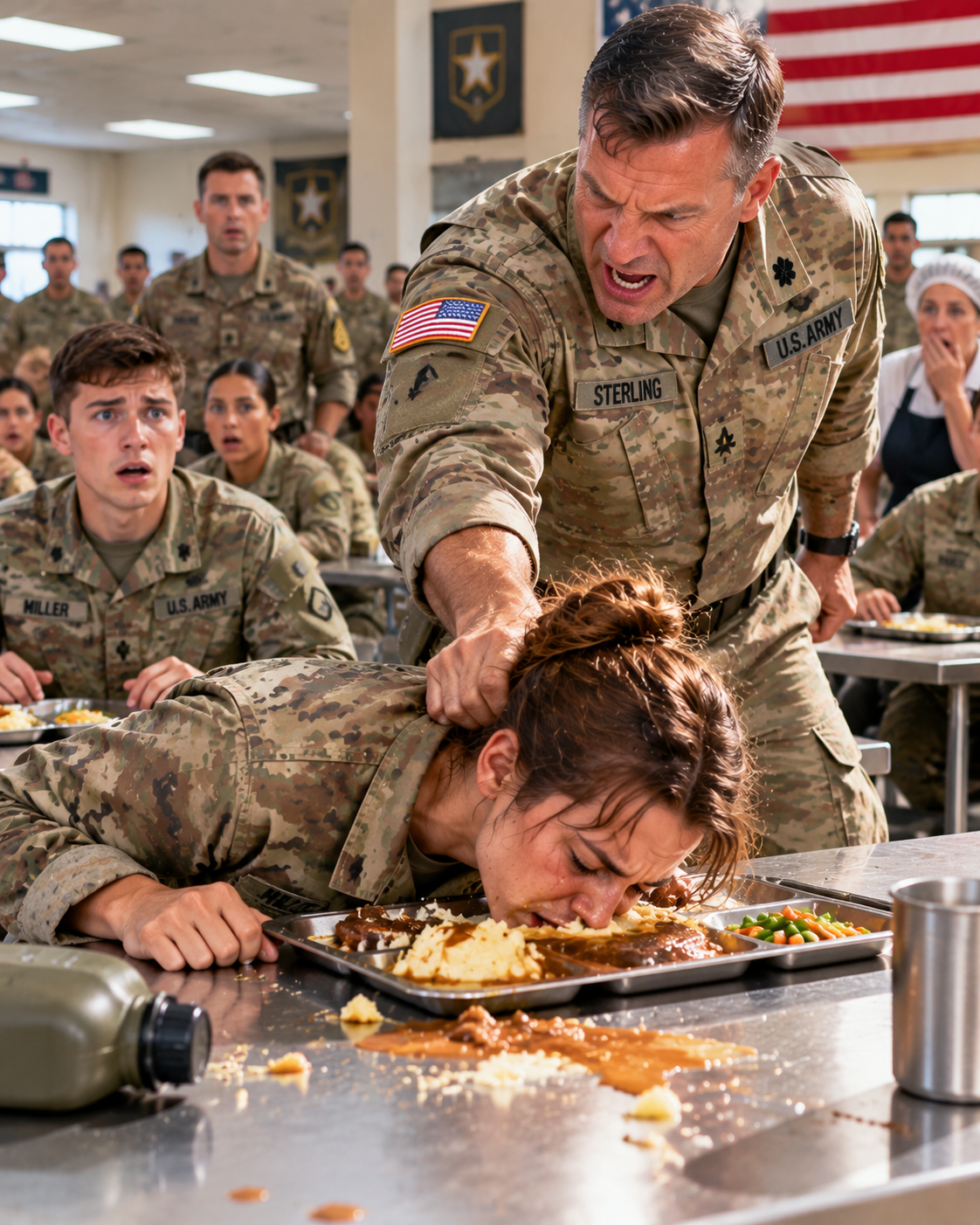
The woman he had just humiliated was not a transfer soldier.
Not a junior officer.
Not someone without influence.
She was the person sent to investigate men like him.
Sterling took one step backward.
“Colonel…”
His voice sounded completely different now.
The confidence was gone.
Elena calmly attached the insignia to her uniform.
The same uniform that moments earlier had made him believe she was powerless.
“Major Sterling.”
She looked around the cafeteria.
“Would you like to explain what happened here?”
Sterling recovered quickly.
At least he tried.
“Colonel, there appears to be a misunderstanding.”
“A misunderstanding?”
“Yes, ma’am.”
He gestured toward Private Miller.
“The private displayed carelessness. I was correcting behavior.”
Elena looked at Miller.
“Private.”
The young soldier immediately stood straighter.
“Yes, ma’am.”
“Did Major Sterling ask you to retrieve the canteen?”
“No, ma’am.”
“Did he correct you verbally?”
Miller hesitated.
Then answered honestly.
“No, ma’am.”
The colonel nodded.
“Thank you.”
She turned back toward Sterling.
The room was still watching.
But this time, nobody was afraid to watch.
Because the balance had changed.
Sterling lowered his voice.
“Colonel, I believe this conversation should happen privately.”
Elena shook her head.
“No.”
That single word surprised him.
She continued.
“Because your decision was not private.”
She pointed toward the room.
“You made every soldier here a witness.”
The major’s jaw tightened.
“You’re making this bigger than it needs to be.”
Elena looked at him.
“No, Major.”
A pause.
“You made it bigger when you decided humiliation was a leadership tool.”
Nobody spoke.
Sergeant Hayes finally stepped forward.
His hands were tense.
But his voice was steady.
“Colonel.”
Elena turned.
“Yes, Sergeant?”
“I witnessed what happened.”
Sterling immediately looked at him.
That look had worked on soldiers for years.
A warning.
A reminder.
A threat without words.
But Hayes didn’t stop.
“He did not drop the canteen, ma’am.”
Silence.
Then Brenda, the civilian cook behind the counter, spoke.
“I saw it too.”
Everyone turned.
She wiped her hands on her apron.
“I’ve worked on this base nineteen years.”
Her voice shook slightly.
“But I saw what happened.”
Elena nodded.
“Thank you.”
Then she looked toward the security cameras.
“Preserve the footage from this dining facility immediately.”
A nearby soldier grabbed his radio.
“Yes, ma’am.”
Sterling’s face hardened.
“You planned this.”
Elena looked at him.
“No.”
She walked closer.
“I planned an inspection.”
She held his gaze.
“You provided the evidence.”
That sentence hit harder than any accusation.
Because it was true.
For three months, Elena had collected complaints.
Anonymous notes.
Unfinished statements.
Reports that disappeared before reaching command.
But she had never had the one thing investigators needed most.
A clear example.
A moment where everyone could see the abuse of authority.
Sterling had given it to her.
Without hesitation.
Without realizing.
The official investigation began that afternoon.
Witness statements were collected.
The cafeteria footage was secured.
Previous training reports were reviewed.
What investigators found was not one isolated incident.
It was a pattern.
Soldiers described unnecessary punishments.
Public humiliation.
Threats disguised as motivation.
Several had avoided reporting concerns because they believed nothing would happen.
They believed rank protected behavior.
Elena understood why.
She had spent enough time at Camp Vora to see it herself.
The most damaging discovery came from Private Miller.
During his interview, he revealed something nobody expected.
He had a medical hardship request pending.
His mother’s condition had worsened.
He had asked for assistance navigating the process.
According to records, the request had been delayed repeatedly.
The reason?
It had been sitting on Sterling’s desk.
Unapproved.
Unanswered.
Elena looked at the file.
A nineteen-year-old soldier had been afraid to complain because he needed help from the same officer making his life harder.
That was not leadership.
That was a system failing the people inside it.
Weeks later, Major Thomas Sterling was removed from command responsibilities pending the completion of the military review process.
The outcome was handled through official procedures.
Statements were examined.
Evidence was reviewed.
Decisions were made based on the findings.
Camp Vora slowly changed.
Not overnight.
Not because one person gave a speech.
Because soldiers started believing that speaking up mattered.
Months later, Elena returned to the dining facility.
No disguise.
No hidden insignia.
Her uniform displayed exactly who she was.
Private Miller approached her.
“Colonel?”
“Yes?”
He smiled nervously.
“I wanted to say thank you.”
Elena shook her head.
“For what?”
“For stopping him.”
She looked around the cafeteria.
At the soldiers eating.
At the conversations happening without fear.
At the young recruits who no longer lowered their voices when officers walked by.
Then she looked back at Miller.
“I didn’t stop him.”
The private looked confused.
“Who did?”
Elena smiled slightly.
“You did.”
“Me?”
“Yes.”
She pointed around the room.
“You and everyone else who finally decided the truth mattered more than being comfortable.”
Miller looked down.
“I was scared.”
Elena nodded.
“So was everyone.”
She paused.
“But courage was never about not being afraid.”
“It was about doing the right thing while you were.”
Years later, new soldiers at Camp Vora heard a story about a mysterious transfer soldier who walked into a dining hall wearing ordinary fatigues.
They heard how a powerful major underestimated her.
They heard how a hidden insignia changed the entire room.
But Elena Vance always corrected one part of the story.
The insignia was never the reason people listened.
The rank was never the reason the truth mattered.
The truth mattered because it was true.
And the strongest leader in that cafeteria was not the person with the highest rank.
It was the nineteen-year-old private who finally stopped believing he deserved to be treated that way.