Part 2: The Inspection Derek Never Saw Coming
Part 2: The Inspection Derek Never Saw Coming
The first vehicle stopped beside the training field.
The door opened.
Colonel Rebecca Hayes stepped out.
Behind her came a command sergeant major, two inspectors, and a legal officer carrying a sealed case.
Captain Derek Mason went pale.
“Colonel Hayes.”
She ignored him.
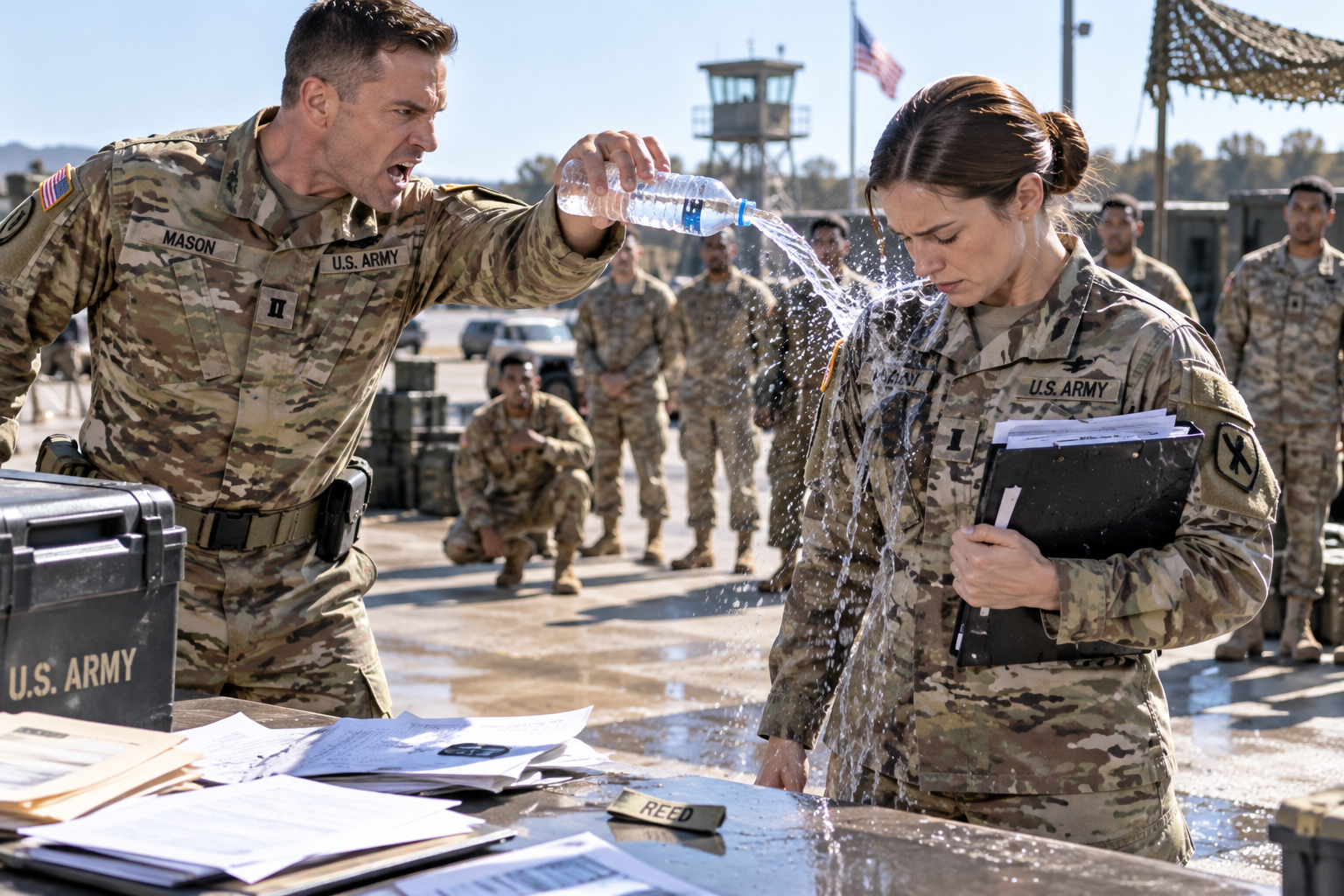
Her eyes went directly to Sophia’s soaked uniform, the broken nametag in the dirt, and the inspection pages scattered across the field.
“What happened here?”
Derek answered first.
“Ma’am, Lieutenant Reed became insubordinate during training.”
Sophia said nothing.
Hayes looked at her.
“Lieutenant?”
Sophia handed her the damaged folder.
“Approximately forty witnesses observed the incident.”
Derek laughed nervously.
“Observed what? A disagreement?”
Colonel Hayes opened the folder.
“These are original command-climate field evaluations.”
Derek stopped smiling.
Sophia had not been assigned to inspect water stations or equipment placement.
She was part of a command-directed assessment triggered by repeated complaints about leadership conduct within Derek’s training section. The low-profile visit was intentional: leadership wanted to see how soldiers were treated when Derek believed senior command was absent.
Colonel Hayes turned toward the formation.
“Did Captain Mason know Lieutenant Reed’s purpose here?”
“No, ma’am,” the staff sergeant answered.
“Good.”
She looked at Derek.
“That was the point.”
For weeks, soldiers had described a pattern: public humiliation, intimidation, questionable evaluation practices, and fear of retaliation.
But written complaints could be disputed.
What happened that morning couldn’t be so easily dismissed.
Several soldiers had witnessed Derek pour water over Sophia.
They saw him remove her nametag.
They watched him scatter controlled documents.
And they saw him pull away the chair while she was collecting them.
More importantly, Sophia had documented everything from the moment she arrived.
Derek tried another defense.
“She provoked me.”
Sophia finally spoke.
“By asking you to follow procedure?”
“You challenged my authority.”
“No, Captain. I observed how you use it.”
That sentence ended the argument.
Colonel Hayes ordered Derek removed from supervisory duties pending formal review.
Nobody applauded.
Sophia didn’t want them to.
This wasn’t revenge.
It was accountability.
Over the following weeks, investigators interviewed personnel individually. Training records were reviewed against original evaluations, and soldiers who had previously remained silent were given a protected channel to report what they had witnessed.
Some allegations could not be substantiated.
Others could.
The important difference was that evidence—not rumor—determined what happened next.
Derek faced administrative and command action based on the findings. The unit also changed how evaluations and complaints were handled so that one officer could not control both a soldier’s daily environment and the paperwork used to judge that soldier.
Months later, Sophia returned to the same training field.
A young private recognized her.
He was the soldier who had tried to help pick up the papers.
“Ma’am?”
Sophia stopped.
“I wanted to help that day.”
“I know.”
“But I was afraid.”
Sophia looked across the field.
“You shouldn’t have needed courage just to pick up a piece of paper.”
The private nodded.
Then he noticed something on Sophia’s uniform.
Her repaired nametag.
Sophia had kept the original damaged one in her desk.
Not because Derek had humiliated her.
Because it reminded her why quiet inspections mattered.
Derek Mason had believed leadership meant making everyone beneath him afraid to speak.
Sophia Reed believed something different.
Real authority isn’t proven by how silent people become when you enter the room.
It’s proven by whether they still feel safe enough to tell you the truth.