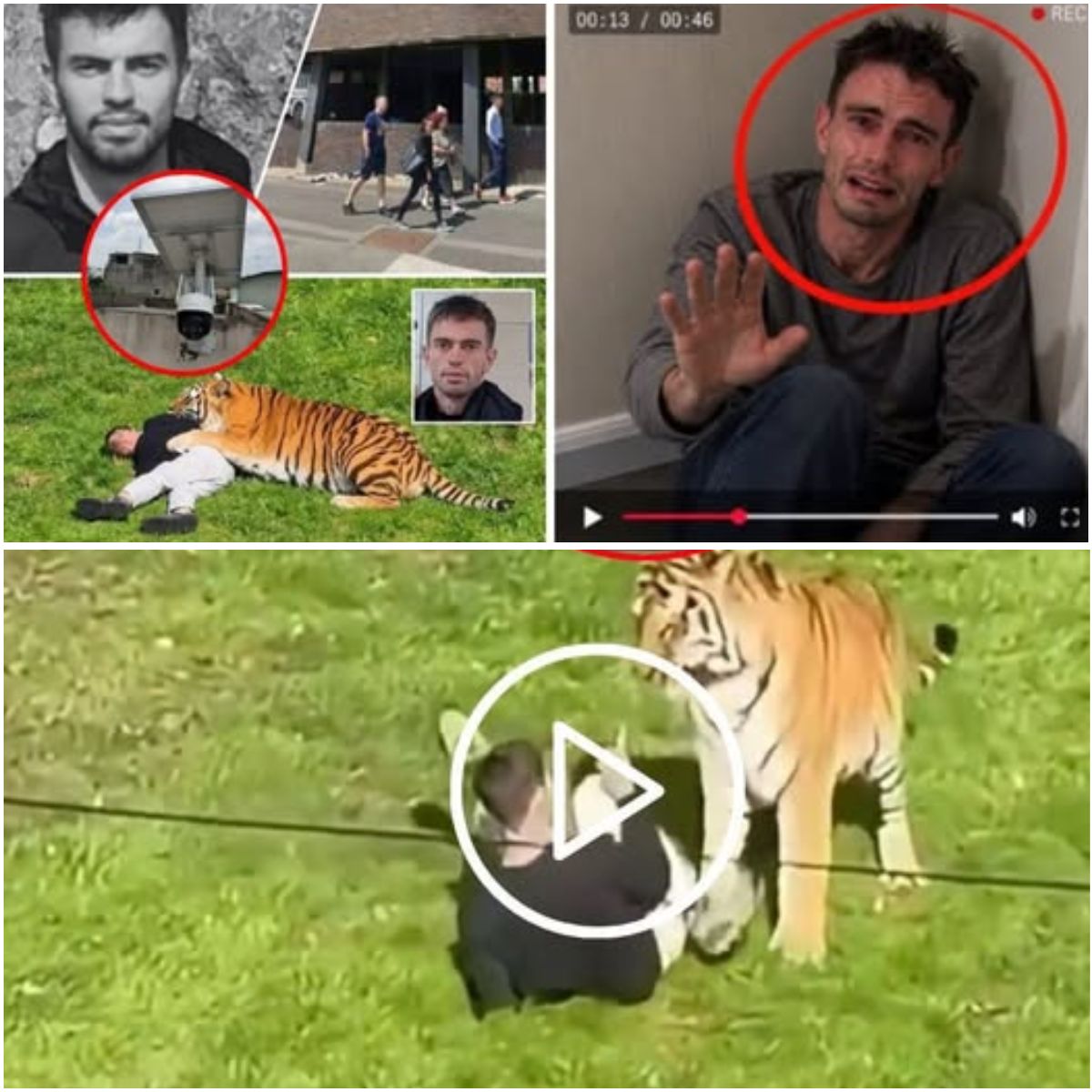
SPECIAL REPORT: QUESTIONS LINGER AFTER INVESTIGATION — WHAT REALLY LIES BEHIND THE DECISION, AND WHAT WILL BECOME OF THE NATURE RESERVE?
SPECIAL REPORT: QUESTIONS LINGER AFTER INVESTIGATION — WHAT REALLY LIES BEHIND THE DECISION, AND WHAT WILL BECOME OF THE NATURE RESERVE?
SPECIAL REPORT: QUESTIONS LINGER AFTER INVESTIGATION — WHAT REALLY LIES BEHIND THE DECISION, AND WHAT WILL BECOME OF THE NATURE RESERVE?

Footage, official conclusions and growing public curiosity have fuelled questions about an investigation and the future of a nature reserve. But do the claims of hidden secrets stand up to scrutiny?
A decision to close an investigation can leave the public searching for answers, particularly when the case involves a wildlife reserve, disputed footage or concerns about what happened behind the scenes.
Now, dramatic online claims are raising a series of unsettling questions: What did investigators actually discover? Was every important detail addressed? And what does the decision mean for the future of the reserve itself?
The language circulating online promises shocking revelations and hidden truths. Yet there is an important distinction between a genuine unanswered question and a dramatic allegation that has not been supported by evidence.
Without the name of the reserve, the investigating body or the report in question, the specific claims cannot be independently verified.
THE FOOTAGE AT THE CENTRE OF THE QUESTIONS
Video footage can become a powerful part of an investigation. It may help establish a timeline, clarify movements or provide context that eyewitness accounts alone cannot offer.
But footage must be assessed carefully.
A short clip may omit events before or after the recorded moment. The camera’s position, recording quality and missing context can also affect how viewers interpret what they see.
That is why a dramatic video circulating online should not automatically be treated as proof of misconduct, a concealed discovery or a deliberate attempt to mislead the public.
To establish what the footage actually shows, investigators’ findings would need to be compared with the original recording, its provenance and any supporting evidence.
At present, the supplied claims do not identify a verified recording or explain what specific discovery it allegedly contains.
WHY WOULD AN INVESTIGATION BE CLOSED?
The phrase “investigation closed” can sound final, but its meaning depends on the circumstances.
An inquiry may conclude because investigators believe they have gathered sufficient evidence, because no further investigative steps are proportionate, or because the matter falls outside their remit. In other situations, a decision may be subject to review or further proceedings.
None of those possibilities, by itself, proves that evidence was concealed.
To understand the decision in this case, readers would need access to the relevant authority’s explanation, the scope of the investigation and any published findings. If an advisory board issued recommendations, those recommendations would also need to be examined in their original context.
Without those details, claims that the closure hides a horrifying secret remain unsubstantiated.
THE ADVISORY BOARD’S ROLE
Advisory boards can assess evidence, recommend changes, identify weaknesses in existing procedures or offer guidance on future management. Their influence varies according to their legal authority and the terms under which they were appointed.
A board’s conclusions are not necessarily the same as a formal investigative finding. Nor does a recommendation automatically mean that wrongdoing has been established.
The key questions are straightforward: What evidence did the board review? What did it actually conclude? Were its recommendations accepted, rejected or left unresolved?
Those answers could help clarify whether the decision reflects an ordinary procedural conclusion, an unresolved disagreement or a more substantial concern.
Until the relevant report is identified, however, it would be misleading to claim that its contents expose a hidden scandal.
WHAT HAPPENS TO THE NATURE RESERVE NOW?
The future of a nature reserve depends on factors that may include conservation requirements, animal welfare, public safety, funding and decisions by the organisation responsible for its management.
An investigation ending does not necessarily mean a reserve will close permanently. Equally, the closure of an investigation does not prove that the reserve will continue operating unchanged.
A reliable assessment would require a statement from the reserve’s management or the responsible authority, together with any relevant licensing decisions, operational updates or conservation plans.
For visitors, local residents and wildlife advocates, these practical details matter more than speculation. They help establish whether access has changed, whether any safety measures are being introduced and whether conservation work will continue.
THE QUESTIONS THAT STILL NEED ANSWERS
The strongest way to examine a controversial investigation is to separate documented facts from assumptions.
That means identifying the original footage, locating the complete report, checking the advisory board’s actual recommendations and confirming the stated reason for closing the investigation.
It also means resisting claims that promise a dramatic revelation without showing the underlying evidence.
If new documents or independently verified recordings emerge, they may provide a clearer picture. Until then, the existence of unanswered questions should not be confused with proof of a cover-up.
The central issue remains unresolved from the information currently available: which investigation is being discussed, what did the advisory board conclude, and what official decision was made about the nature reserve?
Those details are essential to establishing what happened—and whether there is genuinely more to the story than the public has been told.
Editorial note: This report does not establish that evidence was concealed or that wrongdoing occurred. The supplied headline does not identify the reserve, advisory board or investigation, so specific allegations cannot be verified.
Sources needed for verification: The original investigative report, the advisory board’s published conclusions, an official statement from the responsible authority and the nature reserve’s latest operational update.