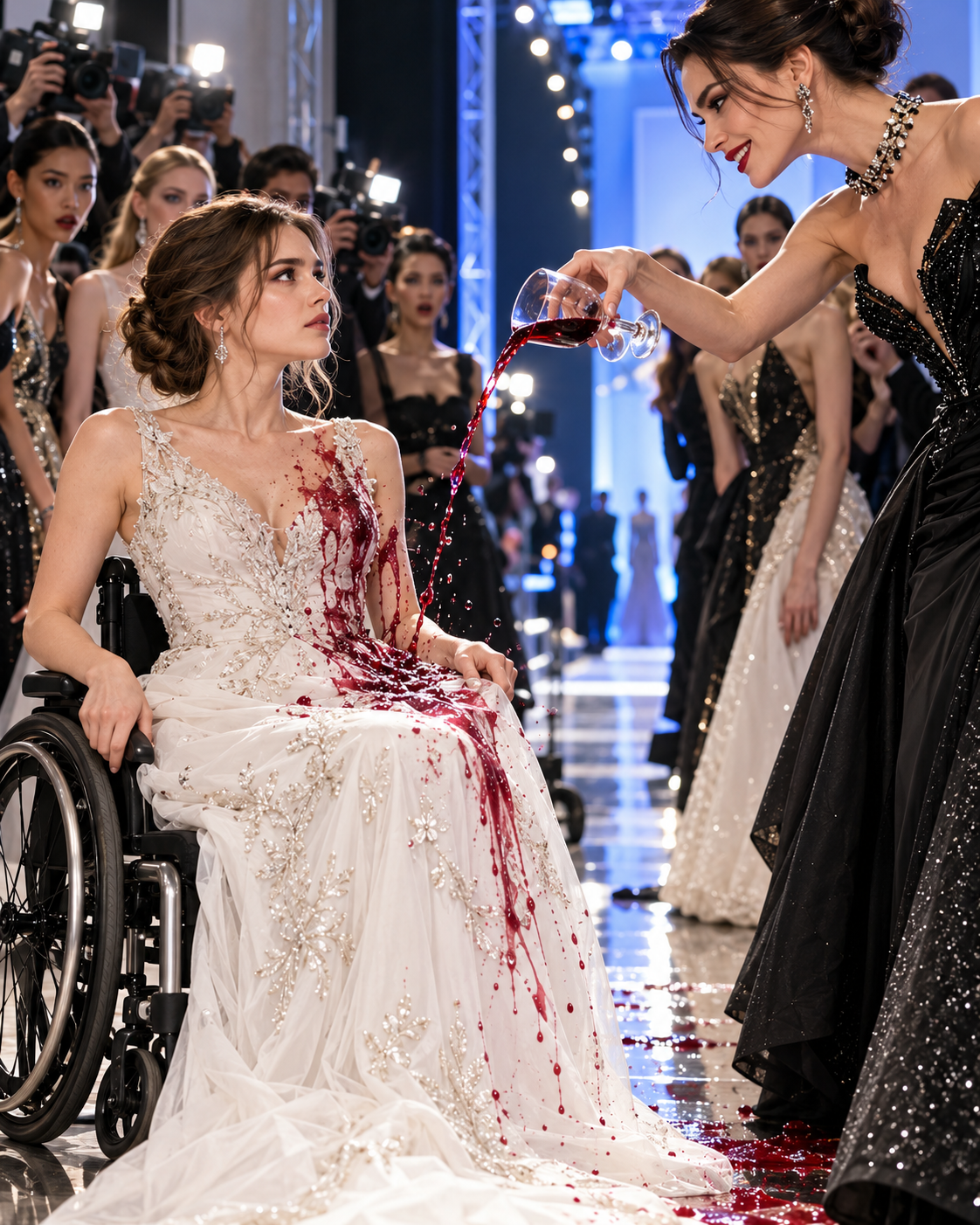
Part 2: The Recording That Changed Everything
Part 2: The Recording That Changed Everything
The screen went black.
For three seconds, nobody breathed.
Then the final recording began.
Vivienne’s voice filled the venue.
“Take Clara’s sketches. Change the colors. Change the names. Nobody will know.”
A man’s voice answered.
“What if she finds out?”
Vivienne laughed.
“She won’t. People already think she’s here because of sympathy.”
The audience erupted.
Clara remained still.
She had heard those words before.
But hearing them through the speakers, in front of the very people who had applauded Vivienne for years, felt different.
The chief executive of the fashion house stood.
“Is that your voice?”
Vivienne couldn’t answer.
Her assistant covered his face.
The runway director looked at Clara.
“How long have you known?”
“Long enough.”
Clara had discovered the theft four months earlier.
Her sketches had begun appearing in another designer’s collection before her own prototypes were finished.
At first, she suspected coincidence.
Then she found identical measurements.
The same hidden construction techniques.
The same notes.
Someone had copied everything.
When Clara confronted her assistant, he confessed that Vivienne had paid him to photograph her private design files.
But Clara didn’t release the evidence immediately.
She waited.
Because she knew accusations could be dismissed.
Proof could not.
So she created one final collection.
A collection designed around a single idea:
Nothing stolen stays hidden forever.
The wine had simply triggered the final reveal.
Vivienne suddenly stepped toward the control booth.
“Turn it off!”
A security guard blocked her path.
“You need to stay here.”
“This is defamation!”
The chief executive shook his head.
“No. These are your own words.”
Vivienne looked around the room.
The photographers who once followed her were now filming her collapse.
Sponsors were whispering to lawyers.
Designers were quietly stepping away.
Then Clara’s former assistant approached the runway.
His hands trembled.
“I need to tell the truth.”
Vivienne stared at him.
“Don’t.”
He ignored her.
“I gave her the files.”
The audience went silent.
“But I wasn’t the only one.”
He pointed toward a senior executive from Vivienne’s fashion house.
“She ordered me to do it.”
The executive immediately denied everything.
But Clara’s legal team had already prepared the documents.
Emails.
Payment records.
Security footage.
File-transfer logs.
Everything was dated.
Everything matched.
The fashion house terminated the executive that night.
Vivienne’s contract was suspended pending a formal investigation.
And Clara’s collection was officially recognized as her original work.
But Clara didn’t celebrate.
She looked down at the wine-stained gown.
The same dress Vivienne had tried to destroy now stood beneath the runway lights as the most photographed piece of the evening.
A reporter shouted:
“Clara! Did you plan this entire thing?”
Clara looked toward the cameras.
“No.”
She paused.
“I planned to protect my work.”
Another reporter called out:
“Do you want Vivienne ruined?”
Clara shook her head.
“I wanted the truth.”
That answer spread across social media before the night was over.
By morning, Clara’s name was everywhere.
Not because people felt sorry for her.
Because they had finally seen her work.
Months later, Clara launched her own design studio in New York.
She named the first collection Embers.
The centerpiece was the white gown from Paris.
She never removed the wine stain.
Instead, she preserved it beneath transparent silk.
At the studio entrance, she placed a small plaque:
“Some people think damage is the end of a story. Sometimes, it’s the moment the truth becomes visible.”
Vivienne eventually disappeared from the major fashion circuit.
Clara never celebrated that.
She simply continued working.
She hired young designers who had been dismissed as outsiders.
She created couture designed for people the industry had ignored.
And whenever someone asked about the night in Paris, Clara gave the same answer.
“Vivienne thought she ruined my dress.”
She smiled.
“She accidentally signed it.”
Because the wine had not destroyed Clara’s most important night.
It had revealed who had been trying to destroy her all along.
And from that moment forward, nobody in the fashion world could look at Clara Whitmore and see someone who needed sympathy.
They saw a designer who had survived humiliation, protected her work, and turned the very moment meant to break her into the beginning of everything she would build.
Part 2: The Recording That Changed Everything
The screen went black.
For three seconds, nobody breathed.
Then the final recording began.
Vivienne’s voice filled the venue.
“Take Clara’s sketches. Change the colors. Change the names. Nobody will know.”
A man’s voice answered.
“What if she finds out?”
Vivienne laughed.
“She won’t. People already think she’s here because of sympathy.”
The audience erupted.
Clara remained still.
She had heard those words before.
But hearing them through the speakers, in front of the very people who had applauded Vivienne for years, felt different.
The chief executive of the fashion house stood.
“Is that your voice?”
Vivienne couldn’t answer.
Her assistant covered his face.
The runway director looked at Clara.
“How long have you known?”
“Long enough.”
Clara had discovered the theft four months earlier.
Her sketches had begun appearing in another designer’s collection before her own prototypes were finished.
At first, she suspected coincidence.
Then she found identical measurements.
The same hidden construction techniques.
The same notes.
Someone had copied everything.
When Clara confronted her assistant, he confessed that Vivienne had paid him to photograph her private design files.
But Clara didn’t release the evidence immediately.
She waited.
Because she knew accusations could be dismissed.
Proof could not.
So she created one final collection.
A collection designed around a single idea:
Nothing stolen stays hidden forever.
The wine had simply triggered the final reveal.
Vivienne suddenly stepped toward the control booth.
“Turn it off!”
A security guard blocked her path.
“You need to stay here.”
“This is defamation!”
The chief executive shook his head.
“No. These are your own words.”
Vivienne looked around the room.
The photographers who once followed her were now filming her collapse.
Sponsors were whispering to lawyers.
Designers were quietly stepping away.
Then Clara’s former assistant approached the runway.
His hands trembled.
“I need to tell the truth.”
Vivienne stared at him.
“Don’t.”
He ignored her.
“I gave her the files.”
The audience went silent.
“But I wasn’t the only one.”
He pointed toward a senior executive from Vivienne’s fashion house.
“She ordered me to do it.”
The executive immediately denied everything.
But Clara’s legal team had already prepared the documents.
Emails.
Payment records.
Security footage.
File-transfer logs.
Everything was dated.
Everything matched.
The fashion house terminated the executive that night.
Vivienne’s contract was suspended pending a formal investigation.
And Clara’s collection was officially recognized as her original work.
But Clara didn’t celebrate.
She looked down at the wine-stained gown.
The same dress Vivienne had tried to destroy now stood beneath the runway lights as the most photographed piece of the evening.
A reporter shouted:
“Clara! Did you plan this entire thing?”
Clara looked toward the cameras.
“No.”
She paused.
“I planned to protect my work.”
Another reporter called out:
“Do you want Vivienne ruined?”
Clara shook her head.
“I wanted the truth.”
That answer spread across social media before the night was over.
By morning, Clara’s name was everywhere.
Not because people felt sorry for her.
Because they had finally seen her work.
Months later, Clara launched her own design studio in New York.
She named the first collection Embers.
The centerpiece was the white gown from Paris.
She never removed the wine stain.
Instead, she preserved it beneath transparent silk.
At the studio entrance, she placed a small plaque:
“Some people think damage is the end of a story. Sometimes, it’s the moment the truth becomes visible.”
Vivienne eventually disappeared from the major fashion circuit.
Clara never celebrated that.
She simply continued working.
She hired young designers who had been dismissed as outsiders.
She created couture designed for people the industry had ignored.
And whenever someone asked about the night in Paris, Clara gave the same answer.
“Vivienne thought she ruined my dress.”
She smiled.
“She accidentally signed it.”
Because the wine had not destroyed Clara’s most important night.
It had revealed who had been trying to destroy her all along.
And from that moment forward, nobody in the fashion world could look at Clara Whitmore and see someone who needed sympathy.
They saw a designer who had survived humiliation, protected her work, and turned the very moment meant to break her into the beginning of everything she would build.