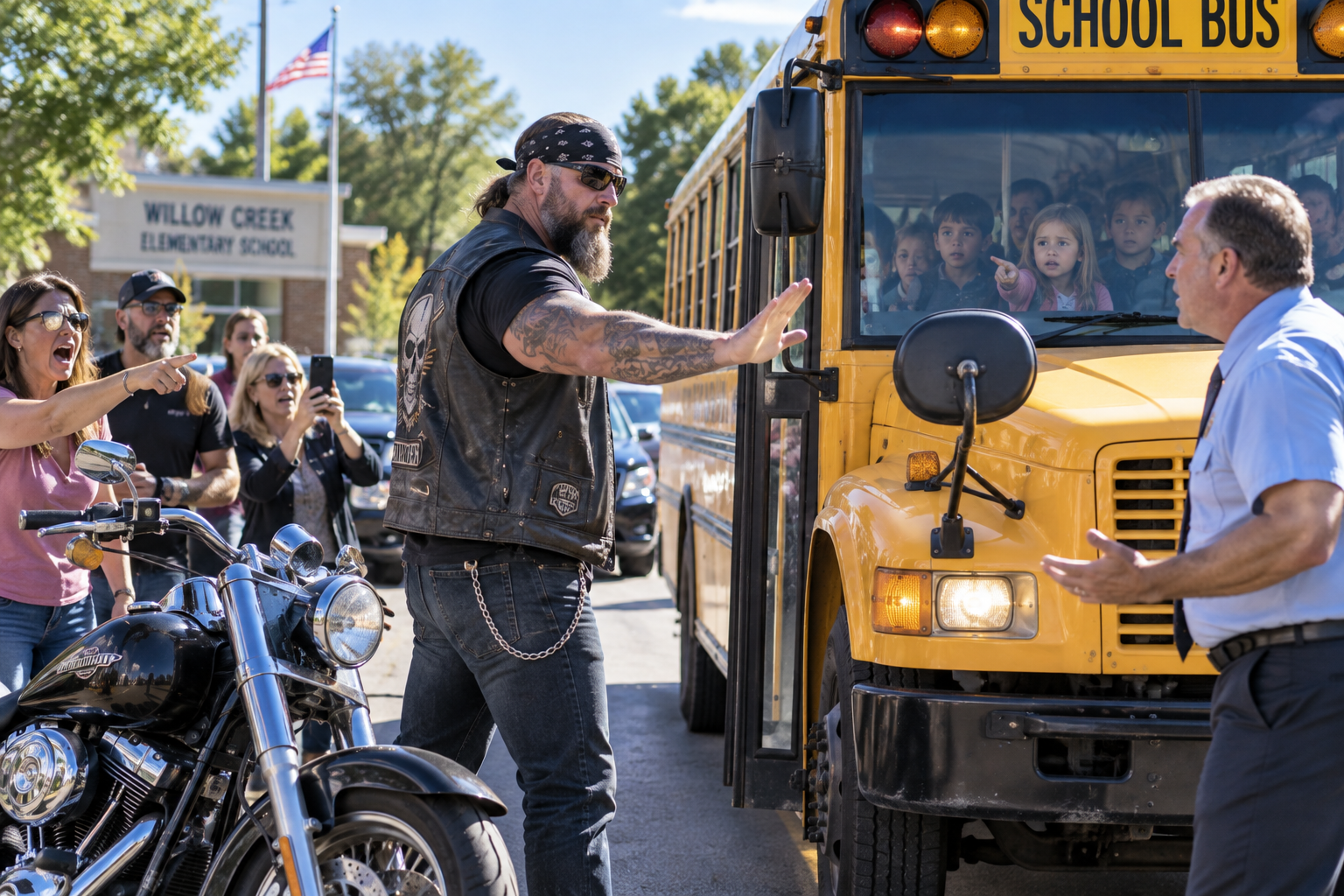
Part 2: The Reason Cole Heard What Everyone Else Missed
Part 2: The Reason Cole Heard What Everyone Else Missed
The driver stared beneath the bus.
“What do you mean it didn’t come loose by itself?”
Cole pointed toward the fastener without touching it.
“See that bright edge? Fresh metal. Something has been disturbed.”
He immediately stepped back.
No accusations.
No dramatic claims.
Just one instruction.
“Don’t move the bus.”
Police arrived minutes later, followed by a school transportation mechanic.
The children were calmly transferred to another bus while officers secured the area.
The mechanic crawled underneath.
When he emerged, his expression was serious.
“Good thing you stopped.”
A mounting fastener in the rear suspension assembly had worked dangerously loose. The mechanic couldn’t determine on the roadside whether it was deliberate damage or a maintenance failure, so the bus was taken out of service for a full inspection.
That answer was enough for Cole.
He wasn’t interested in inventing a villain.
He cared about thirty-two children getting home safely.
But the parents who had shouted at him earlier suddenly had nothing to say.
One man finally approached.
“I called you a lunatic.”
Cole shrugged.
“You saw a stranger blocking a school bus. I understand.”
“You could’ve yelled back.”
“Wouldn’t have fixed the bus.”
The transportation department’s inspection later found no evidence of sabotage. Instead, maintenance records revealed something more ordinary—and more troubling.
The bus had recently undergone suspension work.
A required follow-up inspection had been entered into the system but never completed.
The district immediately removed several buses from service until their maintenance records could be verified.
For Cole, the matter should have ended there.
It didn’t.
Three days later, Willow Creek Elementary invited him to meet the families.
Cole almost refused.
Crowds made him uncomfortable.
Praise made him even more uncomfortable.
But his younger brother, who taught fifth grade there, convinced him.
When Cole entered the school gym, the same little girl who had pointed from the bus window ran toward him.
She stopped several feet away.
“My mom said you saved us.”
Cole crouched so he wasn’t towering over her.
“No. Your driver stopped when I asked him to. The mechanic found the problem. Lots of people did their jobs.”
The girl considered this.
“But you heard it first.”
Cole smiled.
“That part’s true.”
Her mother approached next.
She was one of the people who had filmed him.
“I thought you were dangerous.”
Cole glanced at his tattooed arms.
“You weren’t the first.”
She looked embarrassed.
Then the girl noticed a small wrench tattoo near Cole’s wrist.
“What does that one mean?”
Cole became quiet.
“My dad.”
He explained that his father had taught him mechanics in a tiny Tennessee garage.
Listen before you touch.
Understand before you judge.
Those lessons applied to machines.
Cole had eventually realized they applied to people too.
The following month, the district invited him to volunteer at a community vehicle-safety day. Cole brought several riders from his motorcycle club.
Parents who once crossed the street to avoid them now watched those same bikers check tire pressure, explain basic maintenance, and raise money for school transportation supplies.
Cole never became comfortable with people calling him a hero.
He preferred mechanic.
Or biker.
Either was fine.
Because that morning had taught Willow Creek something Cole had learned years earlier:
A leather vest can make people suspicious.
Tattoos can make strangers nervous.
A motorcycle parked across a road can look like a threat.
But appearances only tell you what someone looks like.
Character tells you why they stopped.