Sam Worthington Leads a Psychological Thriller Where an Entire Family Seems to Disappear
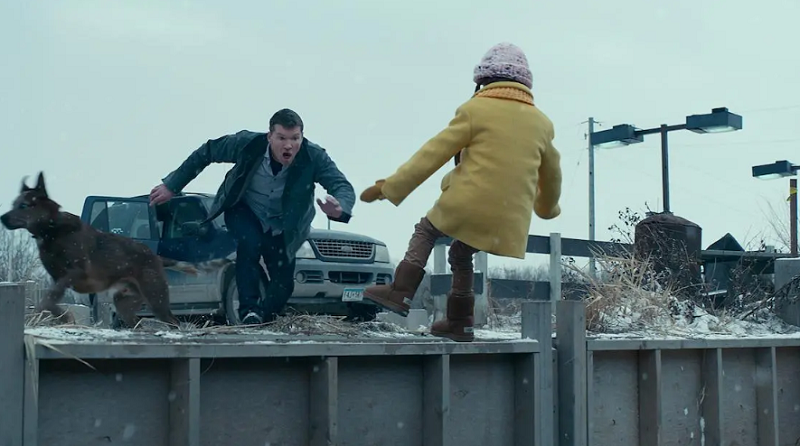
Sam Worthington Leads a Psychological Thriller Where an Entire Family Seems to Disappear
Imagine taking your injured child to a hospital, watching your spouse disappear with them into another part of the building, and then discovering that the hospital insists neither of them was ever there.
No admission record.
No medical file.
No appointment.
No evidence.
That is the terrifying premise at the center of a psychological thriller starring Sam Worthington.
A Father Searching for His Family
The story follows Ray Monroe, a father who arrives at a hospital with his injured daughter after a frightening accident.
He is worried, exhausted and desperate for answers.
His wife takes their daughter downstairs for additional examinations.
Ray waits.
But they never return.
At first, he assumes there has simply been a misunderstanding.
Then the hospital staff begin telling him something impossible.
According to them, his wife and daughter were never admitted.
The Hospital Says Nothing Happened
Ray insists that he remembers exactly what happened.
He remembers arriving.
He remembers his daughter’s injury.
He remembers his wife accompanying her.
But when he asks hospital employees to locate the medical records, they cannot find anything.
There is no patient file.
No appointment.
No registration.
Nothing.
The more Ray demands an explanation, the more unsettling the situation becomes.
The Film Is Fractured
The film is Fractured, the psychological thriller starring Sam Worthington as Ray Monroe.
Directed by Brad Anderson, the movie follows Ray as he desperately searches for his wife Joanne and daughter Peri after an unsettling incident at a hospital.
Lily Rabe plays Joanne, while Lucy Capri portrays Peri.
The film builds its suspense around one central question:
Did Ray’s family really disappear — or is Ray’s understanding of what happened dangerously unreliable?
A Father Who Refuses to Give Up
Ray refuses to accept the hospital’s explanation.
For him, the situation is simple.
His family was there.
He saw them.
They were receiving medical attention.
And now they are gone.
The hospital’s denial only increases his desperation.
He begins demanding information from staff and searching for explanations that make sense of what he remembers.
Suspicion Takes Over
As Ray continues investigating, ordinary details begin appearing suspicious.
Employees seem strangely calm.
Answers do not match.
Information appears to be missing.
And the hospital itself becomes increasingly intimidating.
What should be a place of safety begins feeling like a maze.
Ray becomes convinced that someone is deliberately hiding the truth from him.
But Ray Has a Problem
There is another possibility.
What if his memory is wrong?
That question becomes increasingly important as the story progresses.
Ray is completely convinced that his wife and daughter were inside the hospital.
But the evidence presented to him seems to contradict his memory.
The audience is placed in the same uncomfortable position as Ray.
Who should be believed?
The father?
The hospital?
Or the evidence?
Sam Worthington’s Performance
Worthington carries much of the film’s tension through Ray’s increasingly frantic behavior.
At the beginning, he is simply a worried father.
As the mystery develops, fear turns into anger.
Anger becomes desperation.
And desperation begins affecting the way he interprets everything around him.
The performance makes the audience feel Ray’s urgency while simultaneously raising doubts about his reliability.
A Hospital Becomes a Psychological Maze
The setting plays an important role in creating the film’s atmosphere.
Hospitals are normally associated with care, order and medical expertise.
Here, however, the environment becomes increasingly unsettling.
Long corridors.
Closed doors.
Unfamiliar staff.
Missing information.
Every element makes Ray feel more isolated.
The building becomes almost as mysterious as the disappearance itself.
The Search for Evidence
Ray knows that if he can find proof of his family’s admission, he can establish that his memory is correct.
He searches for records.
He questions employees.
He tries to reconstruct the sequence of events.
But every attempt seems to lead to another contradiction.
The harder he searches, the more uncertain the situation becomes.
What Happened to Peri?
Ray’s daughter is at the center of the mystery.
He remembers her being injured.
He remembers bringing her into the hospital.
And he remembers her being taken away for further examination.
Yet the hospital denies that she was ever treated there.
That contradiction becomes the emotional engine of the story.
For Ray, this is not an abstract mystery.
It is his child.
Joanne Also Vanishes
The disappearance becomes even more disturbing when Ray realizes that his wife has also seemingly vanished.
He cannot understand how two people could disappear from a hospital without leaving any trace.
His suspicion grows.
Perhaps someone is hiding them.
Perhaps the hospital is involved.
Or perhaps something happened to Ray himself that he does not remember.
The Audience Begins to Question Everything
The film’s central strength is its ability to make viewers question their own assumptions.
Ray appears certain.
But certainty does not necessarily mean truth.
The hospital appears suspicious.
But suspicious behavior does not automatically prove a conspiracy.
Every new piece of information can be interpreted in more than one way.
That ambiguity keeps the mystery alive.
A Psychological Battle
As Ray becomes more desperate, the film shifts from a straightforward disappearance mystery into a psychological thriller.
His greatest challenge is no longer simply finding his family.
He must determine whether he can trust his own perception.
The distinction between reality and memory becomes increasingly difficult to establish.
Fear Changes the Way We See Things
One of the film’s central ideas is how fear can influence perception.
When someone believes that a loved one is in danger, every unexplained detail can appear threatening.
A strange expression becomes suspicious.
A delayed answer becomes evidence of a cover-up.
A locked door becomes a possible hiding place.
Ray’s fear makes him increasingly determined — but it may also make him vulnerable to his own assumptions.
The Hospital Staff
The hospital employees become important because their behavior is difficult for Ray to interpret.
Some appear genuinely confused.
Others seem dismissive.
And some responses make Ray even more suspicious.
But the film deliberately keeps their motivations unclear.
Are they hiding something?
Or are they simply responding to a confused and increasingly distressed man?
A Mystery Built Around Memory
Unlike a traditional thriller, the central mystery is not simply about finding a missing person.
It is about determining what actually happened.
Ray’s memory becomes evidence.
But memory can be imperfect.
The story therefore forces viewers to question whether remembering something clearly means that it happened exactly that way.
The Search Becomes Desperate
As time passes, Ray becomes increasingly unwilling to accept uncertainty.
He needs an explanation.
He needs proof.
Most importantly, he needs his family back.
That desperation pushes him to take increasingly extreme steps.
The more resistance he encounters, the more convinced he becomes that something terrible is being hidden.
The Possibility Nobody Wants to Consider
Eventually, another possibility begins emerging.
Perhaps the hospital is not the only thing Ray should be questioning.
Perhaps the missing piece is inside his own memory.
That possibility changes the entire nature of the mystery.
If Ray cannot trust himself, then every assumption he has made becomes questionable.
The Film Keeps the Viewer Guessing
Fractured deliberately provides information that can be interpreted in competing ways.
One moment, the hospital appears suspicious.
The next, Ray’s behavior becomes more concerning.
Then another detail seems to confirm his version of events.
The uncertainty keeps shifting.
That is what makes the film particularly effective as a psychological thriller.
A Father’s Worst Nightmare
At its emotional center, the story is about a parent’s fear of losing a child.
Ray’s actions are driven by desperation.
He believes his daughter is in danger.
He believes someone is preventing him from finding her.
And he refuses to stop searching.
That emotional motivation makes his increasingly extreme behavior understandable, even when his actions become difficult to predict.
When Certainty Becomes Dangerous
Ray’s absolute confidence is both his greatest strength and his greatest weakness.
It gives him the determination to keep searching.
But if his assumptions are wrong, that same certainty could lead him further away from the truth.
The film repeatedly asks whether determination is always a virtue.
Sometimes, refusing to doubt yourself can be just as dangerous as giving up.
The Truth Behind the Disappearance
As the story moves toward its climax, the mystery surrounding Ray’s family begins to take shape.
Details that seemed unrelated suddenly become important.
Earlier conversations acquire new meaning.
And the audience is forced to reconsider what it thought it knew about the hospital visit.
The final revelations are designed to make viewers rethink the events that came before.
More Than a Missing-Family Thriller
Although Fractured begins with a missing-family mystery, its deeper subject is perception.
How much can we trust our memories?
How does trauma affect the way we interpret events?
And what happens when the evidence around us contradicts what we believe we experienced?
Those questions give the film its psychological weight.
Sam Worthington at the Center of the Mystery
Worthington’s performance keeps the audience closely connected to Ray’s emotional state.
His fear is immediate.
His frustration is believable.
And his desperation becomes increasingly intense.
But the performance also leaves enough uncertainty for viewers to wonder whether Ray is an unreliable witness to his own story.
The Question That Drives Everything
Throughout the film, one question refuses to disappear:
Where are Ray’s wife and daughter?
But eventually another question becomes just as important:
Can Ray trust his own memory of what happened?
The answer to one may determine the answer to the other.
A Thriller Designed to Make You Doubt Everything
Fractured works because it does not simply ask viewers to solve a mystery.
It asks them to question the evidence itself.
Every memory can be challenged.
Every explanation can change.
And every new discovery can completely alter the meaning of what came before.
By the time the truth begins to emerge, the audience has already been pulled into the same psychological uncertainty that surrounds Ray.
And that is what makes the final revelation so unsettling:
sometimes the most frightening mystery is not discovering where someone disappeared — but discovering that you may have misunderstood what happened from the very beginning.