Killers of the Flower Moon: Leonardo DiCaprio and Robert De Niro Enter a True-Crime Nightmare Built on Wealth, Power and Betrayal
Killers of the Flower Moon: Leonardo DiCaprio and Robert De Niro Enter a True-Crime Nightmare Built on Wealth, Power and Betrayal
A sudden fortune transforms a community. Then the deaths begin.
Martin Scorsese’s Killers of the Flower Moon takes one of the darkest chapters of American history and turns it into a sprawling crime drama about greed, manipulation and betrayal — with Leonardo DiCaprio and Robert De Niro at the center of a conspiracy whose most disturbing element is how close the danger comes to home.
Set in 1920s Oklahoma, the film follows members of the Osage Nation after oil discovered beneath their land creates extraordinary wealth. But prosperity also attracts outsiders determined to gain control of that fortune.
Soon, Osage people begin dying under suspicious circumstances.
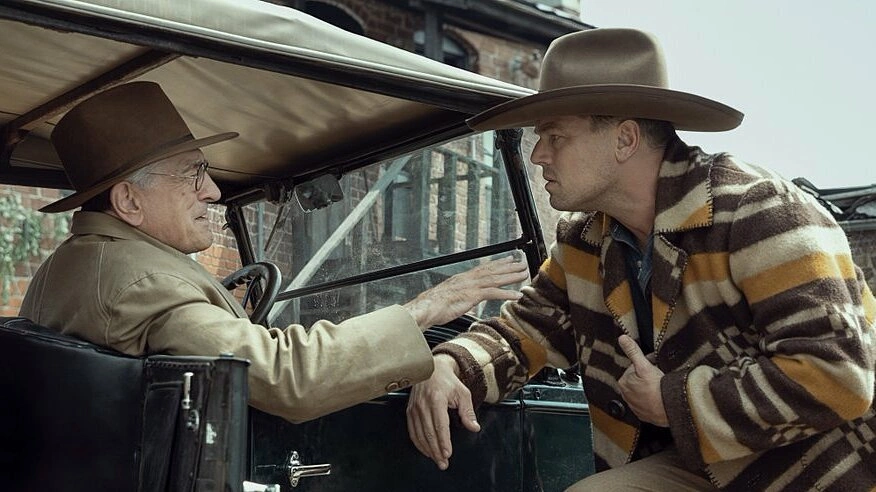
At the center of the story is Ernest Burkhart, played by Leonardo DiCaprio, a World War I veteran who arrives in Oklahoma and falls under the powerful influence of his uncle, William King Hale.
Robert De Niro portrays Hale as a respected and seemingly supportive figure who has carefully established himself within the local community. Behind that public image, however, lies something far more sinister.
Ernest’s relationship with Mollie Kyle, played by Lily Gladstone, becomes crucial to the story. Mollie belongs to an Osage family whose oil rights have made them wealthy, and their marriage initially appears to offer Ernest stability and a future.
But as members of Mollie’s family begin dying, the meaning of the relationships surrounding her becomes increasingly disturbing.
Deaths that might initially appear unrelated begin forming a pattern.
Money changes hands. Inheritances become increasingly important. People who should be protecting those closest to them begin revealing motives that are impossible to ignore.
And the closer the story moves toward the truth, the clearer it becomes that the threat facing Mollie is not coming from a mysterious stranger lurking somewhere outside the community.
It is frighteningly close.
That sense of intimate betrayal gives Killers of the Flower Moon much of its power. Rather than presenting evil as something easily identifiable, Scorsese examines how exploitation can hide behind friendship, marriage, business relationships and claims of loyalty.
DiCaprio’s Ernest is caught between his relationship with Mollie and the influence of his uncle, creating a morally disturbing portrait of weakness, greed and complicity.
De Niro, meanwhile, gives Hale an unnerving calmness. His power does not depend on constant displays of aggression. Instead, influence, reputation and manipulation allow him to operate while maintaining the appearance of respectability.
But Lily Gladstone provides the film with its emotional center.
Her portrayal of Mollie gives the story a perspective shaped not simply by the investigation, but by the devastating personal consequences of what is happening around her. As illness, loss and suspicion close in, the tragedy becomes painfully intimate.
The film is based on David Grann’s nonfiction book Killers of the Flower Moon: The Osage Murders and the Birth of the FBI and dramatizes the period commonly associated with the Osage Reign of Terror.
The historical background makes the story particularly unsettling. The violence was connected to a broader system in which Osage wealth, headrights and legal restrictions created opportunities for exploitation and abuse.
As investigations eventually intensify, the network surrounding the deaths begins to unravel.
But Killers of the Flower Moon is not simply interested in revealing who was responsible.
Its deeper question is how such crimes could continue while perpetrators operated alongside — and sometimes inside — the families and communities they were exploiting.
That is what makes the film’s central horror so difficult to shake.
The fortune was visible.
The deaths were accumulating.
But the people responsible could still present themselves as friends, husbands, businessmen and trusted members of the community.
With Scorsese directing DiCaprio, De Niro and Gladstone, Killers of the Flower Moon becomes more than a conventional murder mystery. It is a historical crime epic about what happens when greed gains access to power — and when betrayal comes from the very people victims were supposed to be able to trust.
Because in this story, the most dangerous person was not necessarily hiding in the darkness.
Sometimes, he was already sitting at the family table.