Steeltown Murders: The Haunting Welsh Crime Drama Where the Past Refuses to Stay Buried
Steeltown Murders: The Haunting Welsh Crime Drama Where the Past Refuses to Stay Buried
A series of murders. Decades of unanswered questions. And an investigation that proves some secrets can remain hidden for years — but not forever.
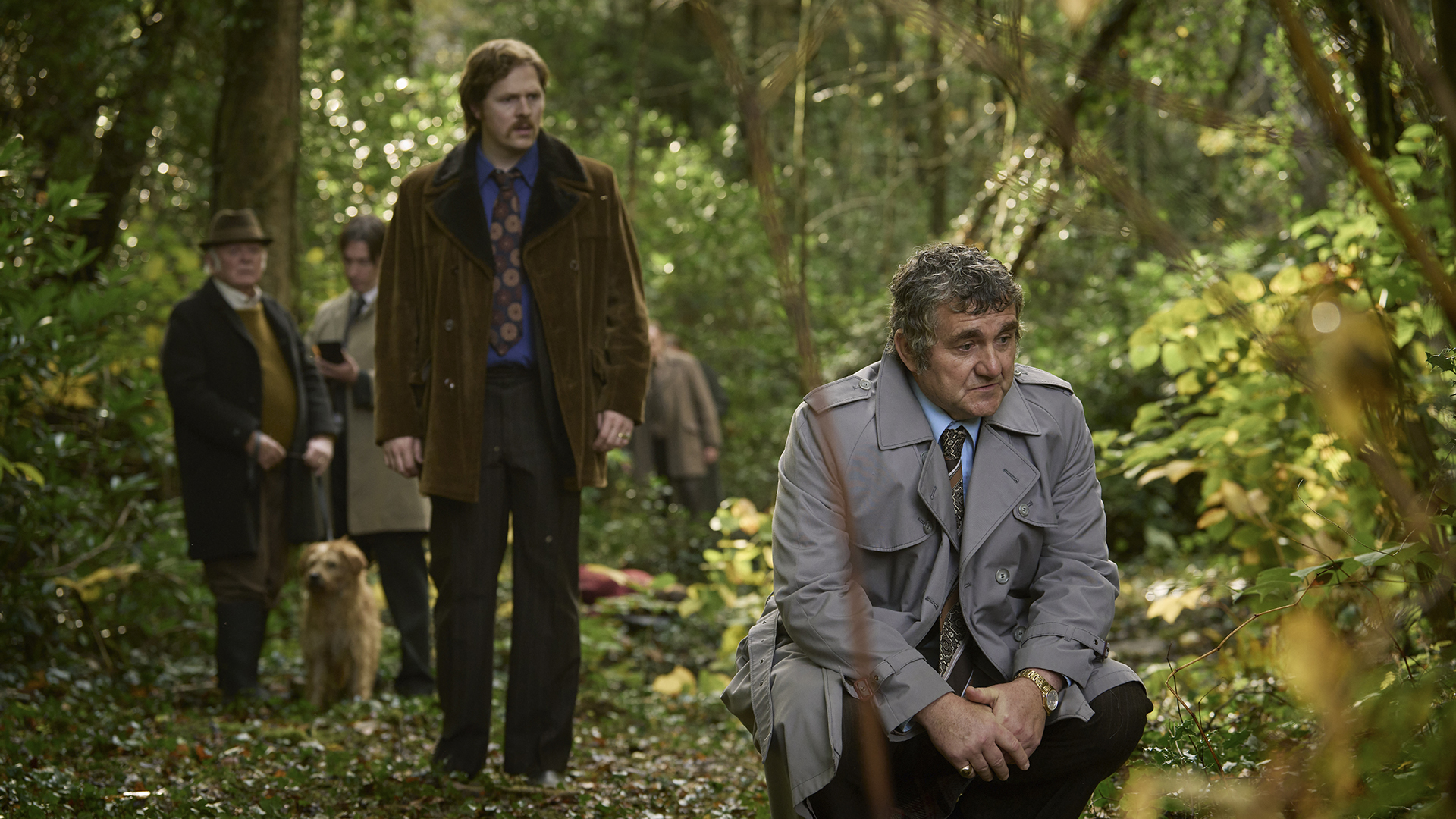
BBC crime drama Steeltown Murders takes viewers deep into a haunting Welsh murder investigation, where detectives are forced to confront crimes whose consequences stretch across generations. Rather than presenting a conventional mystery confined to one moment in time, the series explores how advances in investigation can suddenly reopen doors that once appeared permanently closed.
Created and written by Ed Whitmore, Steeltown Murders unfolds across two different periods, connecting the original investigation into the killings of three young women in the Port Talbot area with a renewed effort decades later to identify the person responsible.
At the center of the later investigation is DCI Paul Bethell, played by Philip Glenister, familiar to many viewers from Life on Mars. Alongside him, Steffan Rhodri takes on the role of Phil “Bach” Rees as investigators revisit evidence from crimes that had haunted the community for years.
The story begins with events surrounding the murders of three young women — Geraldine Hughes, Pauline Floyd and Sandra Newton — in South Wales in 1973.
For investigators working at the time, the case presents an agonizing challenge. Leads are pursued and suspects examined, but the technology available to modern detectives simply does not exist yet. Answers remain frustratingly out of reach.
Then the story moves forward.
Nearly three decades later, developments in forensic science give investigators an opportunity that the original detectives never had. Evidence that once appeared to offer little hope can now be examined in entirely new ways.
That is where Steeltown Murders becomes particularly compelling.
The series is not simply asking who committed the crimes. It also examines what happens when investigators return to a case after years have passed, memories have changed and families have spent decades living without complete answers.
Every piece of old evidence suddenly matters again.
Witness statements can be reconsidered. Earlier assumptions can be challenged. Connections that once seemed insignificant can take on new importance when viewed through the possibilities offered by modern forensic techniques.
The Welsh landscape adds another layer to the drama. Industrial communities, isolated roads and the surrounding countryside create a stark atmosphere as the investigation moves between past and present.
But underneath the procedural mystery is something more human.
For the families affected, decades are not simply a gap in an investigation. They represent years of waiting for an answer that once seemed impossible to obtain. For the detectives, reopening the case means confronting the limitations of the original investigation while searching for the evidence that could finally bring clarity.
The result is a crime drama driven less by sensational twists than by persistence, memory and the evolution of forensic investigation.
Steeltown Murders also draws its power from the knowledge that the drama is inspired by a real investigation. That connection gives the story additional weight as the series explores how detectives eventually used advances in forensic science to revisit crimes committed decades earlier.
It becomes a mystery about time itself: how evidence can survive, how technology can transform an apparently cold case, and how something overlooked in one era can become crucial in another.
For viewers who enjoy British crime dramas built around atmospheric locations, painstaking detective work and mysteries rooted in the past, Steeltown Murders offers a particularly haunting variation on the genre.
Because sometimes the most important clue is not newly discovered.
Sometimes it has been waiting in the evidence for decades — until investigators finally have the technology to understand what it means.