DISNEY+ WARNING: DO NOT PRESS PLAY AT 10 PM — STEPHEN GRAHAM’S BRUTAL BRITISH CRIME DRAMA HAS TWO SEASONS, A 90% ROTTEN TOMATOES SCORE, AND ENOUGH BETRAYAL TO KEEP YOU WATCHING UNTIL 6 AM!

🚨 DISNEY+ WARNING: DO NOT PRESS PLAY AT 10 PM — STEPHEN GRAHAM’S BRUTAL BRITISH CRIME DRAMA HAS TWO SEASONS, A 90% ROTTEN TOMATOES SCORE, AND ENOUGH BETRAYAL TO KEEP YOU WATCHING UNTIL 6 AM!
A THOUSAND BLOWS REVIEW: STEPHEN GRAHAM DELIVERS A BRUTAL, HEARTBREAKING PERFORMANCE IN A VICTORIAN CRIME DRAMA THAT DESERVES FAR MORE ATTENTION
TV REVIEW | A Thousand Blows (2025–) • Historical Crime Drama • Boxing • Disney+

There are television dramas that entertain, dramas that shock, and dramas that stay with audiences long after the final credits. Then there is A Thousand Blows, a fiercely atmospheric British period series that combines bare-knuckle boxing, organised crime, dangerous ambition and devastating personal rivalries into something remarkably compelling.
At its centre stands Stephen Graham, one of Britain’s most consistently powerful screen performers, delivering another extraordinary portrayal of a deeply flawed man whose physical strength conceals an increasingly fragile emotional world.
Created by Steven Knight, the mind behind Peaky Blinders, the drama transports viewers into the unforgiving streets of 1880s London, where survival depends on knowing when to fight, when to run, and whom never to trust.
But this is far more than another story about men throwing punches.
It is a tale of class, race, power, loyalty and the desperate lengths people will go to when they believe the world has left them with nothing.
And while its boxing sequences deliver plenty of visceral excitement, the real brilliance lies in what happens when the fighting stops.
A brutal journey into the forgotten streets of Victorian London
The story begins with Hezekiah Moscow, played by Malachi Kirby, a young Jamaican immigrant arriving in London alongside his friend Alec Munroe, portrayed by Francis Lovehall.
They enter a city that promises opportunity but offers little protection to outsiders.
Victorian London is presented not as the elegant world of grand drawing rooms and fashionable society, but as a harsh landscape of crowded streets, smoky drinking establishments, exploitation and dangerous underground enterprises.
Hezekiah possesses an extraordinary natural talent for boxing. Yet his ability becomes both his greatest opportunity and his most dangerous burden.
His arrival brings him into the orbit of Henry “Sugar” Goodson, played by Graham, a formidable veteran of London’s illegal fighting scene.
Sugar is no ordinary opponent.
He is a man whose reputation has been forged through violence, intimidation and years of surviving in a world where weakness is punished immediately.
For Sugar, boxing is not simply a profession. It is his identity, his source of status and perhaps the only thing preventing his life from collapsing entirely.
When Hezekiah’s rising talent threatens that position, the stage is set for a rivalry that reaches far beyond the boxing ring.
Stephen Graham gives Sugar Goodson a terrifying humanity
Graham’s performance is arguably one of the show’s greatest achievements.
His Sugar Goodson is intimidating from the moment he appears. His imposing physical presence, explosive temper and fiercely territorial behaviour establish him as a man who has learned to dominate through fear.
But Graham refuses to play him as a straightforward villain.
Behind the aggression is a complicated figure wrestling with insecurity, wounded pride and the terrifying possibility that his best days are behind him.
The brilliance of the performance is often found in the smallest moments.
A tightening jaw. A prolonged stare. A sudden silence where another actor might have chosen to shout.
Graham makes Sugar feel dangerous even when he is doing absolutely nothing.
And when the character’s emotional defences begin to fracture, the result is unexpectedly affecting.
The series understands that men who build their identities around violence may be least equipped to confront their own vulnerability.
Graham brings that contradiction to life with remarkable precision.
His performance is not about making Sugar likeable. It is about making him understandable without excusing his cruelty.
That distinction is what elevates the character beyond the familiar stereotype of the ageing, brutal fighter.
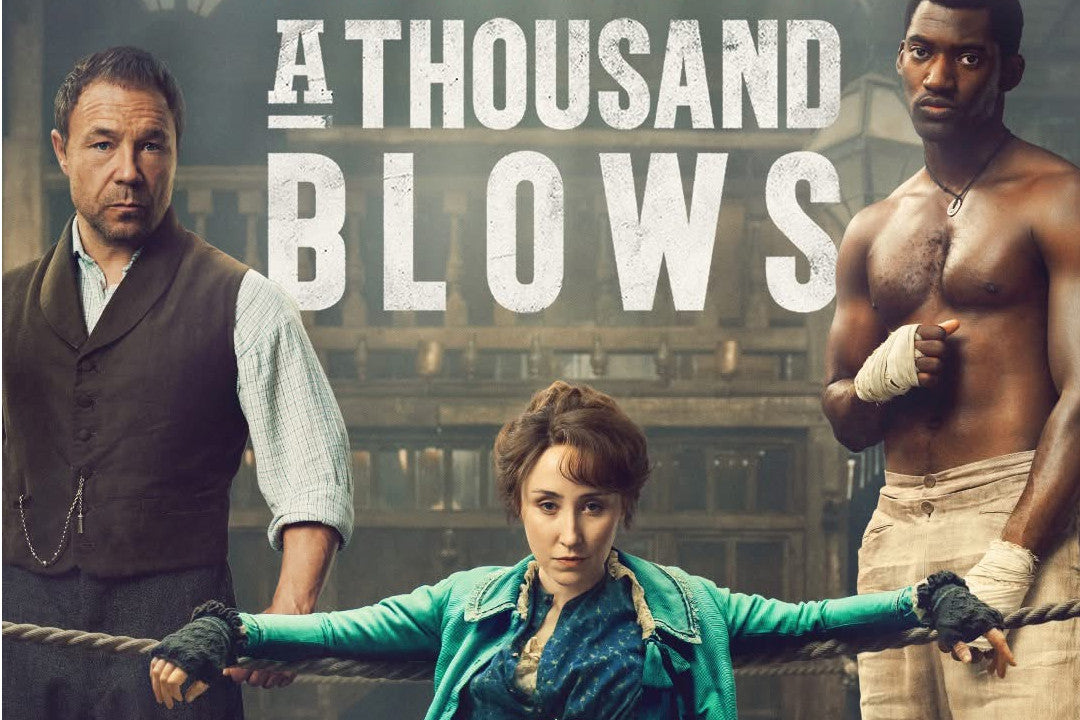
Malachi Kirby is the revelation at the heart of the story
Although Graham’s name may initially attract viewers, Kirby ensures that Hezekiah Moscow becomes equally compelling.
Hezekiah enters the story with determination, intelligence and an understandable belief that his abilities might offer him a better future.
But London quickly teaches him that talent alone is rarely enough.
Kirby captures the character’s transformation with impressive subtlety.
His early optimism gradually gives way to a more guarded understanding of the society surrounding him.
Every opportunity seems to carry a hidden cost.
Every apparent ally may have an agenda.
And every victory threatens to draw him further into a world he never intended to enter.
What makes Hezekiah particularly interesting is that his journey is not simply about becoming a stronger boxer.
It is about preserving his sense of self while navigating a system determined to define his worth according to his usefulness to others.
His rivalry with Sugar therefore becomes a collision between two different forms of survival.
One man is fighting to establish a future.
The other is fighting to prevent his past from becoming irrelevant.
That tension gives their encounters an emotional weight that makes the physical confrontations all the more gripping.
Erin Doherty brings intelligence, danger and irresistible energy
If the boxing rivalry provides the drama’s central conflict, Erin Doherty supplies another of its most fascinating dimensions.
She plays Mary Carr, a key figure in the notorious Forty Elephants, an all-female criminal gang operating in London’s underworld.
Mary is ambitious, calculating and determined to seize opportunities in a society that gives women limited legitimate access to power.
Doherty delivers a performance filled with confidence and restless energy.
Her Mary can be charming one moment and ruthlessly pragmatic the next.
She understands that survival requires more than courage. It demands strategy, timing and an ability to recognise weakness in others.
The inclusion of the Forty Elephants broadens the series beyond the boxing world, creating an interconnected portrait of criminal enterprise and social inequality.
Mary’s storyline is particularly effective because it refuses to treat the women as decorative additions to a predominantly masculine drama.
They have their own ambitions, conflicts and methods of exercising influence.
And Doherty makes Mary one of the most unpredictable figures in the entire series.
The boxing scenes are brutal, but the emotional battles hurt more
A drama centred on bare-knuckle fighting inevitably invites expectations of violence.
A Thousand Blows delivers that intensity.
Its boxing sequences are raw, physical and deliberately uncomfortable.
There is little glamour in the repeated impact of fists against flesh.
Instead, the fights emphasise exhaustion, desperation and the enormous physical price paid by men whose livelihoods depend on their ability to withstand punishment.
The production’s close attention to movement and bodily strain makes these confrontations feel consequential.
But the most important battles often happen outside the ring.
A conversation between rivals can be as tense as a fight.
A betrayal can inflict more lasting damage than a punch.
And a moment of wounded pride can set events in motion that no amount of physical strength can reverse.
This is where Steven Knight’s storytelling instincts become especially apparent.
As in Peaky Blinders, the violence is most effective when it emerges from relationships, ambition and competing loyalties rather than existing purely for spectacle.
The show understands that a fight is only as compelling as the emotional stakes behind it.
And in the conflict between Hezekiah and Sugar, those stakes become increasingly personal.
Season two raises the stakes — and reveals the damage beneath the violence
The second season, released on 9 January 2026, takes the story into considerably darker territory.
Picking up roughly a year after the devastating events of the first season, it finds its central characters struggling with grief, damaged reputations and the consequences of decisions they cannot undo.
Hezekiah is no longer the hopeful newcomer audiences first encountered. Sugar has fallen from his former position of dominance, while Mary is determined to rebuild her influence and reunite the Forty Elephants.
The emphasis shifts from establishing power to surviving its loss.
There is also a significant change in the balance of the storytelling. The second season features fewer boxing sequences and gives greater attention to criminal schemes, relationships and the psychological consequences of violence.
Explore Disney++1
For Graham, this provides a particularly rich opportunity.
His portrayal of Sugar becomes increasingly concerned with what happens to a man when the reputation that once protected him begins to disintegrate.
The character’s decline is uncomfortable to watch, not simply because of his circumstances, but because Graham makes his emotional desperation feel painfully convincing.
The series asks whether redemption is possible for someone whose life has been shaped by cruelty.
It does not offer easy answers.
Meanwhile, Mary’s increasingly ambitious criminal activities provide the drama with a different kind of momentum, while Hezekiah’s attempts to rebuild his future expose him to fresh dangers.
The result is a second chapter that is often more emotionally punishing than its predecessor.
Why critics have responded so strongly
The series has earned substantial critical recognition, with an overall 90% critics’ score on Rotten Tomatoes at the time of checking. Its first season holds 88%, while the second has reached 93%.
Rotten Tomatoes+1
Those numbers reflect the show’s considerable strengths: its vivid atmosphere, compelling performances and willingness to explore the darker corners of British history.
Yet the critical response has not been unanimous.
Some reviewers have praised the second season’s increased emotional intensity, while others have questioned its slower passages and the way certain storylines compete for attention.
rogerebert.com+2
Both perspectives have merit.
At times, the drama becomes so absorbed in its sprawling criminal world that the central rivalry loses some urgency.
Certain developments feel more elaborate than necessary, and the transitions between boxing, gang activity and personal tragedy can occasionally interrupt the narrative’s momentum.
The series also indulges in moments of heightened melodrama that may not appeal to viewers expecting restrained historical realism.
But these shortcomings rarely overwhelm its achievements.
The performances remain consistently absorbing, and the world of Victorian London is constructed with enough confidence to make even the quieter scenes compelling.
Most importantly, the series has something meaningful to say beneath its violence.
It examines how people pursue dignity in a society structured to deny it to them.
That gives its most spectacular confrontations a deeper purpose.
A visual world of smoke, sweat and dangerous ambition
One of the series’ most immediate pleasures is its production design.
Victorian London feels dirty, crowded and alive.
The streets are filled with smoke, the fighting establishments are oppressive, and the interiors reveal stark divisions between those who possess wealth and those forced to struggle for it.
Costumes are equally important in establishing the characters’ social positions.
Sugar’s imposing appearance reflects a man who relies on physical authority.
Hezekiah’s changing presentation mirrors his efforts to navigate unfamiliar social environments.
Mary’s clothing, meanwhile, becomes an extension of her determination to claim status and independence.
The visual contrast between East London’s criminal underworld and the privileged spaces of the wealthy is particularly effective.
It reminds audiences that the characters are not simply competing against one another.
They are confronting an entire social order.
And in this world, respectability is often a luxury reserved for people who can afford it.
The true history behind the drama
Part of the fascination of A Thousand Blows lies in its relationship with real history.
The series draws inspiration from historical figures and the world of Victorian prizefighting, including the notorious Forty Elephants criminal gang.
However, it should not be mistaken for a documentary.
Steven Knight uses historical material as the foundation for a fictionalised narrative, combining real people and circumstances with invented relationships and dramatic events.
The second season, in particular, continues this blend of fact and fiction.
nme.com+1
This creative approach allows the drama to explore aspects of Victorian society that conventional costume productions often overlook.
The experiences of immigrants, the limited opportunities available to working-class women, and the exploitation surrounding illegal sporting enterprises all become central to the storytelling.
The series is therefore most effective when understood as historical fiction rather than a precise reconstruction of events.
Its greatest achievement is not that it reproduces every detail of the past.
It is that it makes the inequalities and ambitions of that world feel immediate and recognisable.
Is A Thousand Blows worth watching?
Absolutely — particularly for audiences who enjoy character-driven crime dramas with strong performances and a distinctive historical setting.
Fans of Peaky Blinders will recognise Steven Knight’s fascination with outsiders, criminal empires and the complicated relationship between violence and social mobility.
But A Thousand Blows has its own identity.
Its boxing world gives the drama a raw physical intensity, while the inclusion of the Forty Elephants creates an intriguing counterbalance to the masculine rivalries.
Kirby provides the emotional centre, Doherty brings extraordinary charisma, and Graham supplies the combustible energy that makes the series so difficult to ignore.
The second season is darker and occasionally less focused than the first, but its willingness to explore defeat, regret and possible redemption makes it a worthwhile continuation.
Both seasons are available on Disney+ in the UK, with Hulu carrying the series in the United States.
Explore Disney++1
Final verdict: A knockout performance in a drama with real emotional power
4.5/5
Editorial review rating
A Thousand Blows is an ambitious, visually striking and frequently heartbreaking drama that deserves recognition for much more than its boxing scenes.
It is a story about people who have been pushed to society’s margins, fighting desperately to create lives that offer something beyond mere survival.
Graham’s Sugar Goodson embodies the series’ central tragedy: a man who has spent his life learning how to hurt others but has never discovered how to heal himself.
Kirby’s Hezekiah represents the possibility of change, even as ambition exposes him to increasingly devastating consequences.
And Doherty’s Mary demonstrates that intelligence, determination and courage can be just as dangerous as physical force.
Together, they create a compelling portrait of a society where every opportunity comes at a price.
The drama may occasionally stumble beneath the weight of its ambitions, but when it finds its rhythm, it delivers television of remarkable intensity.
For viewers searching for a gripping British series filled with betrayal, rivalry, extraordinary performances and unexpected emotional depth, A Thousand Blows is well worth stepping into the ring for.
Because in this unforgiving world, the most devastating blows are not always the ones delivered with a fist.