
Shock Omission: Why Federico Chiesa Was Left Off Liverpool’s Trip To Istanbul — A Deep Tactical Dive and What It Means For Arne Slot’s Reds
Shock Omission: Why Federico Chiesa Was Left Off Liverpool’s Trip To Istanbul — A Deep Tactical Dive and What It Means For Arne Slot’s Reds
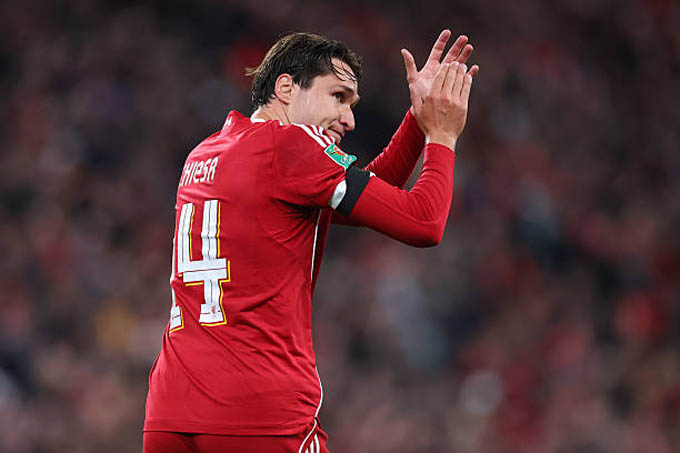
When Liverpool announced a 21-man travelling party for Tuesday night’s Champions League trip to Galatasaray, one name leaping out from the list of absentees was Federico Chiesa — the Italy international who had only just been registered for European competition following Giovanni Leoni’s season-ending ACL injury. Club sources stressed the omission was not injury-related and there was no registration paperwork problem. That made Chiesa’s exclusion immediately combustible: why sign a player to the Champions League squad only to leave him at home when your team flies to one of the most hostile venues in Europe?
This article unpacks the options and the footballing logic behind Arne Slot’s controversial call. We’ll analyse tactical fit, squad management, possible “hidden-card” strategies, and the short- and medium-term implications for Chiesa, for Liverpool’s game against Galatasaray — and for Slot’s season-long project.
The facts – what we know
-
Federico Chiesa was added to Liverpool’s Champions League list after Giovanni Leoni suffered an ACL tear.
-
Liverpool announced a compact 21-man travelling squad to Istanbul — meaning just 10 substitutes.
-
Club communication has ruled out injury or registration issues as the cause of Chiesa’s absence.
-
Alexander Isak and Alexis Mac Allister, still working back to fitness, travelled; Hugo Ekitike also travelled as he returns from suspension.
With those constraints in mind, the omission must be read as a deliberate coaching decision rather than an administrative accident.
Chiesa: expectations vs reality
Chiesa arrived at Anfield with pedigree and a reputation: electric dribbler, direct runner, capable of creating chaos down either flank and of producing moments of individual brilliance. He is the sort of player Liverpool supporters would normally welcome as an injection of unpredictability — the very quality you want on European nights.
But football is not just about flashes of talent. It’s a system of interlocking responsibilities. Early signs at Liverpool suggest Chiesa’s strengths — one-on-one skills, direct running off the shoulder of defenders — may not map perfectly onto Arne Slot’s pressing, positional, and structure-heavy model. Slot demands disciplined movement from his wide players: tracking wing-back transitions, sitting in compact blocks when defending, and sustaining positional rotations that look effortless when executed well but can disintegrate if one piece behaves like a free agent.
Put simply: a player can be outstanding in isolation and still be a tactical mismatch.
Theory A — Slot is protecting a tactical plan (the “hide the card” theory)
One plausible, and high-savvy, explanation is that Slot is hiding a tactical card.
-
Champions League fixtures come thick and fast, and Slot might prefer to keep fresh, unpredictable options in reserve for later group games or knockout ties. By leaving Chiesa behind, Liverpool deprives opponents and media of valuable viewing time to study his interplay with Salah/Isak or how he links with the midfield.
-
Alternatively, Slot could want to preserve Chiesa for Premier League priorities — he may see Chiesa as crucial against specific domestic opponents and wants to avoid burning him on a trip where the tactical setup will be less conducive to his strengths.
This “poker” gambit works only if you can trust the rest of your squad to deliver. Given Liverpool’s precariousness at times this season (set–piece fragility, late-game concentration lapses), it’s a high-risk decision to travel without an extra creative winger.
Sensational side note: if Slot was concealing Chiesa purely as a tactical surprise, he’s playing a high-stakes game of bluff — and bluffing against Galatasaray’s home atmosphere in front of 50,000+ fans would be a bold (some would say reckless) move.
Theory B — Tactical mismatch: Chiesa the stylist vs Slot the system coach
The more prosaic — and in many ways likelier — explanation is fit.
Arne Slot’s Liverpool, as it has evolved, requires wide attackers who do more than punish defenders one-on-one. They must:
-
Fold into midfield channels when the team loses the ball to protect against counters.
-
Provide intermittent width while also offering short passing combinations with the full-backs and inside midfielders.
-
Help defend set-piece assignments and second-phase situations — something Liverpool have struggled with.
Chiesa’s game, historically, benefits most when he has space to run in behind and when his team can feed him the ball between the lines. Against a compact, tactically disciplined team — which Galatasaray will almost certainly be at home — those spaces are rarer. If Slot anticipates a tight, low block where Chiesa’s directness would be less dangerous and possibly even harmful to Liverpool’s shape (forwards running off the line and pulling wide channels open instead of staying compact), leaving him behind could be an intelligible tactical choice.
Add to that the fact Liverpool are still integrating new forwards. Slot may prefer to double down on structure and defensive balance (e.g., fielding Ekitike/Isak up top with Salah or using Gakpo’s physicality and defensive work rate) rather than electing for a mercurial dribbler who could leave the team exposed.
Theory C — Training form, integration and internal competition
Football coaches judge players daily in training. It’s feasible that Chiesa’s recent sessions did not convince the coaching staff that he offered more in this specific game than the alternatives. A few points to consider:
-
Timing: Chiesa was a late addition to the Champions League squad. He has had limited sessions under Slot in competitive contexts. Coaches are often conservative with late signings.
-
Chemistry: By contrast, other forwards such as Ekitike, Salah, Isak, and Gakpo have a proven understanding with the midfielders or with Slot’s defensive expectations.
-
Tactical discipline: If Chiesa’s defensive output in training was below par — e.g., failing to tuck in or to press triggers — Slot could simply have judged the risk unacceptable for an away European night.
This is the “hard-nosed coach” case: selection based on who Slot trusts most to execute the plan, not necessarily on raw talent.
Who will fill the Chiesa void? Examining replacement options
With Chiesa absent, Slot’s options to provide width, pace and offensive impetus are limited but not barren. Here are the chief candidates and the tactical implications of each:
1. Hugo Ekitike (likely starter) — a power vs pace trade
Ekitike’s inclusion in the travelling squad after suspension signals Slot’s intent to field a forward who can occupy central defenders physically and create disruption in box channels. If Ekitike starts ahead of Isak, expect Liverpool to opt for greater aerial threat and second-phase scoring — useful if Galatasaray invite crosses or set-piece battles.
Tactical consequence: less inverted wing play from wide attackers; more direct balls into the box and opportunities from knockdowns.
2. Cody Gakpo — return of the wide workhorse
Gakpo offers industrious running, crosses from the byline and willingness to defend. Unlike Chiesa, Gakpo’s game includes consistent defensive covering and overlap with Robertson or Kerkez.
Tactical consequence: more reliable defensive balance on the flanks; reduced risk of isolation in tight spaces.
3. Mohamed Salah — the natural outlet
If Slot retains Salah on the right, much of Liverpool’s width and finishing tone will come through him. He provides the directness that Chiesa might have offered but with far more end product and reliability in big games.
Tactical consequence: Liverpool becomes even more Salah-centric; opponents may load the left to try to stifle him.
4. Florian Wirtz central with inverted wide runs
Slot could ask Wirtz to occupy the central creative role while pushing wide players to stretch Galatasaray. Wirtz’s influence can compensate for Chiesa’s creative absence in the half spaces.
Tactical consequence: Liverpool becomes more possession-based through midfield rather than relying on isolated wing bursts.
5. Jeremie Frimpong or Szoboszlai at wing-back/right back
Frimpong’s inclusion among defenders indicates he could be deployed in a more advanced role when attacking. Szoboszlai at right back is an unconventional but feasible ploy if Slot seeks to overload midfield zones when in possession.
Tactical consequence: unconventional right-side structure that could surprise Galatasaray but risks exposing defensive gaps.
A plausible XI (Slot’s likely hand for Istanbul)
Based on the squad list and the tactical threads above, a workable prediction:
Formation: 4-3-3 (or 4-2-3-1 variant)
-
GK: Alisson
-
RB: Conor Bradley (or Szoboszlai rotated to RB)
-
CBs: Virgil van Dijk, Ibrahima Konaté (or Gomez depending on fitness)
-
LB: Andy Robertson (or Milos Kerkez)
-
Midfield double / triple: Ryan Gravenberch, Szoboszlai (if not RB), Wataru Endō (for balance)
-
Attacking line: Mohamed Salah (RW), Hugo Ekitike (CF), Cody Gakpo (LW)
Bench (10 subs): Mamardashvili, Woodman, Frimpong, Gomez, Jones, Mac Allister, Isak, Ngumoha, possibly Wirtz.
This XI prioritises defensive balance, second-phase aerial threat in Ekitike, and Salah as the principal goal generator.
How Galatasaray will test Liverpool — and why Chiesa might have helped
Galatasaray at home are noisy, aggressive, and adept at forcing high-tempo turnovers. Their tactical approach — compact defence, quick wide counters — punishes teams that overcommit. The Turkish side often refuses to sit too deep; instead they press zoneally and tempt visitors into playing risky forward passes.
Key threats Liverpool must neutralise:
-
Wide overloads from Galatasaray’s wingbacks that can isolate Liverpool’s fullbacks.
-
Second balls and set pieces — Turkey’s home teams excel at chaotic, late-phase scoring.
-
Emotional intensity — the crowd will aim to unnerve visiting players.
Had Chiesa travelled, his ability to run in behind and to drag defenders wide could have stretched Galatasaray’s compact blocks, creating pockets for Wirtz or Szoboszlai to exploit. Without him, Liverpool may struggle to find that intelligent drag-and-run movement that opens up spaces in low blocks. So the caution of leaving Chiesa behind could cost Liverpool in terms of unpredictability and vertical penetration.
The gamble: tactical prudence or missed opportunity?
This is the core fault line in the debate.
-
If Slot is right: Liverpool will move as a compact, disciplined unit, smother Galatasaray’s counters, and exploit moments on the break or via set-pieces. The decision to omit Chiesa preserves balance and reduces the risk of being punished for structural lapses. A cautious road plan that wins a point or three in Istanbul would vindicate Slot.
-
If Slot is wrong: Liverpool will be predictable, overreliant on Salah and aerial encounters, and unable to break down a stubborn home block. In that scenario, Chiesa’s absence will be a glaring missed tactical tool — a creative spark Liverpool sorely needed when chances are at a premium.
Either way, Slot’s decision is not safe football; it is a calculated strategic bet.
What the omission means for Chiesa’s short- and mid-term future
Being left at home is rarely good for a player’s confidence — especially one who only recently joined and will be scrutinised by both supporters and pundits. Three possible trajectories are realistic:
-
Short-term bench / future starter: Chiesa accepts the rotation, works privately on tactical discipline, and reintegrates slowly — becoming a rotation weapon against teams that leave space. Slot then uses him in targeted fixtures where his directness is decisive.
-
Squad friction: If Chiesa interprets the omission as a snub, his morale could dip. That can curdle into public tension if he voices frustration, potentially accelerating a sale or loan in January.
-
Tactical conversion: Chiesa could be retrained to fit Slot’s needs — more pressing triggers, defensive covering, and positional refinement. If successful, he becomes a more complete component in Slot’s system.
Most plausible is option 1: Slot will prefer to bring Chiesa into the fold when the tactical circumstances justify his presence. But every week he’s not involved is an opportunity cost for both player and club.
Bigger picture: does this define Slot’s tenure?
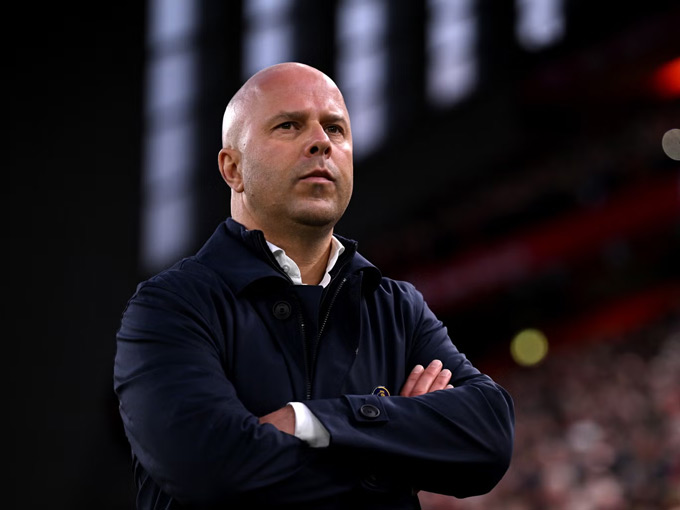
Arne Slot is building a team identity — structured, intense, and defensively disciplined. Leaving a high-maintenance, high-impact player out of a European trip may be a statement: collective principles trump individual stardust. If Slot’s approach consistently produces results, the method will be vindicated. If it backfires in Istanbul or in the run of the Champions League group stage, critics will accuse him of risk aversion and of mismanaging star power.
This decision will be a yardstick for Slot’s willingness to prioritise system over superstar — and the outcome in Turkey could be the first major test of that philosophy.
Final tactical verdict and match prediction
Liverpool’s XI sans Chiesa looks safer on paper, sturdier in set-piece defence, and more reliable in pressing triggers. But it lacks the one-off, free-agent creativity Chiesa affords. Against Galatasaray’s passionate crowd and industrious, low-block approach, the match will likely be decided by:
-
how quickly Liverpool can adapt to in-game dynamics,
-
whether their full-backs can avoid being isolated, and
-
whether Salah or Ekitike can produce moments of finishing brilliance.
Prediction: a tight, cagey encounter. If Liverpool control the midfield and minimise turnovers, they edge it (2–1 or 1–0). If Galatasaray intimidates early and forces Liverpool into profligate passes, the Reds risk dropping points. Chiesa’s absence increases the probability that Liverpool will need a late individual moment to secure victory.
Verdict: a calculated risk with high stakes
Arne Slot has made a choice that reveals his coaching priorities: structure, reliability, and balance. Leaving Federico Chiesa behind may be a defensible tactical call — but it is also an admission that Liverpool currently values system continuity over explosive, potentially destabilising individual ability on the road.
If the gamble pays off in Istanbul, Slot will be hailed as a master tactician who put team before headline signings. If it fails, the omission will be remembered as the moment Slot let conservatism cost creativity — and as the day a freshly-signed attacker’s season took an early wrong turn.
Either way, one thing is certain: Chiesa’s future at Anfield will be watched far more closely from here on. The next fortnight will tell us whether this is a brief, chess-like manoeuvre — or the first crack in a relationship that was supposed to add a new dimension to Liverpool’s attack.