When Memory Fades, Loyalty Remains
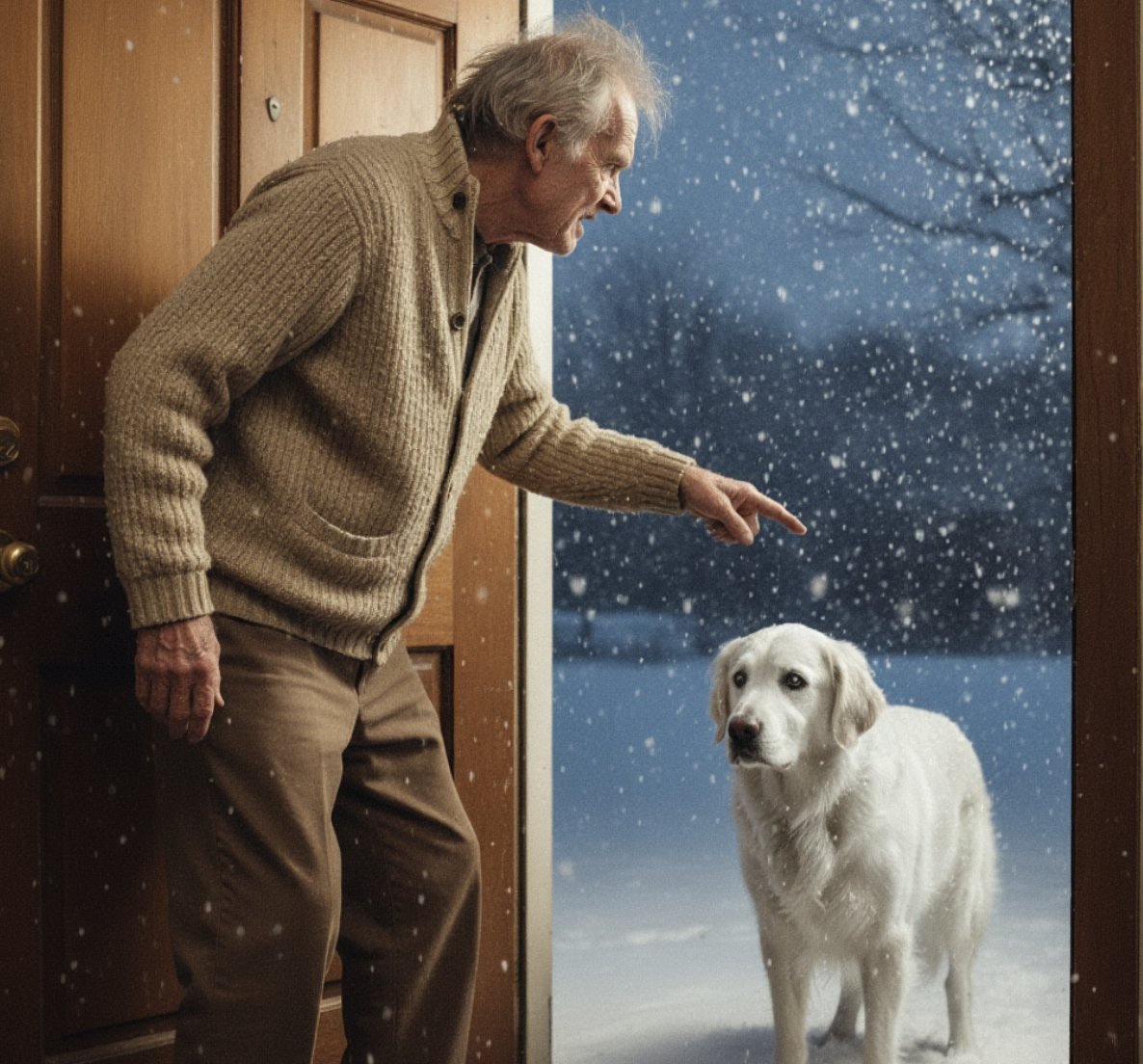
I shoved the old dog out the front door and into the blinding snow. He didn’t growl. He just looked at me with wet, confused eyes, limped off the porch, and sat down in the drift.
I slammed the door and locked the deadbolt.
“Finally,” I muttered, brushing the golden hair off my trousers. “Eleanor hates a mess.”
I checked my watch. 4:15 PM. Eleanor would be back from the grocery store any minute. She only went to pick up steaks for the grill. It’s Friday, 1985. Fridays are for steaks, a six-pack of cold domestic beer, and listening to the ballgame on the radio.
I looked around the living room. It felt… older than I remembered. The wallpaper was peeling a bit in the corner, and the carpet was worn down. I’d have to fix that this weekend. A man’s home is his castle, and I’ve worked forty years at the plant to keep this castle standing.
I went to the window to watch for her station wagon. The snow was coming down hard now, a real Nor’easter.
My reflection in the glass startled me. The man staring back wasn’t the 45-year-old foreman with thick dark hair. He was gray. Withered. His skin looked like crumpled paper.
“Bad lighting,” I grunted, turning away.
I sat in my recliner—the leather was cracked, split open like a dried riverbed—and waited. The house was too quiet. Usually, the kids would be running around, or the TV would be blaring the evening news.
“Ellie?” I called out.
Silence. Just the wind howling against the siding.
I felt a sudden surge of irritation. Where was that dog? The one I just kicked out. It had been looking at me all afternoon, following me from room to room with that slow, clicking walk. Click, click, click on the hardwood. It drove me crazy. I don’t own a dog. Never did. Eleanor is allergic. Or was she?
I couldn’t remember.
I stood up to pace. That’s when I saw it.
On the side table, right next to my empty coaster, was a thick, leather-bound notebook. It looked out of place, like something sacred left in a waiting room. A piece of blue painter’s tape was stuck to the cover with bold marker writing: READ ME WHEN YOU’RE CONFUSED.
I frowned. I wasn’t confused. I was just waiting for my wife.
But my hands trembled as I reached for it. I opened to the first page. The handwriting was unmistakable. Elegant loops, strong pressure. Eleanor’s hand.
My dearest Arthur,
If you are reading this, you are having a “foggy day.” It’s okay. Take a deep breath. You are safe. You are in our home.
I need to tell you some things, because I can’t tell you in person anymore. I went to be with the Lord three years ago, Artie.
I stopped reading. My chest tightened, like a vise grip was crushing my ribs. No. That’s impossible. She was just at the store. I saw her leave… didn’t I?
I forced my eyes back to the page.
I know that hurts to read. I’m sorry. But you aren’t alone. I made sure of that.
Look around for Rusty. He’s a Golden Retriever mix. He’s twelve years old now. Do you remember the day we got him? It was ten years ago, after you retired. You said you didn’t want a dog. You said they were useless noise.
But then he sat on your foot and fell asleep, and you didn’t move for two hours because you didn’t want to wake him.
Rusty isn’t just a dog, Artie. He is your guardian. When my legs got too weak to walk, he laid his head on my lap for hours. He promised me—in that way dogs do—that he would watch over you when I couldn’t.
He has arthritis in his hips now, just like you have in your knees. He takes a pill with cheese every morning. He loves you more than anything on this earth. Please, be good to him. He’s the only one who remembers the good old days as well as we do.
Love, Your Ellie.
The book fell from my hands. It hit the floor with a heavy thud.
The silence of the house suddenly wasn’t peaceful. It was violent.
I looked at the front door.
The image of those eyes flashed in my mind. Milky with cataracts. Sad. Confused. He hadn’t fought me. He hadn’t barked. He accepted my cruelty because it came from me.
“Rusty,” I whispered.
I scrambled to the door, my own knees popping and protesting. I fumbled with the deadbolt, my fingers useless, numb blocks of ice.
“Come on, come on!” I yelled at the lock.
I threw the door open.
The storm was a white sheet. The wind bit my face, stinging like needles.
“Rusty!” I screamed into the void. “Boy! Here, boy!”
Nothing but the wind.
I looked down at the porch. The snow was piling up fast, covering the wood. But there, just off the edge of the steps, was a lump in the drift. A mound of gold being buried by the white.
He hadn’t left.
I didn’t put on a coat. I didn’t put on boots. I stepped out into the freezing slush in my slippers. The cold shot up my legs, shocking my system, bringing me back to a harsh, biting reality.
I fell to my knees beside him. He was curled into a tight ball, his nose tucked under his tail, shivering so hard it shook the snow off his back.
“Oh, buddy. Oh, God, I’m sorry,” I sobbed, scooping the snow away from him. “I’m so sorry.”
I wrapped my arms around his neck. He was wet and freezing.
Rusty lifted his head. He didn’t pull away. He didn’t hold a grudge. He licked the tears off my frozen cheek. His tail gave a weak, singular thump against the snow.
I tried to lift him, but I’m not the foreman anymore. I’m not the man who could lift transmission cases. I’m old.
“Come on, Rusty. We gotta help each other,” I grunted, hooking my arms under his belly.
He groaned, his stiff hips protesting, but he pushed with his back legs while I pulled. We were two broken machines, grinding gears, fighting the elements together.
We stumbled through the doorway, collapsing onto the entryway rug in a heap of wet fur and flannel.
I kicked the door shut and locked out the cold.
For a long time, we just lay there. The heat of the house slowly seeped back into our bones. I grabbed the throw blanket from the sofa—Eleanor’s favorite quilt—and draped it over him.
I went to the kitchen, found a slice of American cheese, and held it out. He took it gently, his teeth worn down but his gratitude sharp.
We sat by the heater vent. I stroked his head, feeling the familiar bump behind his ears. And suddenly, a memory—a real one—broke through the fog.
I remembered sitting on this same floor, ten years ago. Eleanor was in the chair, laughing as this dog, then a puppy, chewed on my shoelaces. The sun was shining. The radio was playing Springsteen. We were happy.
I looked at Rusty. He was watching me. Not with judgment, but with a patience that humans simply don’t possess.
They say memory is what makes us who we are. But they’re wrong. Memory is fragile; it breaks, it fades, it lies.
I don’t remember what I had for breakfast. I don’t remember the name of the President. Tomorrow, I might not remember that Eleanor is gone, and I might break my own heart all over again.
But as I looked at the old dog sleeping at my feet, guarding me from ghosts he couldn’t see, I realized something.
The mind forgets. The heart remembers.
And the soul? The soul just stays.
“You’re a good boy, Rusty,” I whispered into the quiet room. “You’re a good boy.”
He let out a long sigh, closed his eyes, and went back to his watch.
Author’s Note: We live in a culture that worships the “new”—new phones, new trends, new relationships. We discard things when they lose their shine or when they become difficult. But love isn’t about the shiny beginning. It’s about the rusty, weathered end. It’s about the ones who stay when the doors are locked against them. If you have an old dog, or an old person in your life, hold them close. They are the keepers of your history, even when they can’t read the pages anymore