What the Storm Left Me
The last week before I signed my farm away, my old Husky saved my life—and showed me what I was really meant to keep.
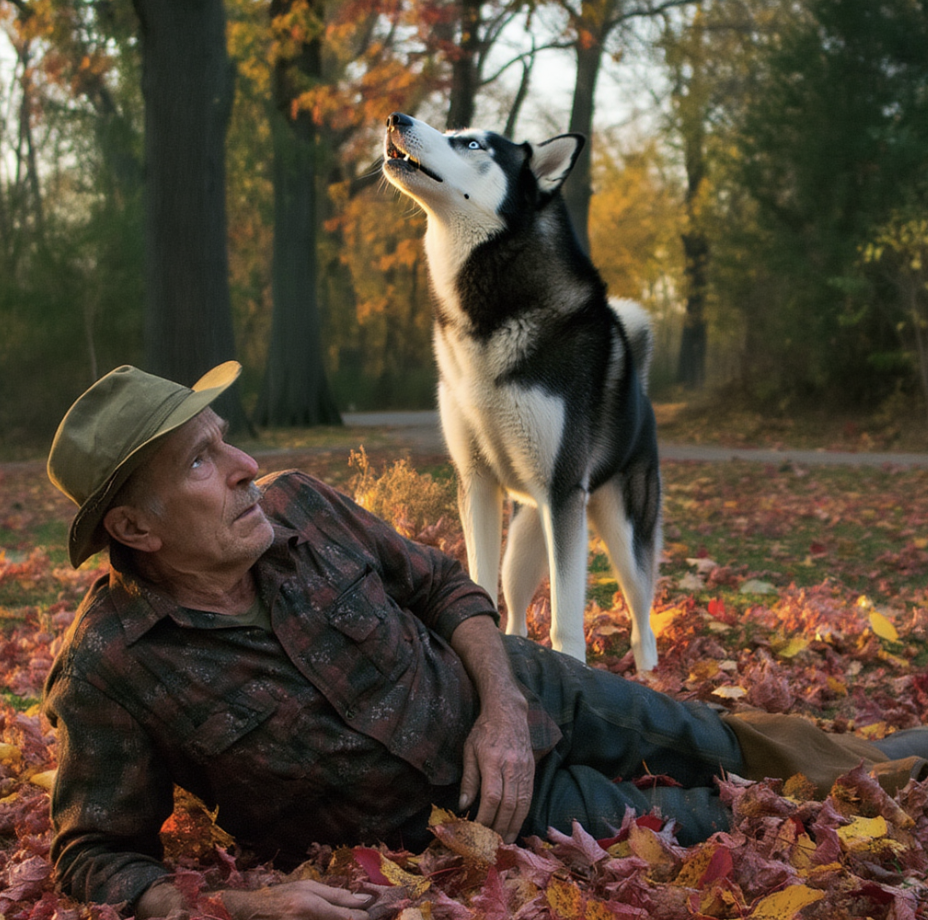
My name is Earl Whitaker, third generation on a slice of prairie that once felt wider than the sky itself. The land taught my bones the weather long before the radio did. My knees ache ahead of rain; my hands remember fence wire and coffee tins without looking. And every morning, padding down the steps behind me, comes the same sound—soft, deliberate thumps. That’s Koda. Thirteen years old. Blue eyes gone milky at the edges. Fur silvering around the muzzle like frost.
We used to run fence lines at dawn, Koda pulling ahead, tail high, singing that half-howl Huskies make when the world feels right. These days we make it only to the end of the porch. I tie my boots. He lowers himself beside me and rests his chin across my toe. We share the quiet: alfalfa in the air, cottonwoods whispering, meadowlarks somewhere beyond what I’ll soon no longer own.
My daughter Maya called from St. Louis.
“Dad, the offer’s good. You keep the house and a slice of pasture. Let the rest go. Let yourself rest.”
I didn’t answer right away. Just watched dust spin in a square of sunlight on the kitchen table, tracing an old coffee ring with my thumb. Koda nudged my wrist—his way of saying time keeps moving, whether you do or not.
That week, I walked the place like a soldier saying goodbye to his post. The fence paint chipped since Reagan. The barn leaning but unbroken. I took my son’s old baseball glove from its nail and pressed the leather until the shape of a small hand came back. I tossed a ball underhand. Koda lunged, slipped, and missed it. He stood there panting, embarrassed. I felt the same.
At church potluck, nobody asked before setting food near my plate. Around here, that’s how people tell you they see the hurt. Noah—the neighbor kid—fed Koda a crust. Koda accepted it politely, then leaned his old shoulder into Noah’s shin like a promise.
“You really selling?” Noah asked.
“I’m selling acres,” I said. “I’m keeping home.”
The words sounded brave. I practiced them later in my truck until they tasted true.
The night before the signing, the air went heavy. Wind rolled in mean and fast, the kind that peels tin off roofs. I went to lash the barn door. Koda followed, tail making a tired figure eight.
Lightning stitched the horizon. Thunder cracked so hard it knocked sense clean out of me. My boot slipped on a wet rung. I fell hard inside the loft, pain blooming white-hot through my hip.
“Koda,” I tried to say. It came out as air.
He answered with a single bark—low, intentional. Then another. I heard him shove the hatch open and disappear into the rain.
Time stretched. I drifted in and out, thinking about my father’s hands on a steering wheel, my wife humming to the radio in ’79, teaching Maya to throw a curveball. I thought about Koda’s weight against my leg on cold mornings.
Then light—flashlights. Voices.
“Mr. Whitaker!” Noah’s voice, breathless.
Koda stood beside him, soaked and shivering, but proud in that trembling way. He’d scratched at Noah’s door, then led him back, stopping every few steps to make sure the boy followed.
They hauled me out like a sack of feed. Hip bruised. Ribs sore. Pride dented. Alive.
Maya drove all night. Held my hand in the ER and didn’t say I told you so. We came home at dawn. The barn stood. The house stood. I stood—with help.
The buyer arrived later, folder under his arm, shoes too clean for gravel. I signed where the flags told me to, then stopped.
“One thing,” I said. “The back pasture by the apple tree stays with the house.”
He frowned. “It’s irregular.”
“So is age,” I said. “But the tree stays.”
He nodded. We shook hands.
That afternoon, Koda found his favorite patch of sun near the steps. He folded down slowly, head on my boot. His breathing thinned, then evened, then went soft in a way I knew. I kept my hand on his thick ruff.
“Good boy,” I whispered. “You got me home.”
We buried him by the apple tree, just inside the fence I didn’t sell. Noah carved KODA into barn wood. Maya tucked the old baseball glove beside the marker. We stood until the light turned honey-gold, making even endings feel like harvest.
That night, I left the porch light on. The house felt full—not of people, but of proof. Proof that land isn’t the only measure of a life. Proof that home is what you tend, layer by layer, love by love, until it outlasts you.
I sold land. I kept home. And now I know the difference.