The Ultimate Cliffhanger: The Hidden Inventory
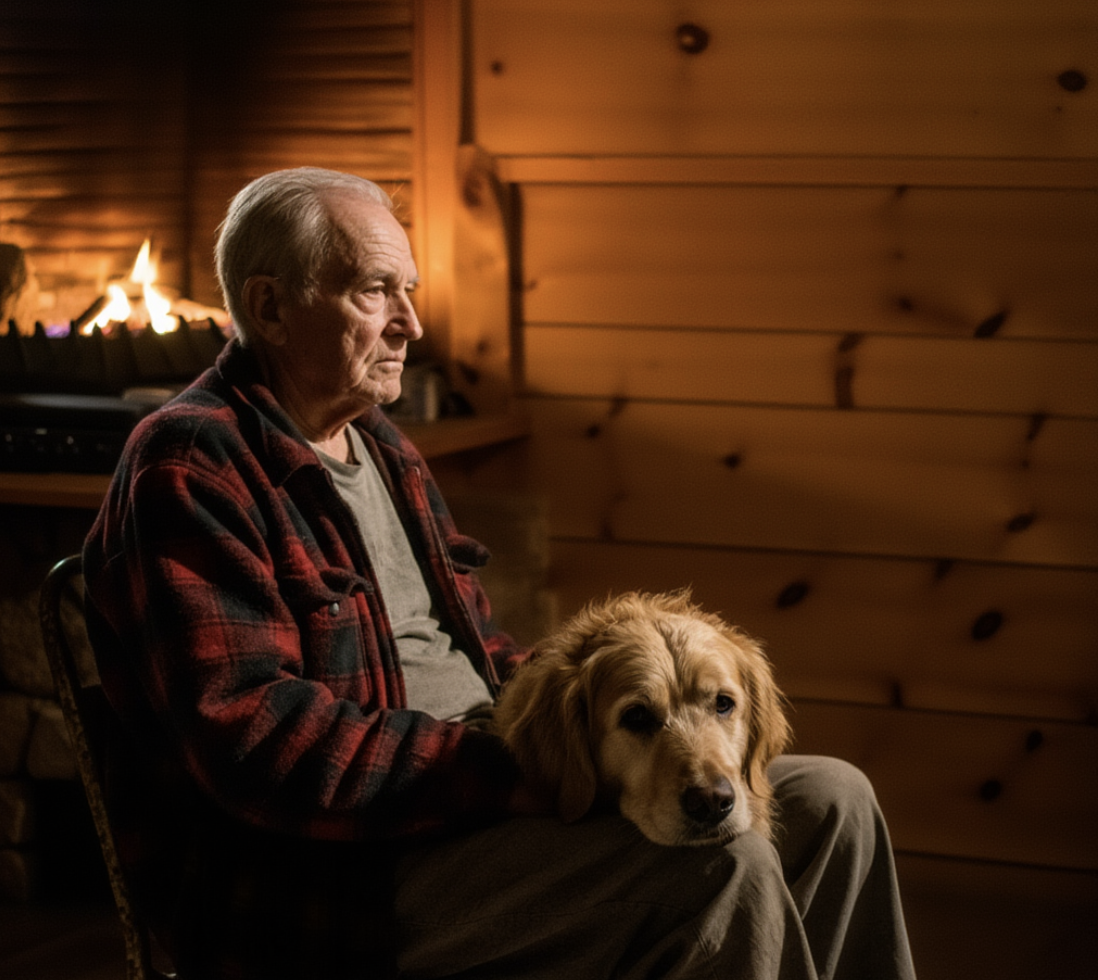
They found Earl dead in his armchair on a Tuesday, one hand on his chest, the other resting on Rusty’s cold collar. But it wasn’t the bodies that broke me—it was the leather book hidden under the register.
I’m the Sheriff of this dying town. I’ve seen bad wrecks and worse fights, but nothing prepared me for the last inventory of “Earl’s Stop.”
To understand the book, you have to understand the place. Earl’s Diner wasn’t retro; it was just old. The kind of place that smelled permanently of bacon grease, burnt coffee, and floor wax. The vinyl booths were cracked, taped over with duct tape that didn’t quite match the red. And then there was Rusty.
Rusty was a Golden Retriever who looked like a discarded rug. He was fourteen years old, mostly blind, with hips so bad you could hear them click when he walked. He spent 90% of his life sleeping on a braided rug near the door.
But Rusty had a talent. A sixth sense.
If a tourist came in just to use the bathroom and didn’t buy anything, Rusty wouldn’t lift an eyelid. If the Mayor came in for a photo op, Rusty would yawn.
But sometimes, the bell would ring, and Rusty’s ears would perk up. He’d heave his heavy body off the rug, nails clicking slowly on the linoleum, and walk to a specific booth. He wouldn’t beg for food. He would just slide his big, blocky head onto a stranger’s lap and let out a long, heavy sigh.
We regulars knew the rule: If Rusty chooses you, you’re in trouble. Not legal trouble. Heart trouble. Soul trouble.
I remember a rainy night back in November. A guy walked in wearing a suit that was two sizes too big and ten years out of style. He had a little girl with him, maybe six years old. She was clutching a dirty stuffed rabbit.
They sat in the corner booth. The man didn’t pick up the menu. He just counted coins on the table. Quarters, dimes, a few pennies.
“Just water, please,” he told the waitress. “And… do you have a kids’ menu? Just the smallest pancake.”
“Daddy, I want the burger,” the girl whispered.
“Not tonight, baby. Daddy’s not hungry,” he said, his voice tight. You could see the shame burning off him like steam. He looked like a man who had been told “no” by the world a thousand times that day.
That’s when I heard the click-click-click of claws.
Rusty made his way across the diner. He bypassed the table where the construction workers were dropping bacon scraps. He went straight to the man in the cheap suit.
Rusty nudged the man’s hand away from the pile of coins and shoved his wet nose into the guy’s palm. Then, he rested his chin on the man’s thigh and looked up with those cloudy, soulful eyes.
The man froze. He looked down at the dog, and his façade cracked. His shoulders slumped. He buried his hand in Rusty’s fur and just held on.
Earl watched from behind the counter. He was wiping a glass with a rag that was arguably dirtier than the glass. He didn’t say a word. He just tapped the order bell.
Ten minutes later, the waitress brought out two plates. The “Lumberjack Special.” Steaks, eggs, hash browns, toast. The works.
The man looked panicked. “I… I didn’t order this. I can’t pay for this.”
Earl walked over, pouring coffee into a mug. “You didn’t order it. The dog did.”
“Excuse me?”
“Rusty,” Earl said, pointing his spatula at the dog. “It’s his birthday. Tradition of the house. If he chooses to sit with you on his birthday, you gotta eat his celebration meal with him. He’s too old for steak, bad for his digestion. So you gotta eat it for him. Don’t be rude to the birthday boy.”
The man looked at Earl, then at the dog. “But… is it really his birthday?”
“Look at him,” Earl grunted. “Does that look like a dog who would lie?”
The man ate. He ate like he hadn’t seen food in two days. The little girl laughed as Rusty licked syrup off her fingers. When they left, the man tried to leave his pile of coins. Earl pushed them back. “Tip for the dog,” he said. “Get her some ice cream on the way home.”
I watched that scene play out a dozen times over the years. A crying teenager running away from home. A widow who had just come from the funeral home down the street. A veteran staring into his black coffee like it was a grenade crater.
Rusty would find them. Earl would feed them. “It’s the dog’s birthday,” he’d say. Or, “He won a bet, you’re eating the winnings.”
We all knew Earl was barely scraping by. The big chain restaurants off the highway were killing him. But he never stopped “celebrating the dog’s birthday.”
Then came last Tuesday.
Earl passed in his sleep. Rusty, loyal to the end, laid down beside him and just… stopped breathing, too. The vet said it happens sometimes. Broken heart syndrome.
As the executor of Earl’s estate, I had to go through the shop. The register was empty. I mean, dusty empty. I knew Earl died broke.
But then I found the ledger.
It was a thick, leather-bound accounting book hidden under the loose floorboard beneath the till. I thought it would be debts. I thought I’d find out how much money he owed the bank.
I opened the first page. It was dated fifteen years ago.
Entry 1:
Subject: Mrs. Higgins.
Rusty’s Action: Sat on her feet for an hour.
The Fix: Earl’s Meatloaf.
Cost: $12.50.
Payment Received: She smiled for the first time since Henry died.
I flipped through the pages. Thousands of entries.
Entry 402:
Subject: The kid with the guitar case.
Rusty’s Action: Howled until he petted him.
The Fix: Coffee, pie, bus ticket to Denver.
Cost: $45.00.
Payment Received: He called his mom from the payphone.
And the entry for the man in the cheap suit:
Entry 3,119:
Subject: Job interview guy (Jack).
Rusty’s Action: The Chin Rest.
The Fix: Two Lumberjacks.
Cost: $28.00.
Payment Received: Dignity.
The last entry was dated the day before they died.
Subject: Me (Earl).
Rusty’s Action: He won’t get up. He’s tired.
The Fix: Just sitting together.
Cost: Everything.
Payment Received: A life well spent.
I closed the book and sat on the floor of that empty diner and wept.
We think being rich is about what’s in the bank. We think “legacy” is having your name on a building. But Earl and Rusty taught me the truth.
Wealth isn’t what you save. It’s what you give away when you have nothing left to give.
I tracked down the man in the suit, Jack. It wasn’t hard; he’s a regional manager for a logistics company now. I sent him a photocopy of his page in the ledger.
He showed up at the funeral yesterday. He brought his daughter. She’s eighteen now, heading to college.
“They saved us,” Jack told me, standing over the double grave we dug under the oak tree. “I was ready to give up that night. I had a plan to… well, I didn’t see a way out. Then that dog put his head on my knee, and that old man gave me a steak, and I realized I wasn’t invisible.”
We buried the ledger with them.
In a world that is obsessed with “likes,” “shares,” and “net worth,” be like Earl. Keep your eyes open for the people who are hurting.
And if you can’t be like Earl, be like Rusty.
Sometimes, you don’t need to say a word. You just need to sit beside someone, let them know they aren’t alone, and help them get through the rain.