The Oak and The Ledger of Loss: The Final Carving
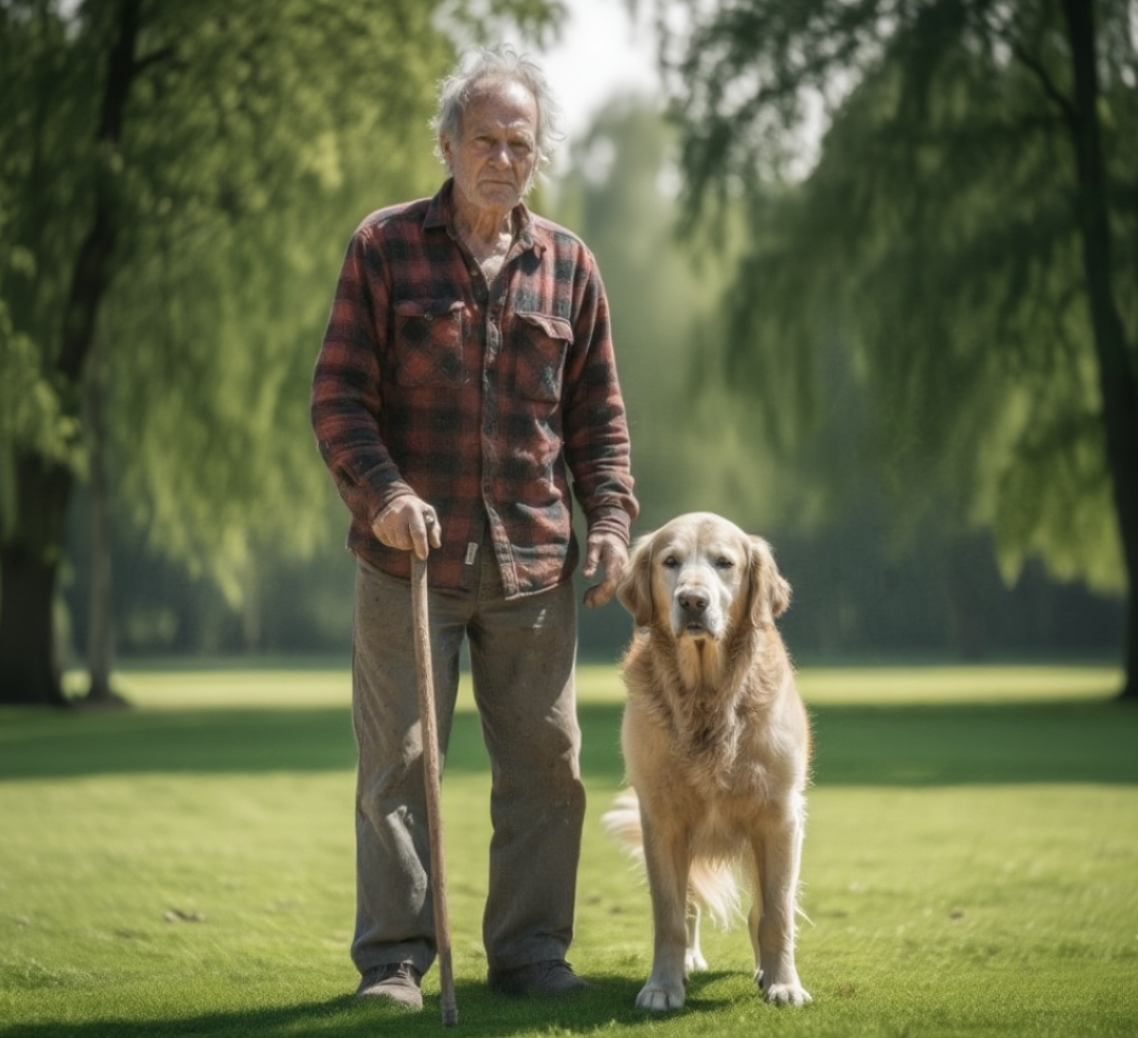
My name is Arthur, and I’m old enough to remember when this town ran on handshakes and hard work, not Wi-Fi signals and “user engagement.” I’ve lived here for seventy-five years. I’ve watched the hardware store become a vape shop and the local diner turn into a scan-to-order chain restaurant where nobody looks you in the eye.
But the Oak was still there.
It stood in the center of the town square, a massive, gnarled giant with branches that stretched out like the arms of a grandfather protecting his kin. That tree had seen soldiers kiss their sweethearts goodbye before shipping off to wars they wouldn’t return from. It had shielded homeless men from the rain and shaded first dates that turned into fifty-year marriages.
Including mine.
Then came the “Revitalization Committee.” A young man in a suit that cost more than my first car knocked on my door. He held a tablet, swiping through renderings of glass kiosks and solar-powered charging stations.
“The tree is a liability, Arthur,” he said, smiling a smile that didn’t reach his eyes. “It’s dropping limbs. The roots are cracking the pavement. We’re replacing it with a ‘Connectivity Hub.’ It’s cleaner. Safer. Efficient.”
“Efficient,” I repeated, tasting the word like sour milk. “You think you can replace a heartbeat with a hard drive?”
He didn’t get it. To him, the past was just data to be archived or deleted to free up space.
The morning the crews arrived, the air smelled of diesel and indifference. They put up orange plastic fencing. The chainsaw engines idled, a hungry, buzzing sound that made my stomach turn.
I didn’t bring a sign. I didn’t bring a megaphone. I brought Barnaby.
Barnaby is my fourteen-year-old Golden Retriever. His muzzle is white as snow, his eyes are cloudy with cataracts, and his hips are so bad I usually have to carry him down the porch steps. But that morning, he walked. He marched with a strange, desperate dignity, the leash slack in my hand.
We ducked under the orange tape before the foreman could stop us. I sat down on the exposed roots of the Oak, and Barnaby collapsed beside me, resting his heavy head on my knee.
“Sir, you need to move,” the young man in the suit shouted over the engines. “You’re obstructing a municipal project.”
“I’m not moving,” I said, my voice shaking just a little. “And neither is he.”
The foreman killed the engine. The silence that followed was heavy. A small crowd began to gather—people on their way to work, teenagers with headphones around their necks, shop owners sweeping their fronts.
“It’s just a tree, old man,” the suit sighed, checking his watch. “It’s rotten inside.”
“It’s not rotten,” I said. “It’s wounded. There’s a difference.”
Then, Barnaby did something that stopped everyone cold.
Usually, it takes him a minute to stand up. But he scrambled to his feet, ignoring the pain in his joints. He didn’t bark at the workers. He didn’t growl at the bulldozer. He limped over to the north side of the trunk, a spot where the bark was thick and scarred.
He began to whine. A high, broken sound that I hadn’t heard since the day Martha died.
Barnaby pressed his nose against the rough wood and started to dig. Not at the dirt, but at the moss covering the base of the trunk. His old paws scraped frantically, breaking his nails, leaving small streaks of blood on the gray wood.
“Get your dog, he’s hurting himself!” a woman in the crowd screamed.
I moved to stop him, but then I saw what he was uncovering.
The young man in the suit stepped closer, curiosity getting the better of him. The crowd pressed in.
Beneath the moss, preserved in the hardened ridges of the tree’s healing scars, was a carving. It was faint, weathered by fifty years of rain and wind, but still legible.
A + M. Forever. 1974.
Barnaby stopped digging. He simply laid his body over those letters, shielding them with his fur. He looked up at the bulldozer, then at the suit, and let out a soft, shuddering breath. He wasn’t protecting a tree. He was protecting Martha. This was where she used to sit and read to him when he was a puppy. This was the spot where I proposed. This wasn’t wood; it was the only gravestone that mattered.
The young man in the suit stared at the dog, then at the carving. He looked at his tablet, then back at the living, breathing creature trembling on the roots. I saw his throat bob. I saw the “efficiency” drain out of his face, replaced by something human.
He signaled the foreman. “Cut the engines.”
“Sir?”
“I said cut them,” he whispered. He looked at me, and for the first time, he actually saw me. “We can… we can pave around it. We can stabilize the roots.”
The crowd erupted. Not with cheers, but with a collective exhale, as if they had all been holding their breath, waiting to see if the world still had a heart.
They didn’t build the Connectivity Hub. They built a circular bench around the Oak, protecting the roots. They put up a small plaque, but it didn’t list the mayor’s name or the budget. It just said: Roots run deeper than pavement.
Barnaby is gone now. He passed away peacefully in his sleep three months later. But the tree is still there.
Yesterday, I walked by the square. I saw two teenagers sitting right where Barnaby used to lie. They weren’t looking at their phones. The boy was using a pocketknife to carefully, gently carve a jagged heart into the bench, while the girl watched him with shining eyes.
They say you can’t stop progress. They say the old ways are obsolete. But you can’t digitize a soul, and you can’t upload a memory. As long as we have things we can touch, things that bleed and heal and grow, we’ll be okay.
Don’t let them pave over your history. Hold onto it. Fight for it. Because once the roots are gone, the rest of us are just leaves waiting to blow away.