The Last Ball
The most expensive phone call of my life didn’t show up on a bill. It cost me the last five minutes of my best friend’s life, and I didn’t even look up to pay the price.
I drove into the driveway of my childhood home on a gray November afternoon, the kind of Midwest day that feels like the sky is pressing down on the roof. The house looked exactly the same as it did in 1999—faded white siding, the basketball hoop rusting over the garage, and the oak tree that had long since conquered the sidewalk.
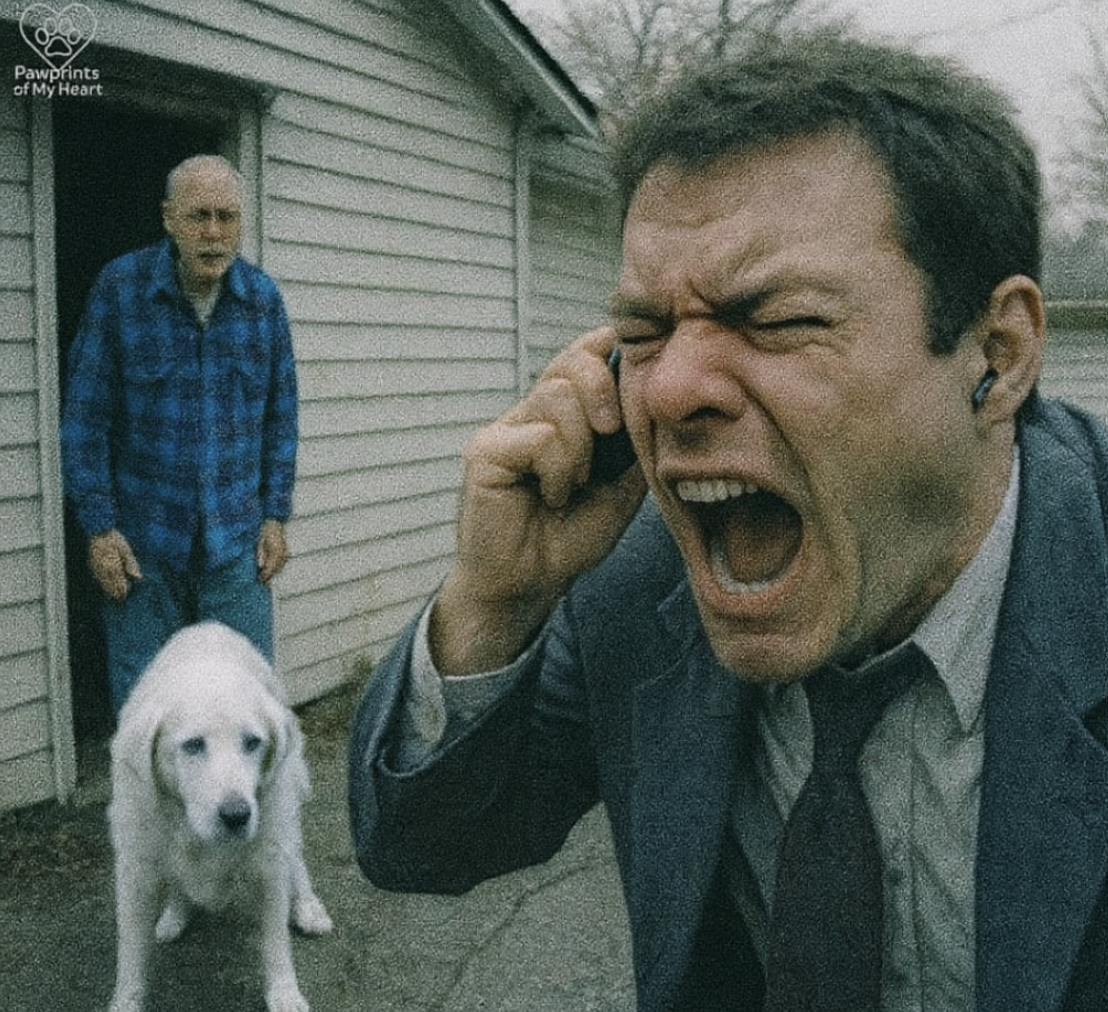
I, however, was different. I was thirty-two, wearing a suit that cost more than my dad’s first car, and I was currently muted on a conference call that had dragged on for three states.
I killed the engine but kept the Bluetooth earpiece in. “Yeah, I’m listening. Just send the quarterly projections,” I whispered, stepping out onto the gravel.
The front door opened before I reached it. Dad stood there. He looked smaller than I remembered. The flannel shirt hung a little looser on his shoulders, his hair more salt than pepper now.
“Hey, kid,” he said, his voice a low rumble.
“Hey, Dad. Give me a sec,” I tapped my ear, signaling the importance of the invisible voices in my head.
I walked past him into the kitchen. It smelled of coffee and lemon polish—the scent of a house that is clean but lonely. On the counter sat the blue Danish cookie tin, the round metal one. I knew for a fact there were no cookies in there. Just sewing kits, rubber bands, and receipts from 1985. It was a time capsule of a life that moved slower than mine.
And then, I heard it. The clicking.
Click. Click. Scrape.
Baxter coming around the corner from the living room.
He was a Golden Retriever, or at least he used to be. Now, his face was a mask of white fur, his golden coat dull and patchy. He was fourteen years old—a hundred in dog years. His hips were bad; I could see the stiffness in every step, the way his back legs trembled just to hold his own weight.
“Hey, buddy,” I said, distracted, checking a notification on my screen.
Baxter looked up at me. His eyes, once deep brown pools of endless energy, were now cloudy, covered in the milky blue haze of cataracts. He blinked, processing that I was finally home.
And then, the tail.
Thump… pause… thump.
It wasn’t the helicopter spin of his youth. It was a slow, heavy rhythm against the floorboards. A laborious effort. But he did it. He wagged his tail because I was his boy, and I had come back.
I reached down, gave his head a quick, perfunctory scratch—the kind you give a piece of furniture you’re dusting—and walked right past him to the fridge. “Do we have any sparkling water? Or just tap?” I asked the room at large.
Baxter turned his body slowly, like a large ship changing course, to follow me. He didn’t ask for food. He just wanted to be in the same room.
The weekend was a blur of “relaxation,” which for me meant sitting on the back porch replying to emails while Dad raked leaves.
On Sunday morning, hours before my flight back to the city, I sat on the porch swing. The Wi-Fi signal was strongest there. Dad was fixing a loose slat on the railing, the smell of sawdust drifting in the cold air.
Baxter pushed open the screen door. It took him three tries. He stumbled out onto the porch, panting from the exertion. He walked over to me and rested his chin on my knee. His head felt heavy, solid. A grounding weight.
I sighed, shifting my leg. “Baxter, buddy, I’m trying to type.”
He didn’t move. He just let out a long breath through his nose, that distinct dog sigh that sounds like the air being let out of a tire.
Then, he did something he hadn’t done in years. He walked over to the corner of the porch, rummaged behind a flower pot, and pulled out a tennis ball.
It was disgusting. The fuzz was gone, replaced by dirt and slobber, practically bald. It was the “Old Ball.” The one I had bought him with my allowance when he was a puppy.
He limped back to me and dropped the ball at my feet. It landed with a wet thud.
He looked up. The tail gave a hopeful thump.
“I can’t play right now, Bax,” I mumbled, scrolling through a spreadsheet. “Go lay down.”
He nudged the ball closer with his nose. He wasn’t asking for a marathon run. He couldn’t run. He was asking for a moment. A connection. A confirmation that we were still a team.
My phone buzzed. Urgent: Client Crisis.
“Not now!” I snapped, more at the phone than the dog, but Baxter took the hit.
His ears flattened. The tail stopped mid-sway. He looked at the ball, then at me, then back at the ball. He stood there for a long five seconds, processing the rejection. Then, slowly, painfully, he picked the ball up in his mouth.
He didn’t take it back to the flower pot. He just walked to the other side of the porch, lay down facing away from me, and rested his head on his paws, the ball still in his mouth.
I took the call. I handled the crisis. I saved the company twelve thousand dollars.
When I left an hour later, I patted Baxter on the flank while he was sleeping. “See ya, buddy. Be good.”
I didn’t know he wasn’t sleeping. I didn’t know he was just too tired to get up again.
The call came three weeks later, on a Tuesday.
I was in a meeting about synergy. My phone vibrated. Dad.
I sent it to voicemail. He called again. Dad never called twice.
I stepped out. “Is everything okay?”
“Alex,” Dad’s voice cracked. It was the sound of a strong tree snapping in a storm. “It’s Baxter.”
My stomach dropped to my shoes. “What? Is he sick?”
“He’s gone, son. The vet just left. He… his hips gave out, and he stopped eating. It was time.”
The silence on the line was deafening.
“He waited for you, you know,” Dad said softly. “After you left, he just sort of… wound down. He slept with that damn bald tennis ball for three weeks.”
I hung up. I stood in the hallway of a glass skyscraper, surrounded by people rushing to important places to do important things, and I felt like I couldn’t breathe.
I flew home for the burial. It seemed ridiculous to my colleagues—”It’s just a dog,” one of them had whispered.
But when I walked into the house, the silence hit me like a physical blow. No clicking claws. No heavy breathing. No thump-thump greeting.
I went out to the porch. Dad had already dug the spot under the oak tree.
I sat on the swing. The wind was biting, but I didn’t feel it. I looked at the corner where Baxter used to lie.
And there it was.
The ball.
It was sitting exactly where he had left it. Dad hadn’t moved it.
I picked it up. It was cold and hard. I gripped it until my knuckles turned white. The memory of that last Sunday crashed over me.
I remembered the nudge. The hopeful look. The way he had gathered his failing strength to bring me his most prized possession, offering me a piece of his heart.
And I remembered my response: “Not now.”
I realized then that “Not now” is the most dangerous lie we tell ourselves. We think we’re pausing the movie, that we can just hit play later. But life isn’t a movie. It’s a live broadcast. You don’t get to rewind.
Baxter knew it was his last time playing catch. He knew his legs were failing. He wanted one last toss, one last moment of being the good boy who chases the ball.
I had traded that moment for an email that was deleted two days later.
Dad came out onto the porch, holding two mugs of coffee. He sat down next to me. He didn’t say anything. He didn’t have to. He saw the ball in my hand.
“He loved you, Alex,” Dad said, staring at the yard. “Dogs don’t keep score. They just love. That’s why they’re better than us.”
“I missed it, Dad,” I choked out, the tears finally spilling over, hot and fast. “He asked me to play, and I was on my phone. I missed the last time.”
Dad took a sip of coffee. “We all miss things, son. The trick isn’t to beat yourself up for the past. It’s to make sure you don’t miss the future.”
He turned to look at me, his eyes tired but sharp. “I’m not getting any younger either, you know.”
The statement hung in the air.
I looked at the ball. Then I looked at my phone, sitting on the railing, lighting up with notifications.
I reached out, grabbed the phone, and held the power button. It buzzed a protest, then went black.
I slid it into my pocket, then reached over and took the old cookie tin from the side table where Dad had left it. I opened it up, pushed aside the sewing needles and the receipts, and placed the tennis ball inside. I closed the lid tight.
“So,” I said, turning my whole body toward my father, looking him dead in the eye for the first time in years. “Tell me about that chair you’re fixing. What kind of wood are you using?”
Dad smiled. It was a small thing, but it reached his eyes. “Well, it’s white oak. Hard to work with, but it lasts forever if you treat it right.”
I leaned back, listening. Really listening.
I couldn’t change the last wag. I couldn’t throw the ball for Baxter one more time. But I could sit here. I could be present.
Because the truth about the “last time” is that you never know when it is. Until it’s gone.
So, put the phone down. Throw the ball. Take the call.
Life is too short to be “busy.”