Between Two and Three
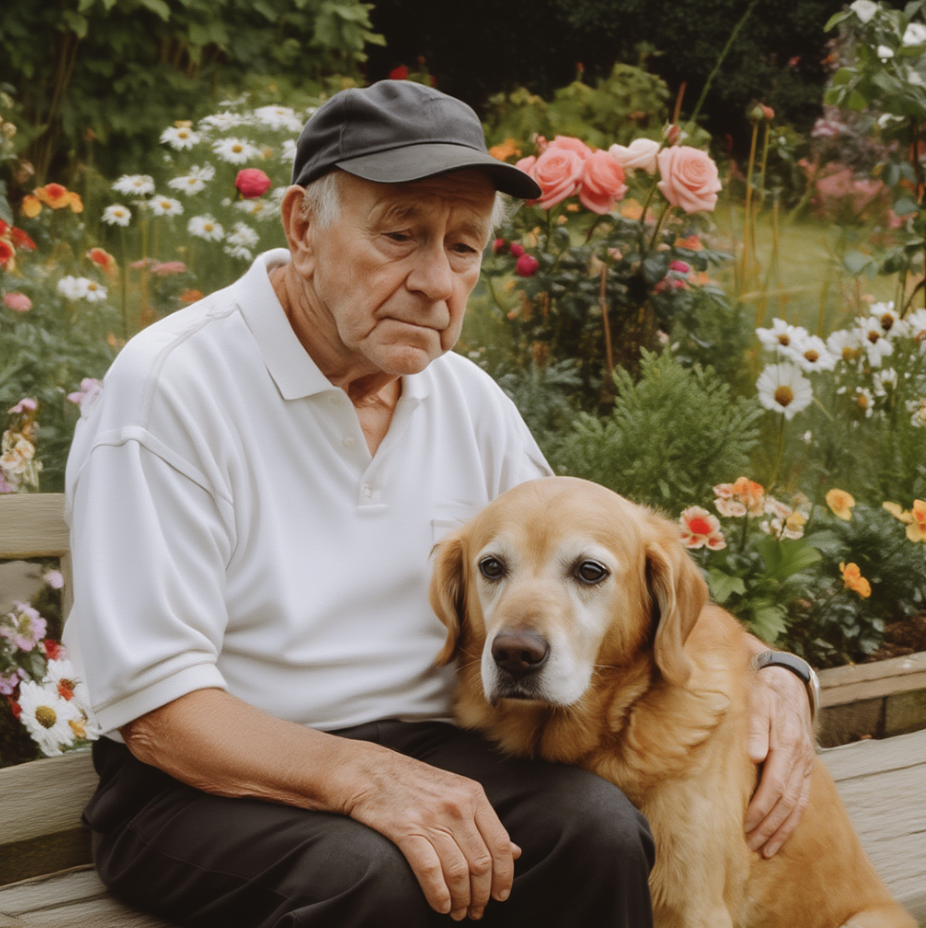
At 2:11 p.m., the old man clipped the leash to the Golden Retriever, settled onto the park bench, and did the most suspicious thing imaginable—nothing at all.
No tennis ball. No singsong voice. No pockets rustling with treats. Just a man in a clean flannel, a dented thermos at his feet, and a dog the color of late-afternoon sunlight. The dog leaned into the man’s leg and watched a willow trail its fingers through the pond. The man watched the dog watch the water. They were so still it made passersby uncomfortable, as if they were interrupting something private.
My name is Jenna. I’m twenty-four, a grad student collecting stories for seniors who insist their lives don’t qualify. I’d heard the rumors—how that old guy never even pets his dog. I’d also heard the gentler version from the chess-table uncles: He’s saving his words for someone who can’t hear them.
I stopped a few steps back, careful not to break the picture.
“He’s beautiful,” I said.
The man lifted his chin. Up close, his hands looked like they’d built things that lasted, and his eyes carried the quiet of long winters. The dog’s tag read SUNNY, the letters rubbed thin by years of being touched.
“Name’s Art,” he said. “Arthur Hale. This is Sunny. He runs the place.”
Sunny pressed his nose into my palm and sighed, the way dogs do when something feels familiar before it makes sense. I asked if I could sit. Art nodded. The bench held all three of us and still left room for silence.
“I’m working on an oral-history project,” I said, showing him my recorder. “I can just listen.”
“That’d be fine,” he said—the kind of fine that meant thank you for not asking me to be interesting.
We let ordinary sounds do their work: geese arguing over nothing, a stroller wheel squeaking its own little anthem, wind counting leaves.
“People think I don’t love him,” Art said eventually, almost amused. “Because I don’t throw things for him.”
“I don’t think they mean it,” I said, immediately regretting how hollow that sounded.
“People are busy,” he replied gently. “I bring him here because she asked me to.”
From his shirt pocket, he drew a folded piece of paper and smoothed it over his knee with both hands, careful, like the paper might resist being flattened.
“My wife,” he said. “Rose. She wrote this when she knew time was getting tight.”
“May I—?”
“With your quiet voice,” he said, smiling as if at an old memory.
The paper felt like cloth from being handled so often. The ink had bled into the fibers, as if it had learned how to cry. At the top: a winter date, and a greeting so simple it felt sacred—My love.
I read softly.
Rose wrote about bargaining with doctors and losing with grace. About buying “the most ridiculous, wonderful dog” because loneliness, she said, is best fought with a leash and a reason to go outside. She asked Art to bring Sunny to this bench, where they once sat watching the willow touch the water.
If heaven has windows, she wrote, I’ll borrow one between two and three and look down at the two of you being stubbornly alive.
My throat tightened. I handed the letter back and turned to the pond so my eyes could finish what they’d started.
“They’re wrong about you,” I said. “You’re not ignoring him. You’re keeping a promise.”
“Best thing a man can do,” Art murmured, “is keep loving the part of her that stayed.”
We sat a while longer as the silence warmed. Sunny shifted, rested his chin on my knee, and closed his eyes like a door that knew it was safe.
“There’s a second page,” Art said quietly. “I read the first one most days. Helps me do the day. Haven’t read the second yet.”
“Why not?”
He considered it. “Because once I do, the letter’s over.”
His hands trembled—not from frailty, but from holding too much. He unfolded the page like revealing a face.
If you’re reading this, you already did the hardest thing, Rose had written. There’s something else I should have told you sooner. In Sunny’s collar, inside the seam, I hid a small favor. You’ll know what to do when you hold it.
My gaze slid to the collar—old red leather, the color of devotion. One stitch along the inside looked tired of pretending.
“May I?” I asked.
Art nodded. I worked the thread loose with my nail. The seam opened easily, eager. A tiny metal key slipped into my palm—heavy, serious, belonging to something older than passwords.
“Rose,” Art breathed, her name filling the space like warmth from an opened thermos.
Sunny tilted his head, pleased, as if he’d fetched something precious from another year.
That’s when I noticed the city notice taped to a nearby pole: BENCH REMOVAL / AREA UPGRADE. Scheduled in two weeks. October 30. Fourteen days.
“If they move the bench,” I said carefully, “they move the view.”
Art nodded—the nod of a man who’d already made plans and discarded them all for being unworthy.
I glanced back at the final lines of the page and read them aloud before I could stop myself:
Bring Sunny to the bench, my love. One day—maybe not soon—someone will come who needs to find us. You’ll know them when you see them. Be gentle. That’s how we finish the story.
Footsteps approached—unhurried, unhesitant.
A woman about my mother’s age stopped at the path’s edge, holding a folded paper crane like it was still warm. Her eyes moved from Sunny to Art to the bench and filled—not with regret, but with arrival.
“Excuse me,” she said, voice trembling with hope and memory. “Are you Arthur Hale?”
Art didn’t stand. He couldn’t. He held the key and the letter like coordinates.
“I was told to find you here,” the woman whispered—
and the wind off the pond went perfectly still.