
😱 CHILLING REPLY: 2Pac Murder Suspect Shocks Judge After Jailhouse Brawl — Fans Are Stunned!
The murder suspect in the 2Pac case delivered a chilling response to the judge after getting caught in yet another jailhouse brawl — a moment that made listeners shudder, finally understanding why, after all these years, even though the Shakur case has yet to reach full trial, the law would never dare let him roam free beyond the prison bars.
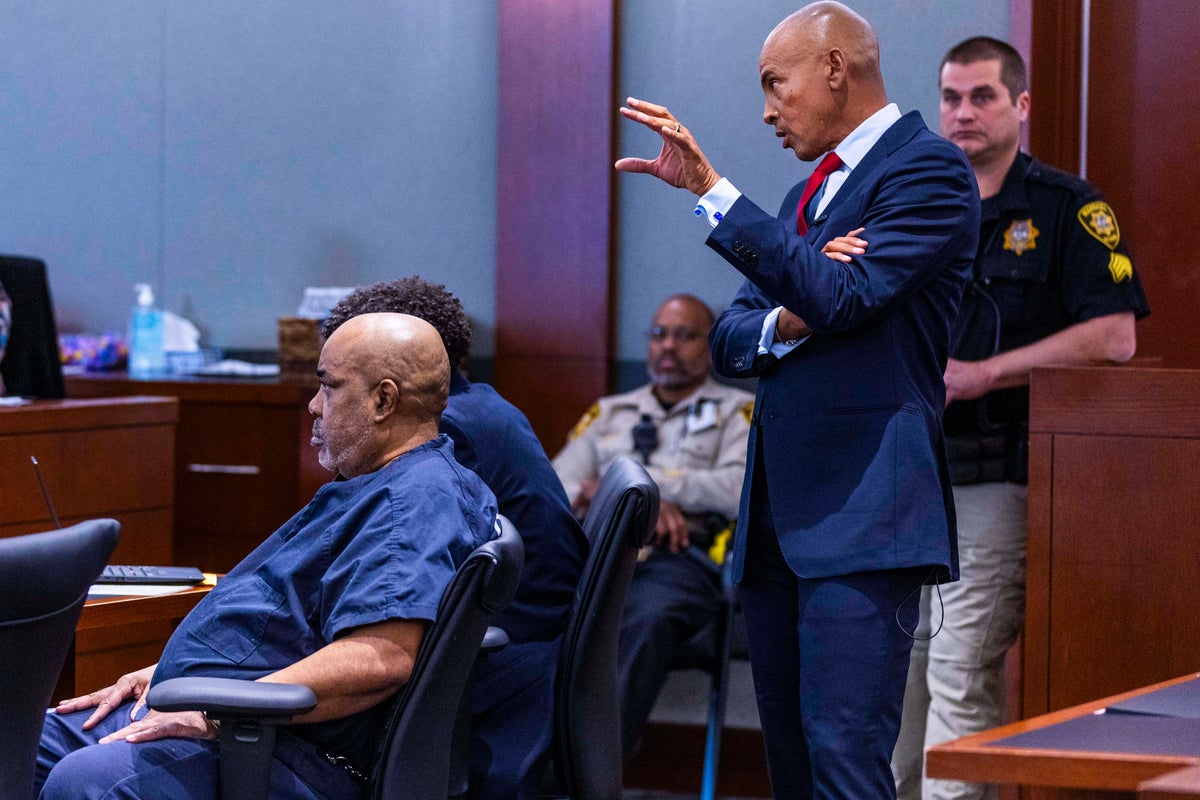
Chilling Response from 2Pac Murder Suspect in Court
On September 2, 2025, Duane “Keffe D” Davis, the prime suspect in the 1996 murder of rap icon Tupac Shakur, stood before Clark County Court Judge Nadia Krall in Las Vegas, Nevada, to face sentencing for a jailhouse brawl unrelated to the high-profile murder case. The 62-year-old, already detained at the Clark County Detention Center since his arrest in September 2023, delivered a response during the hearing that sent chills through the courtroom: “My parents brought me up to protect myself, and that’s all I was doing, protecting myself, and this is totally wrong, man.” This cold, calculated statement, coupled with his demeanor, underscored why authorities remain wary of letting Davis walk free, even as he awaits trial for Shakur’s murder in February 2026.
The sentencing stemmed from an April 2025 guilty verdict, where a jury found Davis responsible for engaging in a physical altercation with another inmate. Video evidence presented during the trial depicted a chaotic 30-second scuffle in the jail’s day room, with Davis and another inmate grappling on the floor before officers intervened. Nevada law permitted a sentence ranging from one to 20 years, with an additional year possible, but Judge Krall opted for a concurrent one-year sentence, meaning Davis will likely serve most of this time while detained for the murder charge. The sentencing, postponed twice prior, was a relatively minor chapter in Davis’s ongoing legal saga, but his chilling words in court revealed a deeper, more unsettling narrative.
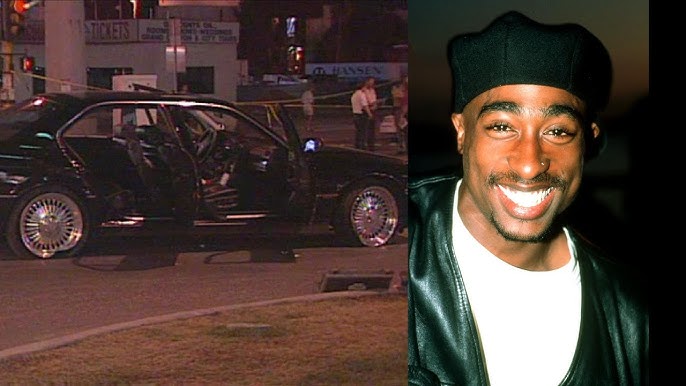
Davis’s statement, “My parents brought me up to protect myself,” was delivered with a steely conviction that seemed to justify his actions, both in the jail fight and, perhaps implicitly, in his broader life choices. The phrase carried a weight that transcended the immediate context, hinting at a worldview shaped by survival and self-preservation—qualities that prosecutors argue have defined his alleged role in Shakur’s murder. For those in the courtroom, the response was not merely a defense of a jailhouse scuffle but a glimpse into the psyche of a man entangled in one of hip-hop’s most enduring mysteries. His assertion that “this is totally wrong” felt less like remorse and more like a defiant rejection of the system holding him accountable.
The Shakur case has loomed large over Davis’s life, with his 2023 arrest marking a significant breakthrough in a nearly three-decade-old investigation. Authorities allege that Davis, a reputed figure in the Southside Crips, orchestrated the drive-by shooting that killed Tupac Shakur on September 7, 1996, in Las Vegas. While Davis has not been convicted of the murder, his alleged confessions in memoirs and interviews have fueled speculation and legal scrutiny. His claim of self-defense in the jail fight mirrors the narrative he has long maintained about his street life—a narrative rooted in a code of survival that clashes with the legal system’s demand for accountability.

Davis’s chilling words resonate because they encapsulate the tension between his self-perception and the law’s view of him as a dangerous figure. To him, the jail fight was a natural extension of a life spent “protecting” himself in hostile environments, from the streets of Compton to the confines of a Nevada detention center. Yet, to prosecutors and the court, his actions—both in the brawl and in the broader context of Shakur’s murder—paint a picture of a man prone to violence and unyielding in his defiance. This dichotomy explains why, even as the murder trial remains months away, authorities are reluctant to grant him freedom. The jailhouse brawl, though minor compared to the murder charge, reinforces their concerns about his volatility.
The courtroom atmosphere during the sentencing was heavy with the weight of Davis’s past and present. His claim of being “attacked” in the jail fight, followed by his unapologetic defense, left listeners uneasy. It was a reminder of the stakes involved—not just in the fight but in the larger question of justice for Tupac Shakur. For fans of the late rapper, Davis’s words were a stark reminder of the unresolved pain surrounding Shakur’s death, a case that has haunted hip-hop culture for decades. For the legal system, they were a warning: a man who views every conflict as a matter of self-preservation is unlikely to conform to societal norms if released.
As Davis awaits his February 2026 trial, his chilling courtroom statement lingers as a testament to his complex persona. Whether he is a product of his environment, as he claims, or a calculating figure responsible for a cultural tragedy, his words reveal a man unbowed by the weight of his circumstances. The law, wary of his past and present, keeps him behind bars—not just for the jailhouse fight but for the shadow of a crime that continues to captivate the world.