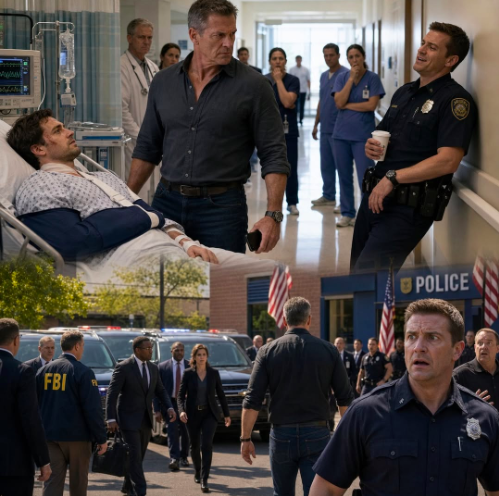
🔥 Bad Cops Broke My Son’s Arms For Fun—Her Billionaire General Dad Broke Every Cop’s Bones
Part 1
The ventilator made a soft, steady sound, like a machine trying to convince the room that everything was under control.
It wasn’t.
My son’s arms lay on top of the hospital sheets in two thick white casts, but the casts couldn’t hide the truth. His fingers were swollen purple. His right wrist bent under the plaster at a sickening angle. His left forearm had been reset twice before the surgeon would even let us see him. Evan was seventeen years old. He played piano with those hands. He used to tap out Chopin on the kitchen island while waiting for toast.
Now he couldn’t even scratch his own nose.
My wife, Amelia, sat beside the bed with both hands wrapped around Evan’s fingertips. She had been crying so long her voice had gone thin and dry. The hospital room smelled of antiseptic, plastic tubing, and the burnt-coffee stink from the nurses’ station down the hall.
Dr. Morris stood in front of the X-ray light box, rubbing the bridge of his nose.
“These fractures are not consistent with a fall,” he said quietly.
I stared at the glowing black-and-white image. Bones don’t lie. Men do.
“What are they consistent with?” I asked.
The doctor looked toward the door before answering. “Torque. Forceful rotation. Someone held the limb and twisted.”
Amelia made a sound like she had been punched.
I didn’t move. I had spent twenty-two years learning how not to move when my blood wanted to catch fire. I had seen men bleed out in sand. I had watched cities burn behind armored glass. Before I became Victor Vance, billionaire defense contractor and quiet father in the expensive suburbs, I had been General Victor Vance. That name had opened doors in war rooms and ended careers in dark places.
I thought I had buried him.
Then someone broke my boy.
“The police report says he fell down the stairs while resisting arrest,” Amelia whispered.
“Evan doesn’t resist waiters when they bring him the wrong soup,” I said.
She looked at me with wet eyes. “Victor, please don’t do anything.”
I bent down and kissed Evan’s forehead. He flinched in his sleep.

“I’m only getting coffee.”
The hallway lights were too bright. They buzzed faintly, making the waxed floor shine like ice. Two cops stood near the elevators. One was older, thick through the middle, with tired eyes and a hand resting too comfortably near his belt. The other one was young, broad-shouldered, and chewing a glazed donut.
His nameplate said Kyle.
Sugar dust clung to his lower lip.
I walked toward them without raising my voice.
“I’m Evan Vance’s father.”
The older cop stiffened. Kyle smiled.
“Oh,” he said. “Stair kid.”
The nickname hit harder than a slap.
“My son’s arms were twisted until they broke.”
Kyle took another bite of donut and looked at me as if I were a slow cashier. “Your son assaulted an officer.”
“He plays piano.”
Kyle laughed. “Not anymore.”
The old world inside me went silent.
It was the kind of silence that comes before artillery.
I studied Kyle’s hands. Bruised knuckles. Fresh scrape on his ring finger. A faint red mark on his wrist, like someone had grabbed him while fighting for air.
“I want to file a complaint,” I said.
Kyle stepped close enough for me to smell sugar, stale coffee, and cheap cologne.
“You file anything,” he whispered, “and next time your boy doesn’t fall. Next time he stops breathing.”
He pulled back, winked, and tossed the rest of the donut into the trash.
The elevator doors closed behind them.
I stood there staring at my reflection in the metal doors, and for the first time in years, I felt the general open his eyes.
Then my phone buzzed with a number only six people in the world had.
Part 2
I didn’t answer the call in the hallway.
I walked to the vending machine alcove where a flickering light made bags of chips look radioactive. My reflection stared back at me from the glass: gray at the temples, clean suit, expensive watch, calm face. A man who looked like he belonged on charity boards, not kill lists.
I answered.
“Status?” a woman asked.
No hello. No name. Old habits.
“Active,” I said.
There was a pause. “Who?”
“Local police. Officer Kyle. Badge 4922. I need everything. Financials, history, partners, lawsuits, sealed complaints. I want to know who trained him, who protects him, and who pays him.”
Another pause, shorter this time.
“Victor, is this personal?”
I looked down the hallway. Inside room 412, my wife was holding our broken son’s hand.
“Yes.”
“Then I’ll be careful.”
“No,” I said. “Be complete.”
I hung up and returned to Evan’s room. Amelia saw my face and knew I had lied about the coffee.
“What did you do?” she asked.
“Nothing yet.”
That was true, technically.
We brought Evan home two days later because the hospital suddenly decided he was “stable.” Stable was a strange word for a boy who screamed every time the car hit a pothole. My driver, Thomas, helped me carry him inside. The plaster casts bumped against the doorframe, and Evan moaned through his teeth.
The sound did something ugly to my heart.
Our house sat behind black iron gates at the end of a quiet street lined with oaks and security cameras hidden in lantern posts. Usually, I found comfort in the silence. That afternoon, it felt like the whole neighborhood was holding its breath.
We settled Evan in the downstairs guest suite because the stairs were impossible. Amelia arranged his pillows with trembling hands. I went to the living room, poured bourbon I didn’t want, and turned on the local news.
The headline appeared before the anchor even opened her mouth.
Teen Injured After Attacking Police.
The glass slipped in my hand.
The reporter stood outside the precinct, hair sprayed against the wind, voice smooth and empty.
“Seventeen-year-old Evan Vance was injured late Tuesday night after police say he became violent during a routine stop downtown. Officers report finding drug paraphernalia near the scene. Sources say the teenager resisted arrest and fell down a concrete stairwell during the struggle.”
Drug paraphernalia.
I stared at the screen.
Evan hated the smell of cigarettes. He once called me from a party because somebody opened a beer and he wanted to leave.
“They’re getting ahead of it,” I said.
Amelia appeared in the doorway. “Ahead of what?”
“The truth.”
Her lips parted, but before she could speak, my secure tablet chimed on the coffee table.
The first packet had arrived.
Officer Kyle Mercer. Twenty-six. Four excessive force complaints in three years. All dismissed. One civil suit settled quietly. Father unknown. Mother deceased. Raised partly by his uncle.
I scrolled.
His uncle was Police Chief Daniel Grant.
That explained the arrogance. Nepotism is corruption wearing family clothes.
Then I opened Kyle’s financial file.
Annual salary: $71,800.
Assets: two sports cars, a bass boat, a condo in Miami, and a house in Maine purchased in cash.
I kept scrolling until a small line item made me stop.
Three days before Evan’s arrest, Kyle received a wire transfer for $8,000 from a construction firm I had never heard of.
Magnolia Ridge Development.
The same company had donated to the mayor’s campaign, sponsored the police union picnic, and paid consulting fees to Chief Grant’s wife.
This wasn’t one bad cop.
It was a table, and everybody had a chair.
My phone buzzed again.
This time it was a text from an unknown number.
Cute house. Shame if grief moved in permanently.
Attached was a photo of Evan’s bedroom window, taken from outside our gate.
I looked toward the dark glass of the living room.
Someone was watching us.
Part 3
I moved Amelia and Evan to the interior safe room before dinner.
Amelia didn’t argue. That scared me more than if she had. She simply packed Evan’s pain medication, his phone charger, and the little framed photo of him at age nine grinning over his first piano recital medal.
The safe room was hidden behind a wall of built-in bookshelves in my office. It had filtered air, medical supplies, steel reinforcement, and a private line routed through three satellites. I had built it years ago after a kidnapping threat from a cartel whose money I had helped the government freeze.
Back then, Amelia had called it paranoia.
That night, she kissed the steel door before it closed.
“Don’t become him again,” she said.
I knew who she meant.
I didn’t answer because I couldn’t promise it.
At 10:15 p.m., I drove into town alone.
The precinct looked like every small-city police station in America that wanted to seem friendly and failed: brick walls, buzzing lamps, faded flag, vending machine in the lobby, and a smell of burnt coffee soaked into old carpet.
A desk sergeant with a gray mustache looked up from a crossword.
“I need to see Chief Grant,” I said.
“Chief’s busy.”
“Tell him Victor Vance is here about my son.”
The sergeant’s eyes changed. Not surprise. Recognition.
“Kid shouldn’t have fought,” he said.
There it was. The script.
“My son was tortured.”
The sergeant leaned back, chair creaking. “Careful with that word.”
“Why? Does it make guilty men nervous?”
His hand moved under the desk. Not to a gun. A panic button, maybe. I let him.
A laugh rose from beyond the glass partition.
I turned.
Inside the bullpen, four officers stood around a desk. Kyle was there, holding a plastic ruler. Blake, thin and twitchy, stood beside him. Dominic, built like a linebacker, leaned against a filing cabinet. Chief Grant watched from his office doorway, arms folded.
Kyle twisted the ruler slowly.
“Stop resisting,” he said in a mocking voice.
The ruler snapped.
The room erupted.
Dominic slapped Kyle’s shoulder. Blake laughed too, but his face had a crack in it. Something nervous. Something that said he was not as brave as the others when the lights were off.
Kyle looked through the glass and saw me.
He raised one finger to his lips.
Shhh.
I left before the soldier in me did something the father in me would have to explain in court.
In the parking lot, cold rain misted over my windshield. I sat in my car and opened the encrypted app disguised as a calculator.
Harper answered on the first ring.
“Tell me you found something.”
“I found too much,” she said. “Magnolia Ridge Development is dirty. Shell layers, political donations, fake invoices. But the money doesn’t originate there.”
“Where?”
“Still tracing. But there’s another thing. The body cam footage from Evan’s arrest was deleted from the local server.”
“Can we recover it?”
“Already working on it.”
I watched the station doors open. Kyle stepped outside under the yellow lobby light. He lit a cigarette and laughed at something on his phone. A man without fear. That kind of man is either stupid, protected, or both.
“Harper,” I said, “put eyes and ears on the precinct.”
“That crosses lines.”
“They crossed them first.”
“Victor.”
“My son’s hands may never work again.”
She went quiet.
Then I heard typing.
“I’ll need authorization.”
“Archangel One.”
The typing stopped.
“That code hasn’t been used in eleven years.”
“Use it now.”
A long breath came through the line. “Assets moving.”
I watched Kyle flick ash onto the wet pavement.
For one second, his phone screen lit bright enough for me to see the caller ID.
Uncle Dan.
Chief Grant.
Then Kyle looked straight toward my car and smiled like he knew I was there.
Part 4
By dawn, the precinct belonged to me.
Not legally. Not officially. But information has its own kind of ownership.
Two miniature audio devices had been slipped into places careless men never check: under the lip of a locker room bench and behind a coffee machine in the bullpen. A cloned dispatch feed poured into my office. Patrol GPS dots moved across my screen like insects under glass.
I sat in the dark, listening.
At first, it was ordinary police noise. Traffic stops. Drunk drivers. A domestic call nobody wanted to take. Then Kyle’s voice came through, lazy and amused.
“Rich kid screamed louder than I expected.”
A chair scraped.
Blake said, “Man, you should stop talking about it.”
“What? You scared of the old man?”
“I’m scared of federal prison.”
Dominic laughed. “Ain’t nobody going to federal prison. Chief buried it.”
Kyle made a twisting sound with his mouth, like wringing water from a towel.
“Should’ve seen his fingers. Kid tried to play brave. Then pop.”
My hands rested flat on the desk.
I did not break the desk.
That took effort.
Blake lowered his voice. “What about the body cam?”
“Gone.”
“All of it?”
“Chief had records wipe it. Audio too.”
“And the drugs?”
“Evidence room. Bag from last month. Easy.”
The room tilted, not from surprise but from confirmation. They hadn’t just hurt Evan. They had built a coffin for his reputation and invited the whole town to watch him climb in.
I saved the recording in four encrypted locations.
Then I called Nathaniel Reed.
Nathaniel had been my lawyer for fifteen years. Former military prosecutor. Silver hair. Perfect suits. Smile like a locked door. If I was a hammer, he was the hand that made sure I only struck where the law would echo.
He answered from what sounded like a restaurant. Silverware clinked in the background.
“Victor. Please tell me you’re sleeping.”
“I have felony conspiracy on recording.”
The silverware stopped.
“Send it.”
I did.
Five minutes later, he called back, his voice lower.
“This is dynamite.”
“Then light it.”
“Not yet,” he said. “One bad release and they’ll claim fabrication. We need chain of custody, financial motive, independent corroboration.”
“I have the money.”
“Good. Freeze them quietly first.”
By noon, Kyle’s bank accounts had federal flags for unexplained income. By two, Blake’s mortgage lender wanted documents he didn’t have. By four, Chief Grant’s wife’s construction company received notices from three regulatory agencies.
None of it was illegal.
That was the beauty of bureaucracy. Done right, it doesn’t kick down doors. It locks them from the inside.
I listened as panic spread through the precinct.
“My card got declined,” Blake said, voice shaking.
Dominic cursed. “Mine too.”
Kyle tried to laugh. It came out thin.
At 5:30, Grant summoned them into his office. The audio was muffled but clear enough.
“Somebody is pushing buttons,” Grant snapped. “Nobody talks. Nobody texts. Nobody calls girlfriends. You hear me?”
Kyle said, “It’s Vance.”
Grant slammed something. “Vance is an old rich man.”
“No,” Blake said quietly. “I saw his eyes. He’s not just rich.”
The first honest thing anyone in that building had said.
Grant lowered his voice. “Then we remind him what fear feels like.”
I leaned closer to the speaker.
“What does that mean?” Blake asked.
“It means we still know where his family sleeps.”
I stood so fast my chair tipped over.
Before I could move, the front gate alarm chimed.
On my security monitor, a delivery bike rolled up to the estate. The rider wore a black helmet and no visible company logo. He left a small cardboard box on the porch and sped away.
No postage.
No label.
Just my name written in red marker.
Part 5
I didn’t let Amelia come near the box.
The porch light hummed above me, turning the cardboard edges gold. Rainwater dripped from the roof in slow beads. Somewhere in the dark, a cricket scratched out one stubborn note.
The box smelled faintly metallic.
Blood has a way of announcing itself before you see it.
I used a knife to cut the tape.
Inside was a white glove wrapped around a photograph.
The photo showed Evan through the hospital window, asleep in bed before we brought him home. The angle was high, taken from another building or a drone. His casts were visible. So was Amelia’s hand on his forehead.
On the back, three words had been written.
We can touch him.
The old rage came fast this time. Hot. Animal. The kind that makes men stupid.
I closed my fist around the photo until it bent.
Then I breathed once.
Twice.
“Victor?” Amelia called from the doorway.
I turned so she wouldn’t see my face right away. “Pack Evan’s medication. We’re moving.”
“Where?”
“Not the safe room. Not anywhere they know.”
She stared at the box, and color drained from her cheeks.
“They were outside our home?”
“They want me emotional.”
“Aren’t you?”
“Yes,” I said. “That’s why I’m going to be careful.”
We moved before sunset. Three vehicles left the estate. One carried Thomas and an empty medical cot. Another carried two of my security men dressed like me and Amelia. The third, a battered laundry van with a cracked taillight, carried my wife, my son, and me.
Evan woke halfway through the drive.
“Dad?”
“I’m here.”
“Are we in trouble?”
The van smelled of detergent and rubber mats. A loose hanger tapped against the wall with every bump.
“No,” I said. “The trouble is behind us.”
He tried to smile. His lips were pale. “That sounds like a dad lie.”
“It is.”
He closed his eyes again.
We took him to a private recovery facility I owned under a company that owned a company that owned another company. To the outside world, it was a wellness retreat for executives with stress and bad knees. In reality, it had blast-rated windows, former Marines at the gates, and a medical wing stocked better than some county hospitals.
Once Evan was secured, I went to the command room.
Harper appeared on the main screen from her office, dark curls tied back, eyes sharp behind blue-light glasses.
“We traced the delivery rider,” she said. “Fake plates. But traffic cams caught his face when he removed the helmet two miles away.”
“Who is he?”
“Runner for Obsidian Shield.”
The name made my jaw tighten.
Obsidian Shield wasn’t a police vendor. They were private muscle for people who could afford not to dirty their own shoes. Strikebreaking, intimidation, executive protection that sometimes looked a lot like kidnapping if you squinted.
“Who hired them?”
“That’s where it gets interesting.” Harper pushed a file to my screen. “Payment came through Apex Holdings.”
I waited.
She didn’t continue.
“Harper.”
“I’m sorry, Victor.”
The file opened.
Apex Holdings. Cayman registration. Beneficial ownership hidden behind three nominees, two trusts, and one signature key.
Julian Vance.
My younger brother.
For a moment, I heard nothing. Not the air system. Not the keyboard. Not my own breathing.
Julian, who had bounced Evan on his knee when Evan was a baby. Julian, who brought expensive wine to Thanksgiving and forgot birthdays but remembered scandals. Julian, who had spent his whole life smiling like the world owed him more.
I scrolled.
Three days before Evan was beaten, Apex wired $50,000 to Chief Grant.
A second transfer went to Obsidian Shield.
My brother had not just betrayed me.
He had purchased my son’s pain.
“Do we know where Julian is?” I asked.
Harper’s voice was careful. “Vance Tower. Penthouse gala tonight.”
Of course.
My son was learning how to breathe through pain while my brother toasted investors under chandeliers.
I stood.
“Victor, take a team.”
“No.”
“This is not a conversation you should have alone.”
“It’s exactly the kind you have alone.”
I walked toward the door, but Harper spoke again.
“There’s one more thing. Julian didn’t originate the Apex structure by himself. Someone helped him build it.”
I stopped.
“Who?”
“We don’t know yet.”
I stared at my brother’s signature glowing on the screen.
Then my phone buzzed.
A text from Julian.
Heard about Evan. Terrible thing. Need anything, big brother?
Part 6
Vance Tower rose out of downtown like a blade of black glass.
I owned sixty percent of it. Julian acted like he owned the air inside.
The lobby smelled of white orchids and expensive marble polish. Security tried to stop me at the private elevator, then recognized me and suddenly found the floor very interesting.
The penthouse doors opened to jazz music, laughter, champagne, and women in dresses that caught the light like spilled oil. The city glittered beyond the windows. Men with clean hands discussed dirty money under soft chandeliers.
Julian stood near the bar in a velvet tuxedo, holding a crystal glass. His hair was perfect. His smile was brighter than the room.
When he saw me, the smile twitched.
“Victor,” he called. “Ladies and gentlemen, my brother has finally remembered we exist.”
People turned. Some clapped. One man lifted a glass.
I walked through them without speaking.
Julian leaned in for a hug.
I let him get close enough to smell the whiskey on his breath.
Then I said, “Apex Holdings.”
His body went still.
Only for a second.
That was all I needed.
“Study,” I said.
His eyes flicked toward a security guard near the wall. The guard was Obsidian. I could tell by the earpiece, the shoes, the way he watched hands instead of faces.
“Now,” I added.
Julian smiled at the room. “Family business.”
His study was paneled in walnut and decorated with old war photographs he had no right to display. One showed me at thirty-eight, dust-covered and hollow-eyed, shaking hands with a president. Julian had hung it behind his desk like a hunting trophy.
The door closed.
The mask dropped.
“You look awful,” he said.
“You paid Grant.”
“I don’t know what grief has done to your judgment, but—”
“Don’t.”
He poured himself whiskey with one hand. The ice clinked softly.
“I have the wire transfer,” I said. “Apex to Grant. Apex to Obsidian. Dates, amounts, routing numbers.”
His mouth tightened.
“I also have the threat they sent to my house.”
Julian took a drink.
For a while, the only sound was jazz bleeding through the walls.
“I told them to scare you,” he said finally.
My hands curled.
“I told Grant to get Evan in trouble. A record. A scandal. Something that made the board question whether you were stable enough to remain trust chairman.”
“You used my son.”
“You made him untouchable,” Julian snapped. “You made everything untouchable. The company. The money. Father’s name. Even the damn family house. I am fifty years old and I still need approval from you like I’m borrowing lunch money.”
“So you broke a child’s arms?”
“I didn’t order that.” His voice rose. “Kyle got carried away.”
“He laughed about it.”
“I don’t control every animal I feed.”
“That’s exactly what you did.”
Julian slammed the glass down. Whiskey jumped over the rim.
“You don’t get it, do you? You come home from war, build an empire, marry the perfect woman, raise the perfect son, and everybody bows. I was the spare Vance. The joke. The party favor.”
“You were my brother.”
He looked at me then, and for one breath I saw the boy he had been. The one who used to hide behind me when our father shouted.
Then it vanished.
“Sign over the chairmanship,” he said. “I can still make Evan’s charges disappear.”
I almost laughed.
He thought this was leverage. He thought this was a negotiation held between civilized men.
I took out my phone and played back his own voice.
I told them to scare you.
His face turned gray.
“You recorded me?”
“I record rooms where snakes live.”
He lunged for the phone.
He had always been soft. Tennis lessons and tailoring had not prepared him for what my life had been.
I caught his wrist, turned it, and forced him to his knees against the desk. He cried out, high and shocked.
“You hurt my boy,” I said into his ear. “So I’m going to take everything. Not some things. Everything.”
“You can’t,” he gasped.
“I already have.”
I released him and walked to the door.
Behind me, he whispered, “You still don’t know who helped me.”
I stopped.
His laugh was ragged now.
“You think I understand offshore structures? You think I knew which trust clause would break you? Somebody opened the door, Victor.”
I turned back.
Julian looked up from the floor, tears in his eyes and hatred in his mouth.
“Someone you trust handed me the key.”
Part 7
I left Julian on the floor because blood would have been too easy.
Outside the study, the gala had gone quiet. People pretended not to stare and failed. The jazz trio sat frozen with their instruments in their laps. A waiter held a tray of champagne so tightly his knuckles were white.
The Obsidian guard stepped into my path.
“Sir, Mr. Vance asked—”
“I am Mr. Vance.”
He weighed his options. Big man. Good stance. Former military, probably. But he had the eyes of a contractor, not a believer. Men like that don’t die for pride when invoices are involved.
“My office will double whatever Julian is paying you,” I said. “You now work for me. First job is keeping him in that room until federal agents arrive.”
He blinked once.
Then nodded.
Money does not buy loyalty. It rents direction.
In the elevator, Harper called.
“Tell me Julian confessed.”
“He did.”
“Good. Because Grant is moving.”
The elevator seemed to slow.
“How?”
“Chief Grant just pulled five officers off duty and signed out tactical gear from the armory. Kyle, Blake, Dominic, and two others. They’re using unmarked vans.”
“Target?”
“The hospital.”
I closed my eyes.
They didn’t know Evan had been moved. They were going back to finish what they started in an empty room.
A clean trap had opened by accident.
“Let them go,” I said.
“Victor.”
“Patch the hospital feeds to the FBI field office. Every camera. Every hallway. Every door.”
“You’re using the hospital as bait.”
“No. They chose the hook.”
I drove through the city with one hand on the wheel and one eye on the tablet mounted to my dash. Rain streaked the windshield. Streetlights smeared gold across the glass. My tires hissed over wet asphalt.
At 11:42 p.m., the vans reached the hospital loading dock.
Five men entered through the service corridor in black tactical gear. They moved like amateurs pretending to be operators. Muzzles wide. Shoulders tense. Too close together at corners. I had trained teenagers in desert militias with better discipline.
Kyle led them.
Room 412 waited with fresh sheets and a dummy beneath the blanket.
I watched from two blocks away.
“Approaching,” Harper said in my ear.
They stacked at the door.
Kyle kicked it open.
“Police!”
They rushed inside.
For three seconds, there was only shouting.
Then Kyle ripped back the blanket.
“Empty.”
The television on the wall switched on.
My face appeared in a prerecorded message.
“Gentlemen,” the video version of me said, “you have just committed armed burglary, conspiracy, and attempted murder on a live federal feed. Please look toward the camera.”
Kyle turned and fired three rounds into the television.
Sparks rained over the bed.
“Abort!” he shouted. “Abort!”
They ran.
Outside, Chief Grant waited in the command van. I pulled in behind him, blocking his exit with my sedan. He stepped out, face red, hand near his holster.
“You interfering with a police operation now?”
“I’m documenting one.”
“We had intel the suspect was armed.”
“In a hospital bed?”
His jaw flexed.
I threw a folder at his feet. Pages slid across the wet pavement.
“Your offshore accounts. Evidence theft. Falsified payroll. Payments from Apex. You can still choose who you become in the next five minutes.”
He looked at the pages, then at me.
“You think Julian will save you?” I asked. “He confessed. Rich cowards always sell the help first.”
Grant’s face collapsed in a way I had seen in interrogation rooms. The moment a man realizes the story he built no longer holds weight.
Then Kyle and the others burst out of the loading dock.
They saw me. Saw Grant. Saw the folder.
Kyle shouted, “Uncle Dan, what the hell is this?”
Uncle.
There it was. The family rot.
Grant’s hand moved.
It was not a surrender.
He drew.
I stepped inside the gun line, caught his wrist, and drove my elbow down. Bone cracked. The gun hit the pavement. Grant screamed and folded to his knees.
“One,” I said.
Kyle stared at his uncle on the ground.
Then he ran to the van.
“Go!” he yelled.
The van tore out of the lot, leaving Grant behind.
I grabbed Grant by the collar.
“Where are they going?”
He smiled through pain and rainwater.
“Your house.”
“It’s empty.”
His smile widened.
“Not the lake house.”
My stomach turned cold.
Amelia had mentioned the lake house once, only once, on a burner phone she thought was safe.
Grant laughed softly.
“Kyle tracked her.”
Part 8
I drove faster than memory.
The lake house was thirty miles out, past gas stations, cornfields, and a two-lane road that ran through pine woods black as spilled ink. My speedometer pushed past one hundred and twenty. Rain hammered the windshield hard enough to sound like thrown gravel.
I called Amelia.
She answered on the second ring.
“Victor? Is it over?”
“Get Evan and run. Now.”
“What?”
“Leave the house. Don’t pack. Don’t turn on lights. Go into the woods.”
A crash came through the phone.
Glass breaking.
Then Amelia screamed.
The line went dead.
Something inside me tore loose.
I called Harper. “Satellite. Lake house.”
“I’m pulling it up.”
“Now.”
“I have thermal. Four outside. Three inside.”
“Three?”
“Amelia, Evan, and one smaller heat source. I can’t identify.”
“We don’t have a dog.”
The words hung there.
“State police?” I asked.
“Twenty minutes.”
“I have five.”
I killed my headlights before turning onto the dirt road. The tires crunched over wet gravel. Pine branches scraped the sides of the car like fingernails. When the house appeared through the trees, the front door was open. A tactical van sat on the lawn, headlights pouring white light across the porch.
I stopped far back and got out.
No rifle. No armor. No team.
Just me, a tire iron from the trunk, and the kind of fear that strips a man down to his bones.
I moved through the trees toward the back deck. Mud sucked at my shoes. Rain slid down my collar. Inside the house, someone shouted.
“Where’s the safe?”
Kyle.
I stepped over shattered glass into the kitchen.
The house smelled of rain, splintered wood, and gun oil.
In the living room, Amelia knelt on the floor with Kyle’s pistol pressed to her head. Her hair hung wet against her cheeks. She was shaking, but she wasn’t broken. Blake ripped books from shelves. Dominic overturned couch cushions. Another cop stood near the hallway, breathing too fast.
“Your husband keeps cash here,” Kyle said. “Tell me where.”
“I don’t know,” Amelia sobbed.
“Liar.”
My grip tightened around the tire iron.
I needed distance. Timing. Distraction.
Then I saw Evan.
He was behind the overturned couch, pale and sweating, both casts braced awkwardly against his chest. He held a brass candlestick between his forearms like a boy holding a sword in a dream he never wanted.
Our eyes met.
I shook my head.
He ignored me.
Kyle turned to shout at Blake.
“Check the bedrooms again.”
Evan moved.
Not fast. Not graceful. But brave.
He swung one cast into the back of Kyle’s knee.
The impact sounded dull and deep.
Kyle screamed. The gun fired into the ceiling. Amelia dropped flat and rolled away.
I came out of the kitchen shadows.
The tire iron caught Blake in the shoulder. He went down with a howl. I kicked his weapon under the sofa and drove my knee into his ribs. Dominic turned, raising his rifle, but Amelia threw a ceramic lamp at his face. It shattered against his cheek, and I closed the distance, striking his wrist until the rifle clattered away.
Kyle was on the floor, crawling toward his gun.
“Dad!” Evan shouted.
I lunged.
A shot cracked before I reached him.
For one terrible second, I thought Evan had been hit.
But Kyle jerked backward, blood spreading through his shoulder.
In the hallway stood Julian.
His tuxedo was torn. His hair was wild. He held a silver pistol in a trembling hand.
“I came to warn you,” he said.
Kyle stared at him in disbelief.
“You sold us out?”
Julian’s face twisted. “You were supposed to scare him, not kill them.”
I looked at my brother, and for a heartbeat the world became cruelly complicated.
Then Dominic groaned behind me.
He was reaching for the fallen rifle.
Part 9
“Down!” I shouted.
Amelia pulled Evan behind the couch.
Dominic got one hand on the rifle stock, but Blake, dazed and bleeding from the mouth, kicked it toward him with the desperate teamwork of bad men running out of chances.
Julian fired again.
The bullet punched into the wall three feet wide.
He wasn’t trained. He wasn’t brave. He was a rich man holding a gun because guilt had shoved him into a room he didn’t understand.
Dominic grabbed the rifle.
I threw the tire iron.
It struck his forearm. The rifle clattered to the floor, but he came up with the fireplace poker instead. Heavy iron. Blackened end. Murder simple enough for any man to understand.
He swung at Julian.
“Move!” I yelled.
Julian turned too late.
The poker clipped the side of his head. He dropped like someone had cut his strings. The silver pistol skidded across the floorboards.
Dominic picked it up.
“Nobody moves,” he screamed.
The room froze.
Rain blew through the broken back door. The curtains fluttered like ghosts. Somewhere upstairs, a pipe creaked.
Kyle, bleeding from the shoulder and limping badly, crawled toward the wall and pulled a knife from his boot.
“Kill them,” he rasped. “Burn the place.”
Blake moaned on the floor. “Man, this is done.”
Kyle looked at him with pure hatred. “It’s done when I say.”
That was the problem with men like Kyle. They mistook cruelty for command. They thought fear was loyalty. But fear is cheap fuel. It burns fast.
Dominic pointed the pistol at me, his hand shaking.
“You ruined us,” he said.
“No,” I answered. “You finally met consequences.”
His mouth twitched.
Amelia was near the kitchen counter now. I saw her hand close around something heavy. Not a knife. A cast-iron skillet hanging from the rack.
Good woman.
I kept Dominic’s eyes on me.
“Look at Kyle,” I said. “He’s bleeding. Grant abandoned you. Julian betrayed you. Blake wants out. You’re standing in my living room holding a gun for a man who will blame you before sunrise.”
Kyle snarled. “Don’t listen to him.”
Dominic’s eyes flicked.
One inch.
That was enough.
Amelia swung the skillet into the side of his head.
The sound was awful, like a bell struck underwater.
Dominic collapsed. The pistol bounced across the floor.
Kyle lunged with the knife.
He came at me low and wild. I sidestepped, but age is honest. I wasn’t thirty anymore. The blade sliced my forearm. Heat opened along my skin. Blood ran into my palm.
Kyle smiled.
“There he is,” he whispered. “The old man bleeds.”
I backed into the living room, hand wet around my own wrist.
“You like twisting arms?” I asked.
His smile widened.
“I liked your kid begging.”
Evan made a sound behind me. Not fear. Rage.
Kyle heard it and looked past me.
That was his last mistake.
I stepped in, trapped his knife wrist, and turned with my whole body. Not flashy. Not cinematic. Krav Maga is ugly because survival is ugly. His elbow locked. His shoulder rose past where God designed it to go.
“This is for the left arm,” I said.
I drove upward.
His shoulder dislocated with a wet pop.
Kyle screamed and dropped the knife.
I swept his leg. He hit the floor face-first. I pinned him with one knee between his shoulder blades.
He sobbed immediately. Bullies often do when gravity changes sides.
“Please,” he gasped. “I was following orders.”
“No,” I said. “You were enjoying permission.”
I grabbed his right arm.
The one with the bruised knuckles. The one that had snapped the ruler in the precinct. The one that had held a donut while my son lay under a ventilator.
Evan said, “Dad.”
I looked at him.
His face was pale, eyes wet, jaw clenched.
“Don’t kill him,” he said.
So I didn’t.
I broke the arm instead.
The crack was sharp and final.
Kyle screamed into the rug.
Outside, helicopter rotors beat the rain into mist. Blue and red lights flashed through the windows. Engines roared up the dirt road.
I stood over Kyle, blood running down my fingers, and opened my empty hand.
The knife lay on the floor between us.
I had not become a murderer.
But I had become something he would remember every morning he woke up unable to lift his own cup.
Then Julian groaned from the floor and whispered a name I didn’t expect.
“Nathaniel.”
Part 10
Federal agents arrived like weather.
Black SUVs flooded the yard. State troopers secured the road. FBI jackets moved through rain and flashing lights. Medics rushed inside with bags and stretchers. Someone shouted for weapons clearance. Someone else shouted that the suspects were down.
I stood in the doorway with my hands raised, blood dripping from my sleeve onto the porch boards.
Agent Harper walked up the steps wearing a trench coat darkened by rain.
“You look terrible,” she said.
“You’re late.”
“Traffic.”
Behind her, two medics lifted Kyle onto a stretcher. Both his arms were strapped down. He stared at me with a hatred so naked it almost looked like prayer.
Blake was crying while agents cuffed him. Dominic was unconscious but breathing. Julian lay on a stretcher with his head bandaged, one eye half-open.
As they wheeled him past me, I leaned close.
“What did you say?”
Julian’s lips moved.
“Nathaniel knew.”
Then he passed out.
The rain suddenly seemed colder.
Nathaniel Reed. My lawyer. My adviser. The man who had helped freeze Kyle’s money and build the first legal strike. The man who knew my trusts, my board, my family pressure points, my blind spots.
Harper heard it too.
She looked at me.
“You think your lawyer is dirty?”
“I think my brother is a coward, not an architect.”
The next three weeks were made of paper.
Depositions. Affidavits. Medical reports. Insurance statements. Search warrants. The clean language of law trying to describe what violence had done in dirty rooms.
Evan had surgery on his right arm. Amelia slept in chairs. I answered questions under oath while cameras waited outside every courthouse door.
The story exploded nationwide.
Former General Billionaire Takes Down Corrupt Police Ring.
I hated every version of it.
They called me a vigilante. A warrior father. A monster with money. A hero. None of them had sat beside Evan at 3 a.m. while he cried because phantom pain told him his hands were still being twisted.
Chief Grant gave up fast.
Men like him don’t love their crews. They love power, and when power leaves, they chase comfort.
He named judges. City council members. Evidence technicians. A state senator. He explained Magnolia Ridge. He explained the fake drug charge. He explained the deleted footage.
He also confirmed Julian paid him.
Julian survived the head injury.
A week later, I visited him in the federal medical wing.
He looked smaller in an orange jumpsuit. Without cufflinks and expensive shoes, he was just a tired man with stitches along his scalp and fear in his eyes.
“Victor,” he said.
I sat across from him. The room smelled of bleach and overcooked vegetables.
“I saved them,” he said.
“You endangered them first.”
He swallowed.
“I didn’t know Kyle would—”
“Stop.”
His face crumpled. “I’m your brother.”
“That used to mean something.”
He reached across the table. His cuff chain scraped metal.
“I’m sorry.”
I looked at his hand and remembered us as children crossing a busy street, his small fingers gripping mine because he was scared of cars.
Then I remembered Evan in the hospital.
I stood.
“No.”
His eyes filled.
“No what?”
“No forgiveness. No family dinners. No letters where you explain greed like it was a storm that happened to you. You made choices. You bought pain. You aimed men at my child.”
“Victor, please.”
“You are alive because Evan asked me not to kill Kyle, and because Amelia still believes the world can be better than men like you. Don’t confuse that with mercy from me.”
I walked to the door.
Behind me, Julian whispered, “Nathaniel built Apex.”
I stopped.
“He told me how to move the money,” Julian said. “He told me when the board would panic. He told me Evan’s arrest would trigger the morality clause.”
My chest went tight.
“He said no one would get badly hurt,” Julian added weakly.
There it was. The sentence cowards use to step over blood.
I left without another word.
In the hallway, Harper waited.
“Well?” she asked.
I looked down at my hands.
“Nathaniel wasn’t cleaning up the conspiracy,” I said. “He was trimming loose ends.”
Part 11
Nathaniel chose a café with white tablecloths and windows facing the courthouse.
That was his style. Public enough to feel safe. Expensive enough to remind everyone he belonged above ordinary consequences.
He smiled when I walked in.
“Victor,” he said, rising halfway. “Rough week.”
I sat across from him.
The café smelled of espresso, lemon cleaner, and buttered pastry. A spoon clinked against porcelain somewhere behind me. Outside, two pigeons fought over a French fry in the gutter.
Life has a rude way of staying normal during betrayal.
Nathaniel folded his hands. “I assume this is about Julian’s plea.”
“It’s about Apex.”
His smile faded by a millimeter.
“Ah.”
“Five years of monthly payments,” I said. “Ten thousand dollars each. Consulting fees from a company my brother supposedly created.”
Nathaniel looked toward the window.
I placed a bank record on the table.
His eyes lowered.
“For a brilliant man,” I said, “you got lazy.”
He sighed. Not ashamed. Annoyed.
“Julian was useful.”
“My son was useful too?”
“I didn’t know about the violence.”
It came too quickly.
“I gave Julian corporate strategy,” Nathaniel continued. “Pressure points. Legal mechanisms. The trust clause. That’s all.”
“That’s all.”
His mouth tightened.
“You don’t understand how suffocating it is to stand beside men like you. You make everyone around you feel like staff. Soldiers. Assets.”
“You were my friend.”
“I was your employee.”
“You were my son’s godfather.”
That landed. For the first time, he looked uncomfortable.
“Victor—”
“You helped Julian target Evan because Evan was the cleanest way to make me look unstable.”
Nathaniel leaned forward, voice low. “I helped create leverage. I did not break bones.”
“No. You handed matches to arsonists and acted surprised at fire.”
He looked around the café. People were pretending not to listen.
Then his face hardened.
“You can’t expose me without exposing yourself. I know every gray area in your empire. Every overseas contract. Every classified handshake. Every favor.”
I nodded.
“There he is.”
“What?”
“The man under the suit.”
Nathaniel sat back.
“You should have settled for the cops,” he said. “You won. Your boy lives. Your brother goes to prison. Why keep digging?”
Because men like him always ask that. Why not stop where the story becomes convenient? Why turn over the last stone if everyone already clapped?
I leaned closer.
“Because my son asked if we were safe.”
Nathaniel blinked.
“And I don’t lie to him anymore.”
Outside, two FBI agents stepped from a black sedan. Harper stood behind them with a folder under one arm.
Nathaniel followed my gaze.
His face went white.
“Attorney-client privilege,” he said.
“Doesn’t cover participation in racketeering, witness intimidation, or conspiracy to deprive civil rights.”
“You son of a—”
“Careful,” I said. “There are children in here.”
He stood so fast his chair tipped backward. One agent entered through the front. Another through the kitchen hallway. Harper came last.
Nathaniel looked at me with hatred that had finally lost its manners.
“You really are a monster.”
I took the bank record back and folded it neatly.
“No,” I said. “I’m what happens when monsters pick the wrong house.”
They cuffed him beside the pastry display.
A woman at the next table covered her mouth. A waiter froze holding a tray of cappuccinos. Nathaniel kept his eyes on me until they took him outside.
Harper sat down across from me after he was gone.
“We found something else in his files,” she said.
I closed my eyes. “Of course you did.”
“A list. Names of civilians framed by Grant’s unit. Not just Evan. Dozens.”
The café noise dimmed around me.
Dozens.
For one selfish second, I wanted to stop. I wanted to go home, lock the gates, sit with my wife, listen to Evan breathe, and let the rest of the world handle its own pain.
Then Harper slid a photograph across the table.
A young man. Nineteen maybe. Dark hair. Bruised face. Arrest record attached.
“He died in jail last year,” Harper said. “Grant’s unit put him there.”
I stared at the photo.
Evan could have been one name on a longer list.
My war was no longer personal.
That was the most frightening part.
Part 12
The trials came in waves.
Grant first. Then Kyle, Blake, Dominic, and the others. Then Julian. Then Nathaniel. Around them, smaller men fell like rotten branches: evidence clerks, judges, campaign treasurers, union fixers, consultants who had smiled too long at the wrong dinners.
The county called it a scandal.
That word felt too clean.
A scandal is a politician with a mistress. This was a machine that ate poor people and called the chewing justice.
Evan testified by video because the doctors said stress slowed healing. He wore a blue sweater Amelia picked out, and both his arms were still braced. When the prosecutor asked him what he remembered, he stared into the camera for a long time.
“The floor smelled like old beer,” he said. “One of them kept saying I should stop resisting, but I wasn’t moving. I couldn’t. They were laughing.”
The courtroom went quiet.
Kyle stared at the table.
Not from shame. From rage.
When my turn came, the defense tried to paint me as a dangerous man with illegal surveillance and military grudges. They weren’t entirely wrong about the dangerous part.
“General Vance,” Kyle’s lawyer said, pacing before the jury, “isn’t it true you broke my client’s arm?”
“Yes.”
A murmur moved through the room.
“Both arms, in fact?”
“One arm. One shoulder. The second injury was an elbow.”
The lawyer blinked, thrown off by precision.
“And you expect this jury to believe that was self-defense?”
“I expect them to watch the lake house footage and decide whether a knife in his hand mattered.”
He turned red.
The jury watched.
They saw Amelia on her knees. Evan behind the couch. Kyle with the gun. Dominic raising the pistol. Julian shooting Kyle. Me bleeding. Kyle lunging with the knife.
By the time the video ended, one juror was crying.
Kyle was convicted on every count.
Grant got life.
Dominic and Blake took deals and still lost decades. Nathaniel’s conviction made national legal news. Julian’s trial was quieter, maybe because people understand street corruption faster than family betrayal.
At sentencing, Julian asked to speak.
He turned toward me from the defense table. His prison uniform hung loose. His eyes were wet.
“I was jealous,” he said. “I was greedy. I was weak. I hurt a boy who trusted me. I don’t ask forgiveness.”
“Good,” I said under my breath.
The judge gave him thirty-two years.
When reporters asked if I forgave him, I gave the only honest answer.
“No.”
Not “not yet.” Not “someday.” No.
Some betrayals don’t ask for healing. They ask for distance.
Evan healed slowly. That was the part the cameras never showed. They didn’t show him trying to button a shirt and failing. They didn’t show Amelia crying in the laundry room because she found blood on a pillowcase. They didn’t show me standing outside Evan’s bedroom at night, listening for nightmares like a guard at a gate.
But they also didn’t show the first time Evan moved his fingers across piano keys again.
It happened on a rainy Thursday.
He sat at the old upright in the family room. The same one he had played since he was six. His fingers hovered over the keys, thin and stiff.
“I might not be able to,” he said.
“You might not,” I answered.
He looked at me.
Most parents would have said, “Of course you can.”
But Evan had heard enough lies dressed as comfort.
He pressed one key.
Middle C rang through the room.
Plain. Small. Perfect.
Amelia covered her mouth.
Evan pressed another. Then another. The melody was slow and uneven, but it was music. His face changed while he played, as if some locked door inside him had opened.
When he finished, he looked at me.
“It hurts.”
“I know.”
“But it’s mine again.”
I nodded because my throat had closed.
Later that night, after Evan slept, I sat in my office and opened a new set of documents. Not war plans. Not revenge files.
Foundation documents.
The Evan Vance Legal Defense Fund.
Mission: provide free legal representation, forensic investigation, and civil rights litigation support to victims of police misconduct.
Amelia stood in the doorway.
“You’re still fighting,” she said.
“Yes.”
“But not the same way.”
I looked at the piano in the next room, where one note still seemed to hang in the air.
“No,” I said. “Now we build something.”
On my desk, Harper had left the list of framed civilians.
The first name was a mother from Detroit whose son was serving fifteen years on planted evidence.
I picked up the phone.
Part 13
One year later, I stood behind a podium in a building that used to be an abandoned grocery store.
Now it had glass walls, clean floors, a children’s reading room, a legal clinic, and a piano in the lobby. We called it the Vance Community Justice Center, though Evan hated having his name on anything and said it sounded like a place where old men gave speeches.
He wasn’t wrong.
The crowd filled every chair. Mothers. Fathers. Reporters. Lawyers. Former inmates. Kids in sneakers. People who had learned the hard way that justice often charges by the hour.
I looked out at them and felt the old battlefield feeling again, but this time nobody was wearing armor.
“They called me a vigilante,” I said into the microphone. “They said I took the law into my own hands. Maybe I did. But only because the men sworn to carry it had dropped it in the dirt.”
Applause rose, then faded.
“This building is not revenge. Revenge ends when the enemy falls. This place begins after that. It exists so the next father doesn’t need a war room to save his child. So the next mother doesn’t have to choose between rent and a lawyer. So the next kid with broken bones is believed before a badge writes the lie.”
In the front row, Amelia wiped her eyes.
Evan sat beside her in a dark jacket, hands folded in his lap. The scars were still there if you knew where to look. Thin pale lines near the wrists. A stiffness in cold weather. A hesitation before touching doorknobs.
But he was alive.
More than alive.
He stood when I called him up.
The room quieted.
He didn’t speak. He wasn’t ready for that, and I didn’t push him. Instead, he sat at the piano in the lobby.
For a second, his hands hovered above the keys.
Then he played.
Not perfectly. Not like before.
Better.
There was pain in the music, but there was also anger, humor, stubbornness, and something bright I didn’t have a name for. His fingers moved carefully at first, then faster. The notes filled the room until even the reporters lowered their cameras.
I watched my son turn suffering into sound.
That was the day I knew Kyle had lost completely.
Not because he was in prison. Not because Grant would die behind bars. Not because Julian had written letters I never answered. They lost because the thing they tried to destroy had become louder than them.
After the ceremony, Harper found me near the back exit.
“Detroit case settled,” she said. “Mother’s son comes home next month.”
I let out a breath I hadn’t known I was holding.
“Good.”
“Also,” she added, “Julian sent another letter.”
“Burn it.”
She studied me.
“You don’t want to read it?”
“No.”
“He may actually be sorry.”
“I hope he is. He can be sorry far away from my family.”
Harper nodded. “Fair enough.”
That evening, we went home without security sirens, without decoy cars, without anyone tracking burner phones. Amelia made apple pie because she believed every family crisis, victory, funeral, birthday, and Tuesday could be improved by cinnamon.
Evan sat with me on the back porch while the sun slid down behind the trees. The air smelled of cut grass and warm sugar from the kitchen. Crickets started up in the bushes.
“Dad,” he said.
“Yeah?”
“Do you ever miss who you were before?”
I watched the sky turn purple.
“The general?”
“Yeah.”
I thought about it.
“I miss the certainty,” I said. “War makes things simple. Enemy there. Family here. Move forward. Survive. Real life is harder.”
Evan flexed his fingers slowly.
“You scared me at the lake house.”
“I scared myself.”
“But you stopped.”
“You asked me to.”
He looked at me then, really looked.
“I didn’t ask because Kyle deserved mercy.”
“I know.”
“I asked because I didn’t want him taking you too.”
That went through me deeper than any knife.
I put my hand on the back of his neck the way I had when he was little.
“He didn’t.”
Inside, Amelia called that the pie was ready.
Evan stood and smiled. “Apple?”
“Is there another kind?”
He laughed, and for one ordinary second, the world was exactly what I had once tried to buy with gates, cameras, money, and power.
Safe.
Not because evil was gone.
Because we had survived it without letting it own the rest of our lives.
I looked once toward the dark line of trees beyond the yard. The past was out there somewhere, full of ghosts and men who wanted forgiveness because guilt had become uncomfortable.
I closed the door on it.
Julian remained my brother by blood.
But blood had not held Evan’s hand in the hospital. Blood had not rebuilt our home. Blood had not earned a place at our table.
So I did not forgive him.
I chose my wife. I chose my son. I chose the work still waiting in the world.
Then I went inside, where the lights were warm, the pie was cooling, and my boy was playing one-handed piano just to make his mother smile.
THE END!