Desert Echoes and the Unfinished Power of Romanza
Desert Echoes and the Unfinished Power of Romanza

It’s not a pop spectacle. It’s not a chart-topping artist chasing viral moments. And it’s certainly not the kind of event usually designed to dominate headlines in the Middle East. Yet something quietly seismic is about to happen.
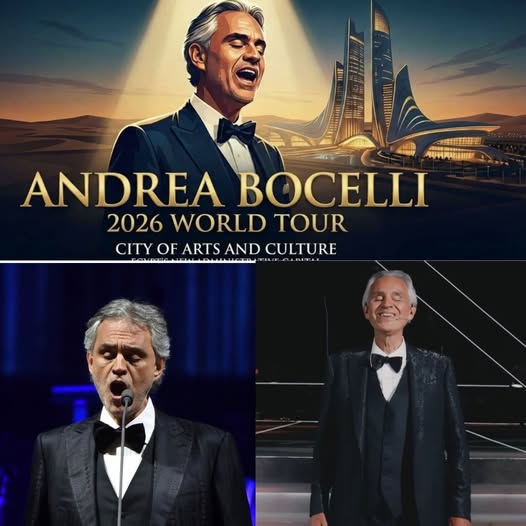
Nearly three decades after it first reshaped the global classical music landscape, Romanza is stepping back into the spotlight — this time in Egypt. And not just anywhere in Egypt, but on a grand modern stage built to symbolize the country’s cultural future.
When the name Andrea Bocelli was announced for a May performance in Egypt, excitement spread quickly. But so did questions. Why revive an album from the 1990s now? Why anchor a major cultural event around a project that many critics once dismissed as “too commercial” for opera purists?

To understand the weight of this moment, we have to go back to 1997. At the time, Romanza did more than sell records — it disrupted expectations. Classical crossover was not new, but Bocelli’s approach blurred boundaries in a way that unsettled traditionalists. Songs like “Time to Say Goodbye” didn’t stay confined to opera houses. They filled arenas, wedding halls, television broadcasts, and radios across continents.
The album went on to sell tens of millions of copies worldwide, transforming Bocelli into one of the most recognizable classical voices of his generation. But with that success came criticism. Some in the classical establishment argued that he diluted the purity of opera. Others questioned whether popularity should ever define artistic legitimacy.
Now, almost 30 years later, the same album is being honored on a stage in Egypt’s New Administrative Capital — a city designed to project ambition, modernity, and global relevance. The venue itself represents forward momentum. And yet, the centerpiece of this event is an album rooted in nostalgia.
That contrast is where the real intrigue lies.
In an era obsessed with speed — faster trends, shorter songs, instant virality — Egypt is choosing to spotlight a body of work built on sustained emotion and timeless melody. It’s a move that feels almost rebellious in its restraint.
Supporters see it as a cultural milestone. They argue that bringing Romanza to this stage underscores the universality of music. Opera is no longer confined to European heritage sites or elite concert halls. It can resonate in the Middle East, among audiences of different languages and traditions, without losing its essence.
Critics, however, see a different narrative. Some question whether celebrating a decades-old album signals a lack of innovation. In a world reshaped by streaming algorithms and AI-generated compositions, is revisiting past triumphs a safe — perhaps too safe — choice?
But that criticism may miss the deeper point.
The decision to honor Romanza now may reflect something larger than nostalgia. The global climate is marked by instability — economic pressures, geopolitical tension, social fragmentation. In uncertain times, audiences often gravitate toward art that feels grounding. Familiar melodies. Enduring voices. Emotional clarity.
Romanza offers precisely that.
Bocelli himself has long stood at the intersection of accessibility and tradition. He never positioned himself as a strict operatic purist. Instead, he embraced the role of bridge-builder — between classical technique and mainstream appeal, between elite institutions and everyday listeners.
Bringing that philosophy to Egypt carries symbolic weight. It signals openness. It suggests that high art does not have to be exclusionary. That reverence for tradition can coexist with modern ambition.
Ticket pricing has reportedly been structured across multiple tiers, allowing a broader cross-section of the public to attend. That detail matters. It reinforces the album’s original message: powerful music should not belong to a select few.
And perhaps this is the quiet twist that makes the story compelling.
At a time when many global entertainment events aim for spectacle — fireworks, controversy, viral moments — this concert centers on something slower and more deliberate. It asks audiences to listen. To feel. To revisit a work that once challenged assumptions about what classical music could be.
The outrage, if there is any, seems rooted less in the event itself and more in what it represents. Some resist the idea that art can transcend its original era. Others bristle at the blending of high culture and mass appeal. But the sustained popularity of Romanza suggests that the debate may already be settled — not by critics, but by listeners.
When the first notes rise into the Egyptian night this May, the moment will likely feel less like a revival and more like a reaffirmation.
Not every cultural statement needs to shout.
Sometimes, the boldest move is to stand still — to honor what once changed the rules and trust that its resonance has not faded.
The real question is not whether Romanza deserves another spotlight.
It’s whether we’re ready to admit that some works never truly leave it.