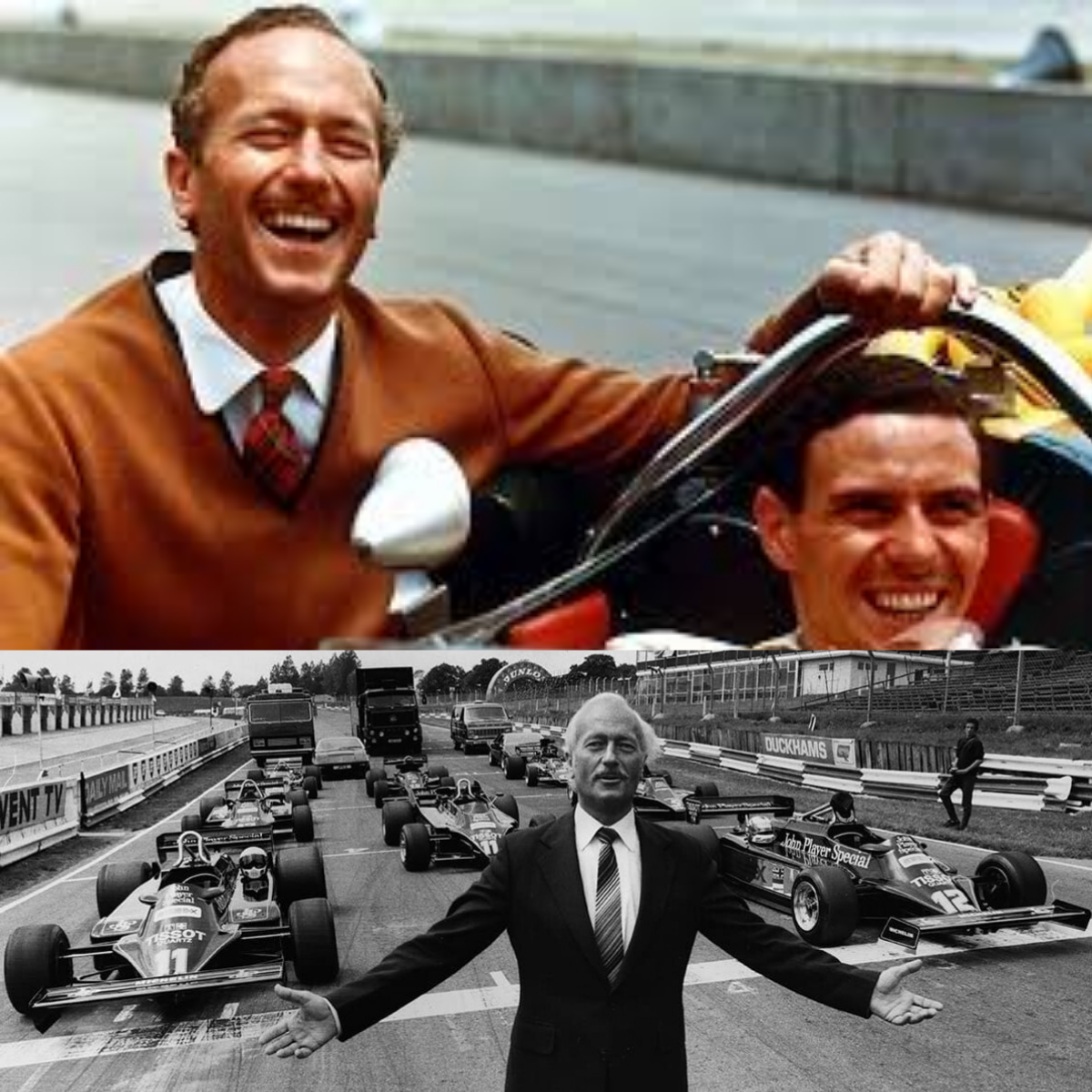
THE MYSTERY OF COLIN CHAPMAN: On December 16, 1982, the Lotus genius passed away at the age of 54 – leaving behind a legacy that modern F1 will forever owe him. From a humble garage to 7 championships: Constructors, monocoque, ground effect, DFV… But behind these masterpieces were deadly risks and secrets never revealed. Was Chapman truly the “man who changed F1 forever,” or were there dark hidden aspects? WATCH MORE TO FIND OUT! 😱🏁
On this day, 16 December 1982, Colin Chapman passed away. He was only 54.
And yet, if you follow the thread of modern Formula 1 backwards, it keeps leading you to the same place: a small team with a big idea, and a man who believed speed should be designed, not demanded.
Chapman did not enter the sport to decorate it. He entered to remake it.
Born in London in 1928, he grew up with a mind that treated problems like invitations. In the early years, Lotus was not a brand. It was a philosophy in motion, built in garages and shaped by long nights, the kind where you do not chase horsepower first, you chase clarity. Simplify, then add lightness. It sounds like a line. In Chapman’s hands, it became an era.
Team Lotus arrived in Formula 1 and quickly stopped behaving like a newcomer. Their first Grand Prix victory came in 1961. Soon after, Jim Clark and Lotus began writing a new chapter of dominance, winning world titles in 1963 and 1965. But Chapman’s true signature was not only on the timing screens. It was in the way the cars were conceived. The Lotus 25 introduced the monocoque to F1’s front line. The Lotus 49 helped define a new generation built around the Cosworth DFV. Later, Lotus pushed aerodynamics into ground effect, turning airflow into grip and imagination into lap time.
The trophies followed because progress followed.
Under Chapman, Lotus won seven Constructors’ Championships and six Drivers’ Championships. Clark. Hill. Rindt. Fittipaldi. Andretti. Different champions, one constant: cars that looked like they came from tomorrow. Even the sport’s commercial identity changed around him, as Lotus helped usher in the age of title sponsorship and iconic liveries that made racing feel larger than life.
Chapman’s legacy is complicated, because transformation always is. His genius demanded risk, and the costs of Formula 1 in that era were real and sometimes brutal. But his influence remains unmistakable. Every time a team finds speed by making a car smarter rather than louder, lighter rather than simply stronger, you can feel the echo of Lotus.
Colin Chapman did not just build race cars.
He built the idea that Formula 1 should never stand still.