STREAMING NOW ON NETFLIX: OLIVIA COLMAN IN THE DARKLY PSYCHOLOGICAL HILARIOUS MYSTERY DRAMA!
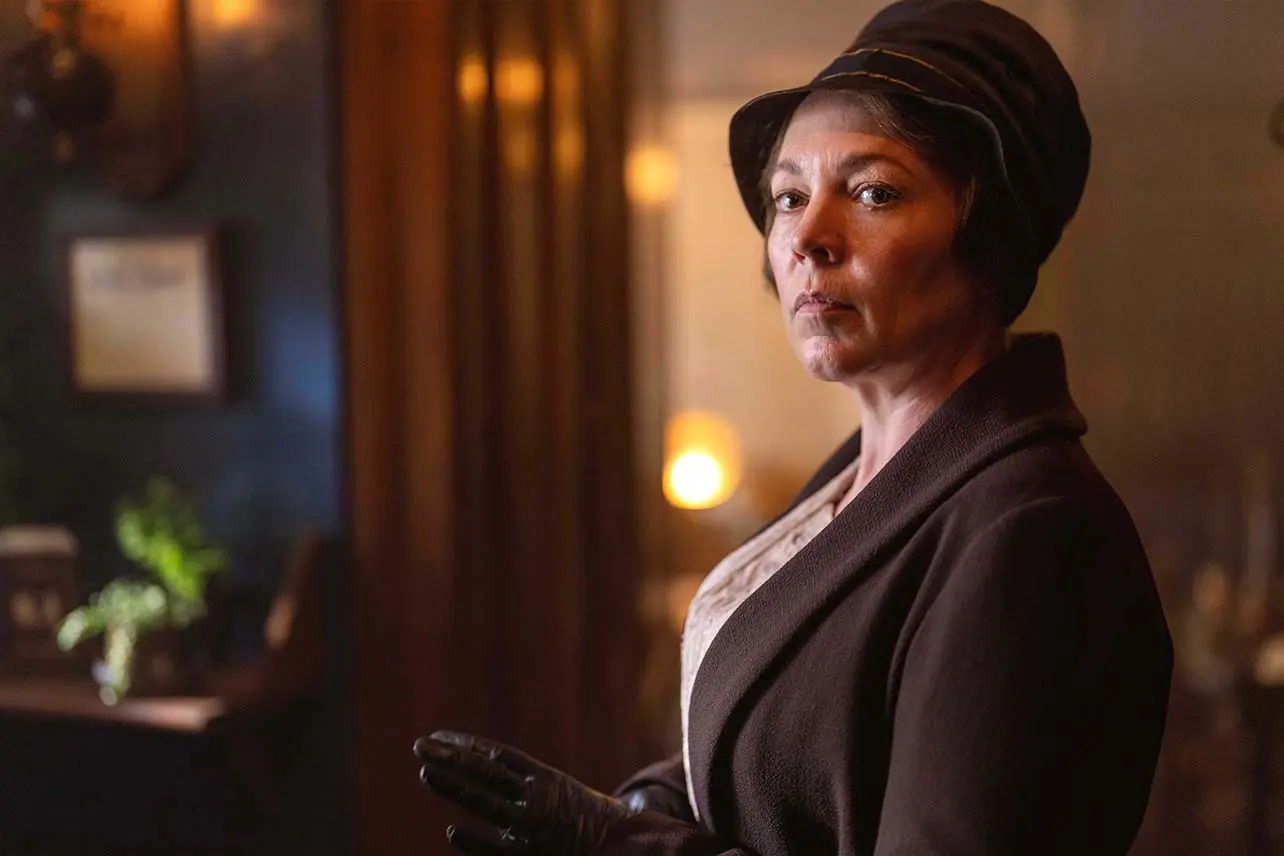
A quiet British seaside town, dozens of foul-mouthed anonymous letters, and a pious woman pointing fingers at her rebellious neighbor. When strict religious upbringing collides with an explosion of buried rage. On NETFLIX, this hit period mystery captures the suffocating dread of a woman forced to wear a pristine facade. The chilling truth dawning on the investigators right after this frame was enough to turn a sleepy coastal community into a national scandal that still feels uncomfortably close a century later.
In the spring of 1920, Littlehampton looked like the last place on earth where anyone would need to lock their letterbox. The Sussex seaside town was respectable, modest, and tightly bound by church, family, and the expectation that women would keep their voices low and their language cleaner than the tablecloth. Then the letters started arriving.
They were not polite complaints. They were volcanic. Obscene. Inventively filthy. They accused neighbors of affairs, theft, child neglect, and worse, all in language so raw it made magistrates blush and newspapers quote only the safest fragments. The chief recipient was Edith Swan, a devout, unmarried woman who still lived under her father’s roof, slept in a room with her parents, and presented herself as the model of Christian restraint. Edith knew exactly who was responsible. It had to be the woman next door.
Rose Gooding was everything Edith was not. Loud. Irish (in the film’s telling). A single mother with a sharp tongue, a chaotic household, and no interest in pretending the world was tidy. The two women had once been friendly. Then a garden dispute, a reported row, and a call to the authorities over a child turned neighborliness into something colder. When the poison-pen campaign exploded, Edith marched to the police and named Rose. The town believed her. Of course it did. The pious woman always looked more trustworthy than the one who actually swore out loud.
Wicked Little Letters (2023), directed by Thea Sharrock and written by Jonny Sweet, takes this stranger-than-fiction scandal and turns it into a darkly comic psychological pressure cooker. Olivia Colman plays Edith with a performance that is almost frightening in its stillness. Her face is a carefully maintained mask of piety. Every smile is slightly too tight. Every prayer feels like it is holding something back. Jessie Buckley’s Rose is the opposite: messy, defiant, funny, and increasingly desperate as the machinery of respectability closes around her and her daughter. The contrast is the engine of the film. One woman has spent a lifetime swallowing every forbidden thought. The other has never learned how.
The letters keep coming. They reach the local laundry customers. They reach Edith’s family. They reach people who had never spoken to either woman. National newspapers pick up the story. Parliament hears about “the Seaside Mystery.” Rose is arrested, tried, and sent to prison. Twice. The first time she is away from her child for weeks. The second time the sentence is longer. The town is satisfied. Edith is vindicated. The good woman has been protected from the bad one.
Except something does not add up.
A handful of women refuse to accept the official story. Leading them is WPC Gladys Moss, played with quiet steel by Anjana Vasan, one of the few female officers in a force that would rather not have her at all. Moss notices the details the male officers miss: the handwriting, the timing, the way Edith’s distress never quite looks like fear. Other women in the town—shopkeepers, neighbors, the ones who actually listen—begin to wonder why a woman as openly foul-mouthed as Rose would bother writing anonymous letters when she already said worse things to people’s faces. The investigation becomes a kind of quiet rebellion. The official story is too neat. The pious victim is too perfect.
What Wicked Little Letters understands better than most period mysteries is the particular violence of a life lived entirely inside someone else’s rules. Edith’s father, played by Timothy Spall with terrifying banality, is not a cartoon monster. He is simply the kind of man who has never questioned his right to control every hour of his daughter’s existence. Church, housework, silence. Edith has been trained since childhood to treat her own anger as a sin. The letters become the only place that anger is allowed to exist. They are not just weapons. They are a scream written in someone else’s name.
The film never lets the comedy fully undercut the dread. The language in the letters is often hilarious in its excess—Victorian restraint colliding with modern profanity in the most unexpected combinations. Audiences laugh. Then they notice Colman’s face as Edith reads another one. There is a flicker of something that is not shock. It is closer to recognition. That is the moment the movie becomes genuinely unsettling.
The real Littlehampton case lasted years, not months. There were four trials. Rose Gooding was imprisoned more than once before the evidence finally turned. Police marked stamps with invisible ink. Handwriting experts compared blotting paper from the Swan household. A policewoman who was not supposed to matter kept asking questions the men had already closed. In 1923 Edith Swan was convicted and sentenced to twelve months. The judge still struggled to believe a “respectable, clean-mouthed woman” could have written such filth. That disbelief is the point. Society had built a category for women like Edith and another for women like Rose. It could not imagine the first woman might be using the second as a mask.
Wicked Little Letters is not a documentary. It compresses timelines, heightens personalities, and gives Rose an Irish identity the historical record does not. What it keeps is the psychological core: the collision between a woman who has been told her entire life that rage is unladylike and the sudden, explosive relief of finally saying the unsayable—even if she has to pretend someone else said it.
On Netflix the film arrives as something rarer than another prestige mystery. It is a study of how tightly a community will cling to the story that comforts it. The pious neighbor is innocent because she looks innocent. The loud neighbor is guilty because she sounds guilty. The investigators who finally see through that logic do so not with brilliant deduction but with the simple, dangerous act of looking again.
The last letters in the real case were still arriving while Rose sat in a cell. The facade held until it didn’t. When it cracked, it revealed not a cartoon villain but a woman who had been suffocating in plain sight for years, using other people’s reputations as the only air she could still breathe.
That is the chill that lingers after the credits. Not the swear words. The silence that came before them.