PART 2 – What Arthur Sterling Left Behind: A Daughter’s Choice Between an Inheritance and the Family She Thought She Knew –
My smile made my mother uneasy.
I saw it immediately.
Victoria Sterling knew most of my expressions.
She knew the tight smile I used at charity dinners when someone asked why I had “never settled down.”
She knew the polite smile I used when Julian described my career as “government administration.”
She knew the patient smile I had worn through twenty years of being told that choosing military service had been an elaborate form of rebellion.
But she did not know this one.
This was the expression I wore when a meeting had gone wrong in a way everyone else had not yet recognized.
I finally took the chair at the end of the dining table.
Not because my mother had ordered me to.
Because standing had stopped being useful.
The attorney who had called me Colonel remained on his feet.
He was perhaps fifty, silver-haired, composed, and visibly uncomfortable with the atmosphere in the room.
“Ms. Sterling,” he said, “my name is Daniel Mercer.”
“Colonel,” my mother corrected sharply, then seemed annoyed with herself for saying it.
Mercer glanced at her.
“Sienna is fine,” I said.
He nodded.
“I represent the estate on a limited basis.”
That interested me.
“Limited how?”
Before he could answer, another attorney spoke.
She sat to his right, a woman in a charcoal suit with dark-framed glasses and a legal pad perfectly aligned with the edge of the table.
“I represent Mrs. Sterling individually.”
My mother lifted her chin.
The attorney continued.
“Elaine Warren.”
A third man gestured toward Julian.
“Thomas Bell. I advise Julian.”
Richard had his own counsel too.
And the fifth attorney, an older woman with an expression that suggested she had already lost patience with everyone in the room, represented the family trust.
So that was the first correction.
Five lawyers did not mean five people united against me.
It meant five separate interests sitting around the same table pretending, for the moment, that they overlapped.
That was useful.
My mother seemed to think the number itself created authority.
In reality, five attorneys meant five ethical obligations.
Five sets of records.
Five people whose professional reputations mattered more than Victoria Sterling’s temper.
I placed my hands lightly on the folder.
“Before anybody asks me to sign this, I want to know who drafted it.”
Elaine Warren answered.
“My office prepared the first version.”
“At whose request?”
“Your mother’s.”
“Based on what legal theory?”
Victoria cut in.
“Must you make everything difficult?”
Daniel Mercer spoke before I could.
“Mrs. Sterling, she is entitled to ask.”
My mother’s gaze moved toward him.
It was the first time she seemed to realize the lawyers were not furniture.
May you like


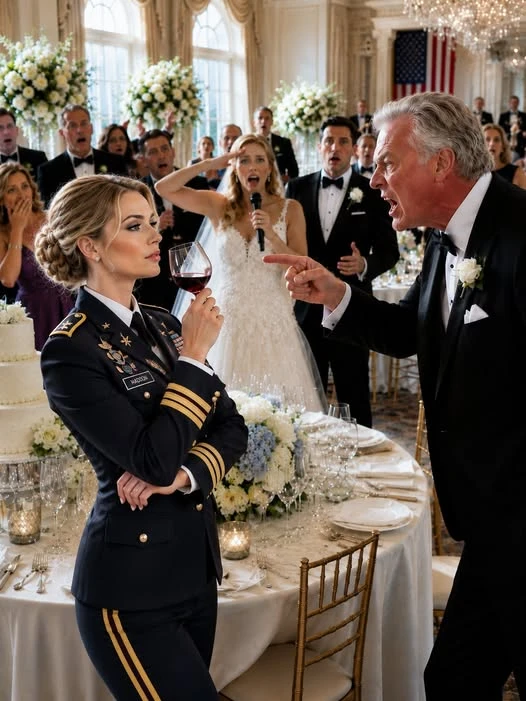
Warren opened her own copy.
“The document is voluntary. It would disclaim certain testamentary gifts and assign other interests to a family holding company.”
“Controlled by whom?”
“Initially, Mrs. Sterling and Mr. Julian Sterling.”
Julian looked up from his phone.
The glance lasted less than a second.
But I saw it.
He had not expected that detail to be emphasized.
“And Richard?” I asked.
Richard shifted near the window.
“He would serve in an advisory capacity,” Warren said.
“Compensated?”
A pause.
“Yes.”
My mother leaned forward.
“Sienna, this isn’t an interrogation.”
“No. It’s due diligence.”
“You always do that.”
“Do what?”
“Turn everything cold.”
I looked at her.
She meant controlled.
She had always mistaken the two.
“I’ve been here less than ten minutes,” I said. “You’ve told me Dad wasn’t competent, asked me to surrender assets, and called me selfish. I think asking who gets paid afterward is reasonable.”
Her mouth tightened.
Richard finally moved away from the window.
“Arthur intended the estate to support the family.”
Daniel Mercer looked at him.
“Mr. Sterling, Arthur’s written estate plan is the controlling document unless successfully challenged.”
Richard’s expression hardened slightly.
“I understand that.”
“Good.”
The older trust attorney concealed a faint smile by adjusting her glasses.
I noticed everything.
Not because I was preparing some military ambush.
That was the fantasy my family had always projected onto my work—that intelligence meant dramatic secrets, hidden microphones, coded messages.
Most of the time, intelligence meant something far less cinematic.
Listen.
Separate fact from assumption.
Identify who benefits from each version of events.
And never mistake confidence for evidence.
I opened the folder.
The first page was exactly what the title suggested.
A waiver.
The next several pages transferred my inherited interests in the Boston property, one commercial building in Stamford, and a significant block of shares in Sterling Regional Construction to a new entity called Sterling Legacy Holdings.
I turned another page.
Then another.
Julian’s restaurant company appeared in an appendix.
I looked up.
“Why is Northline Hospitality listed as a permitted recipient of loans from the holding company?”
Julian’s jaw shifted.
My mother answered.
“Because Julian’s business employs people.”
“So does Dad’s construction company.”
“That’s different.”
“How?”
“Julian built Northline himself.”
I looked at my brother.
He stared at the table.
“No,” I said quietly. “He didn’t.”
Julian looked up.
“Sienna.”
“Dad gave you the seed capital.”
Mom waved a hand.
“That was an investment.”
“He guaranteed your second location.”
Julian’s face changed.
Not much.
Enough.
Mom looked toward him.
“He what?”
There it was.
The first truth my mother had not known.
Julian spoke quickly.
“It was temporary.”
Victoria turned in her chair.
“How much?”
“Mom.”
“How much?”
He rubbed his jaw.
“Three hundred thousand.”
She stared.
Richard stared too.
I did not.
I had known for eleven days.
Not because of my military role.
Because after Arthur died, his estate accountant had called me.
That call had been the first reason I suspected this meeting would happen.
My father’s accountant, Nathan Cole, had worked with him for twenty-three years.
Nathan was not dramatic.
He wore the same kind of striped shirt to every meeting and described six-figure discrepancies as “something worth clarifying.”
Eleven days earlier, he had said exactly that.
“Sienna, there are some obligations involving Julian that are worth clarifying.”
I had asked him to send nothing sensitive electronically until the executor confirmed distribution protocols.
Then I hired my own estate lawyer.
Not a military attorney.
Not someone from the Pentagon.
A private Connecticut probate specialist named Mara Ellis.
My mother did not know that yet.
She also did not know Mara was sitting three miles away with copies of every document I had legally received from the executor.
That was my “ambush.”
Independent counsel.
A complete timeline.
And the radical decision not to sign anything while grieving.
Julian looked at me.
“How did you know?”
“Nathan told me.”
My mother snapped her attention back toward me.
“You’ve been speaking with your father’s accountant behind my back?”
“I spoke with the estate accountant after he contacted me as a beneficiary.”
“You could have told me.”
The irony almost made me laugh.
Instead I said, “Yes. I could have.”
She heard it.
So did Julian.
For a moment, Dad seemed present in the room—not as a ghost, but as the reason all of us had become so defensive about information.
Arthur Sterling had been private.
Careful.
Sometimes too careful.
He loved each of us differently and explained almost none of it.
Now every silence he left behind had become a container for suspicion.
Daniel Mercer sat down.
“I think it would help if we clarified the will itself.”
Victoria’s voice cooled.
“We’ve all read it.”
“I am not certain everyone understands the structure.”
I looked at him.
“Go ahead.”
Mercer folded his hands.
“Arthur’s will leaves the primary residence to Victoria, together with a substantial liquid account intended to support the home’s expenses and her personal needs.”
My mother said nothing.
“Julian receives Arthur’s interest in the Westport commercial property, subject to existing debt, and a direct cash bequest.”
Julian leaned back.
“And Sienna gets everything else.”
“No,” Mercer said.
The correction was immediate.
“Sienna receives the Boston residence inherited from Arthur’s mother, Arthur’s voting shares in Sterling Regional Construction, and the Stamford property.”
My mother laughed without humor.
“So, everything valuable.”
The older trust attorney finally spoke.
“Mrs. Sterling, that is inaccurate.”
Victoria turned.
The woman introduced herself again, perhaps because no one had paid enough attention the first time.
“Patricia Lowe. I advise the Sterling Family Trust. There are additional assets that do not pass through the will at all.”
Mom’s expression shifted.
“What assets?”
Lowe looked toward Mercer.
He nodded.
“Arthur created the family trust fourteen years ago,” she said. “It holds diversified investments and insurance proceeds. Victoria is a lifetime beneficiary of a portion. Julian and Sienna are remainder beneficiaries under separate provisions.”
My mother stared at her.
“I know about the trust.”
“Then you also know Sienna’s inheritance under the will does not leave you unsupported.”
Victoria’s face reddened.
“That isn’t the point.”
“What is the point?” I asked.
Her eyes came to mine.
For a second, I saw exhaustion instead of anger.
Then she covered it.
“The point is your father divided this family on paper.”
“No,” I said. “The paper revealed divisions that were already here.”
Her gaze hardened again.
“You always thought he understood you better.”
I said nothing.
“You two had your little talks. Your Sunday calls. Your private jokes. He kept your secrets.”
Richard looked uncomfortable.
Julian stared toward the dining room windows.
This was not about property.
It had probably never been entirely about property.
“Mom,” I said, “what are you actually angry about?”
“I am not angry.”
Nobody in the room believed that.
She looked around and seemed to recognize it.
Then she laughed bitterly.
“Fine. I’m angry that after thirty-eight years of marriage, your father left me reading documents to understand what he thought.”
That silenced the room.
Even Warren lowered her pen.
My mother’s voice lost its edge.
“I knew he loved you. I knew he worried about Julian. I knew Richard and I would be comfortable.”
Richard glanced toward her at the phrasing.
Comfortable.
Not loved.
Not protected.
Comfortable.
“But I did not know,” she continued, “that he had decided the Boston house belonged to you. I did not know he had given you voting control of the company. I did not know Julian owed him money.”
Julian looked down.
Victoria shook her head.
“I stood beside that man for decades, and everyone seems to know something I didn’t.”
There it was.
Not greed.
Not entirely.
Exclusion.
Grief had turned every unknown fact into evidence that she had been left outside her husband’s real life.
I understood that feeling more than I wanted to.
My family had spent years knowing the outline of my profession and almost nothing inside it.
I had told myself their lack of knowledge meant they were not interested.
Sometimes that was true.
Sometimes I had simply made it impossible for them to know more.
Daniel Mercer broke the silence carefully.
“There is another document.”
My mother looked at him.
“What document?”
“A memorandum Arthur deposited with my office approximately six months before his death.”
My pulse slowed.
Not because I knew what it contained.
Because I knew what a room sounded like just before everyone’s assumptions changed.
Warren frowned.
“You didn’t mention a memorandum.”
“It is not testamentary.”
“Then what is it?”
“A statement of intent.”
Patricia Lowe nodded once.
That told me she knew about it.
Julian did not.
Neither did Victoria.
Mercer opened his briefcase.
My mother stared at him.
“You had this the entire time?”
“Yes.”
“And you didn’t show me?”
“Arthur instructed me to share it only if there was a dispute concerning his allocation of closely held assets.”
Warren’s expression sharpened.
“Which there plainly is.”
“Yes.”
Mercer removed a sealed envelope.
My name was not written on it.
Neither was Victoria’s.
Across the front, in my father’s handwriting, were four words:
FOR MY FAMILY, IF NECESSARY.
I recognized his block letters immediately.
For the first time since walking into the room, my composure shifted.
Only slightly.
But Mom saw it.
“So you didn’t know either,” she said.
“No.”
Something in her posture relaxed.
It was strange.
The fact that I was also excluded made her feel less alone.
Mercer opened the envelope.
Inside were seven typed pages.
“Arthur asked that I read this aloud if all principal family members were present.”
Richard stepped forward.
“Am I included in that?”
Mercer checked the first page.
“Yes.”
Richard sat down.
Finally.
Mercer began.
“To Victoria, Sienna, Julian, and Richard—”
He paused.
My father’s words, spoken in another man’s voice, changed the room.
“I have spent most of my adult life avoiding unnecessary confrontation. This has often looked like patience. Sometimes it was. Sometimes it was cowardice.”
My mother closed her eyes.
I almost heard Dad saying it.
He had possessed a dry, self-aware way of admitting something without asking anyone to rescue him from the admission.
Mercer continued.
“If this letter is being read, I assume my estate plan has caused disagreement. I am sorry for that, though perhaps not surprised.”
Julian let out the faintest breath.
“My decisions were not made to rank my children or punish my wife. They were made because equal love does not always require equal assets, and because different people need different things.”
Victoria’s hands tightened in her lap.
“To Victoria: You spent decades creating the home I returned to every night. I have provided for you in a way I believe will preserve your independence without requiring you to manage businesses you have never wanted to manage.”
Mom’s chin trembled once.
She looked away.
“To Julian: I gave you money while I was alive because you were willing to risk failure in public. I admired that more than I told you. Some of those advances are documented as loans because they were loans. Others were gifts because I wanted you to have the chance to build something. Do not confuse either with a judgment of your worth.”
Julian stared at the table.
Mercer turned the page.
“To Sienna: You asked me for almost nothing.”
My throat tightened.
“That worried me.”
I looked down.
“You became independent so early that I sometimes mistook your refusal to ask for help as proof you did not need any. The Boston house belongs with you because you loved it before you understood its value. You repaired the porch with your grandmother. You spent summers cataloging her books. You know which bedroom window sticks in August.”
A memory came back so quickly it hurt.
Grandma Elise standing on a ladder with a screwdriver between her teeth.
Me at fifteen, complaining about old wood.
Dad laughing from the yard.
The house had never felt like an asset.
It had felt like the one place in my childhood where nobody expected a performance.
Mercer continued.
“The company shares are different. Sienna, I am leaving them to you because I trust your instinct to ask what an institution needs before asking what it can give you.”
Julian glanced toward me.
My mother did too.
“I considered dividing the voting shares between you and Julian. I decided against it because Julian already carries enough risk through Northline, and because forcing my children into shared control would be a poor substitute for encouraging them to have an honest relationship.”
Tyler did not exist in this family.
Our version of that unfinished relationship was sitting three feet away in a navy blazer, tapping one finger against his phone.
Mercer read on.
“To Richard: You entered a complicated family and often chose diplomacy when others chose pride. Thank you for that. But do not become the manager of problems that belong to my children. They are adults.”
Richard gave the smallest nod.
Then came the line that changed the atmosphere again.
“One final point. If Julian’s business is in significant financial distress at the time of my death, no beneficiary should transfer inherited assets to support it until an independent review is completed.”
Julian went still.
My mother turned toward him.
I did not.
I watched Thomas Bell, Julian’s attorney.
He stopped writing.
That was enough.
Mercer continued reading.
“I say this not because I expect Northline to fail, but because Julian has always been an optimist, and optimism becomes dangerous when numbers are allowed to become wishes.”
“That’s enough,” Julian said.
His voice was quiet.
Mercer stopped.
My mother looked at him.
“What?”
Julian pressed his lips together.
“Keep reading.”
Mercer hesitated, then did.
“If Northline needs help, help Julian understand what is true before helping him finance what he hopes is true.”
There were two more paragraphs.
One asked us not to litigate unless genuinely necessary.
The final paragraph was simply Dad.
“I have loved all of you imperfectly. Please do not use my money as evidence in arguments I should have helped you resolve while I was alive.”
Mercer lowered the pages.
Nobody spoke.
Outside, darkness had settled over the lawn.
The dining room windows reflected us back at ourselves.
Five attorneys.
Four family members.
My father’s empty chair at the head of the table.
My mother looked suddenly tired.
Not defeated.
Just tired.
“What does ‘significant financial distress’ mean?” she asked.
Nobody answered immediately.
Then I looked at Julian.
He stared back.
I knew that look.
He had worn it when he was fourteen and cracked Dad’s car mirror with a hockey puck.
At nineteen, when he lost a semester’s tuition trading technology stocks.
At thirty-two, when he called me from Miami at two in the morning because an investor had backed out of his first restaurant deal.
Julian had always been charming when things went well.
When things went badly, he became very still.
“How bad is Northline?” I asked.
Mom looked between us.
“Julian?”
He rubbed his forehead.
“It’s complicated.”
“Numbers usually aren’t.”
He looked at me sharply.
“There she is.”
“Who?”
“Colonel Sterling.”
My mother flinched.
I kept my voice calm.
“This has nothing to do with my rank.”
“It has everything to do with how you talk.”
“Then tell me how you’d prefer I ask.”
He opened his mouth.
Nothing came out.
I tried again.
“Are you in trouble?”
His face changed.
“Yes.”
The room softened around that single word.
My mother leaned forward.
“How much trouble?”
Julian looked at Thomas Bell.
Bell gave a slight nod.
Julian exhaled.
“Our third location underperformed.”
“I thought the third location was profitable,” Mom said.
“It was supposed to be.”
“That is not what I asked.”
He closed his eyes briefly.
“No. It isn’t profitable.”
“What about the other two?”
“The first is stable. The second is barely breaking even.”
Richard crossed his arms.
“And the expansion?”
Julian said nothing.
My mother went pale.
“Julian.”
“I signed the lease.”
“On the fourth restaurant?”
“Yes.”
“You told me financing was secured.”
“It was.”
“Was?”
Thomas Bell finally intervened.
“An investor withdrew.”
“When?”
“Six weeks ago.”
That meant before Dad died.
“Did Dad know?” I asked.
Julian stared at his hands.
“Yes.”
That explained the memorandum.
Perhaps not all of it.
But enough.
“What did he say?” I asked.
Julian laughed once, bitterly.
“He said no.”
Mom frowned.
“No to what?”
“I asked him to increase the guarantee.”
“How much?”
Julian did not answer.
Bell did.
“One point eight million.”
The room fell silent.
Victoria’s face lost color.
Richard sat back.
Even Warren looked surprised.
I had expected trouble.
Not that scale.
Julian spoke quickly.
“It wasn’t all at once. There were equipment commitments, build-out costs, vendor deposits—”
“Julian,” I said.
He stopped.
I made my voice gentler.
“How much debt is personally guaranteed by you?”
His eyes met mine.
“About two point four.”
Mom whispered his name.
He shook his head.
“I was fixing it.”
“By asking me to give you Dad’s assets?” I asked.
“No.”
I looked at the waiver.
His silence answered for him.
My mother spoke instead.
“I asked you to sign.”
I turned toward her.
“Why?”
Her face tightened.
“Because Julian came to me.”
“Mom.”
“He told me he needed time.”
Julian looked miserable.
“I didn’t tell her to do this.”
“You told me losing the fourth location could trigger defaults.”
“Because it could.”
“You said if we moved the family assets together, we’d have more options.”
Richard leaned toward Victoria.
“You told me this was about keeping Arthur’s estate unified.”
“It is.”
“No,” I said.
Everyone looked at me.
“This document authorizes loans to Northline.”
My mother seemed to shrink slightly.
“The lawyers said any loan would have to be documented.”
Warren corrected her carefully.
“I said it could be structured lawfully. I also told you Sienna should retain separate counsel and have time to review.”
I looked at Warren.
“Thank you.”
My mother’s eyes filled with anger again, but this time some of it was directed at herself.
“I was trying to keep your brother from losing everything.”
Julian looked at her.
“Mom, I haven’t lost everything.”
“You could.”
“Yes.”
“And you expect me to stand by?”
“No.”
His answer was surprisingly firm.
“I expected you to listen. Not organize this.”
Her expression broke.
For the first time that night, I saw a mother, not an adversary.
A woman three weeks into widowhood, terrified that one child’s failure would follow the loss of her husband.
She had responded the only way she knew.
Control the room.
Control the documents.
Control the outcome.
I knew something about that instinct.
I had simply received better training in resisting it.
I closed the waiver.
“No one is signing anything tonight.”
My mother looked at me.
“I knew you’d refuse.”
“That isn’t what I said.”
Julian frowned.
“What are you saying?”
“I’m saying Dad was right.”
“That narrows it down.”
“We need an independent review of Northline.”
He gave a humorless laugh.
“You want to audit me?”
“I want someone qualified to tell us whether the business has a solvable liquidity problem or a structurally bad model.”
My mother shook her head.
“You make it sound clinical.”
“Because right now everyone is scared.”
I turned to Julian.
“If the business is viable, we’ll know what kind of help would actually matter.”
His expression changed.
“We?”
“Don’t read ahead.”
A faint smile appeared despite everything.
I continued.
“If it isn’t viable, pouring inherited property into it could turn one problem into several.”
Thomas Bell nodded.
“That is a reasonable approach.”
My mother looked betrayed.
“You’re his lawyer.”
“And therefore obligated to advise him responsibly.”
She stared at the five attorneys as if discovering, one by one, that they had never belonged to her.
I almost felt sorry for her.
Almost.
Then Daniel Mercer looked at me.
“You mentioned before coming in that you had made preparations.”
My mother’s attention snapped toward me.
There it was.
The detail she had been waiting for.
“What preparations?”
I reached into my handbag.
Not for classified documents.
Not for some dramatic military credential.
For a business card.
I placed it beside the waiver.
MARA ELLIS
ELLIS & ROWE — TRUSTS, ESTATES & FIDUCIARY DISPUTES
“My attorney reviewed an electronic copy of the proposed waiver two hours ago.”
Victoria stared at me.
“How did she get it?”
“Mr. Mercer emailed it to beneficiaries this afternoon.”
Daniel nodded.
“As required.”
My mother turned toward him.
“You sent it to her?”
“She is a beneficiary.”
The anger in Mom’s face lasted three seconds.
Then faded.
There was nowhere useful for it to go.
I picked up my phone.
“Mara is available by video if everyone wants to continue. But I don’t think we should.”
“Why not?” Richard asked.
“Because we’re grieving, Julian is scared, Mom is angry, and there are now at least six lawyers involved.”
Patricia Lowe smiled.
“Seven if Ms. Ellis joins.”
“Exactly.”
Julian laughed quietly.
It was the first genuine sound any of us had made in an hour.
I stood.
My mother stared at me.
“Where are you going?”
“Home.”
“You can’t just leave.”
“Yes, I can.”
She seemed startled by the simplicity of that.
Then her voice softened.
“Sienna.”
I paused.
She looked at the waiver.
Then at me.
“I really thought this was the only way.”
I believed her.
That didn’t make it a good way.
“I know.”
“I thought if everyone sat down at once, we could solve it.”
“You invited five lawyers and put a surrender agreement in front of me.”
Her eyes lowered.
“When you say it that way…”
“That’s what happened.”
Julian stood too.
“I’ll call you tomorrow.”
“Don’t.”
His expression closed.
Then I added, “Sleep first.”
He understood.
“Okay.”
I walked toward the hallway.
Richard moved aside before I reached him.
No one had actually locked the room.
Not with a key.
Not physically.
The locked door had existed mostly in my mother’s confidence that family obligation would keep me seated until I surrendered.
I reached the foyer.
Then Daniel Mercer called my name.
“Sienna.”
I turned.
He stood in the dining room doorway holding one of my father’s pages.
“There is another issue.”
My mother frowned.
“What now?”
Mercer looked uncomfortable.
“Arthur’s memorandum references an attachment.”
Patricia Lowe rose.
“What attachment?”
“Schedule C.”
She frowned.
“There was no Schedule C in the trust records.”
Mercer looked at the page again.
“It says, ‘See Schedule C held separately by Nathan Cole.’”
My father’s accountant.
I walked back.
“What does Schedule C concern?”
Mercer read the line aloud.
“‘Contingent transfer instructions regarding Sterling Regional Construction in the event of undisclosed liabilities associated with Northline Hospitality or any related-party financing.’”
Julian stared at him.
“I don’t know what that means.”
Neither did I.
Not yet.
Then my phone vibrated.
Nathan Cole.
One message.
Sienna, I heard the family meeting was tonight. Before anyone transfers shares or property, we need to speak. I found the Schedule C Arthur asked me to hold.
A second message arrived.
There is something here about Julian’s business that I do not believe Julian knows.
I looked up.
My brother was watching me.
“What is it?”
I read the message again.
Then I looked at the man who had spent his life trying to prove he could build something without our father’s shadow over him.
For the first time that evening, I was not wondering what Julian had hidden.
I was wondering what our father had hidden from Julian.
-END OF PART 2 –PRESS NEX PART IN BOTTOM OF PAGE TO READ NEXT PART