WHEN HEAVENLY VOICES COLLIDE: INSIDE THE UNFORGETTABLE LEGACY OF SUSAN BOYLE AND ANDREA BOCELLI
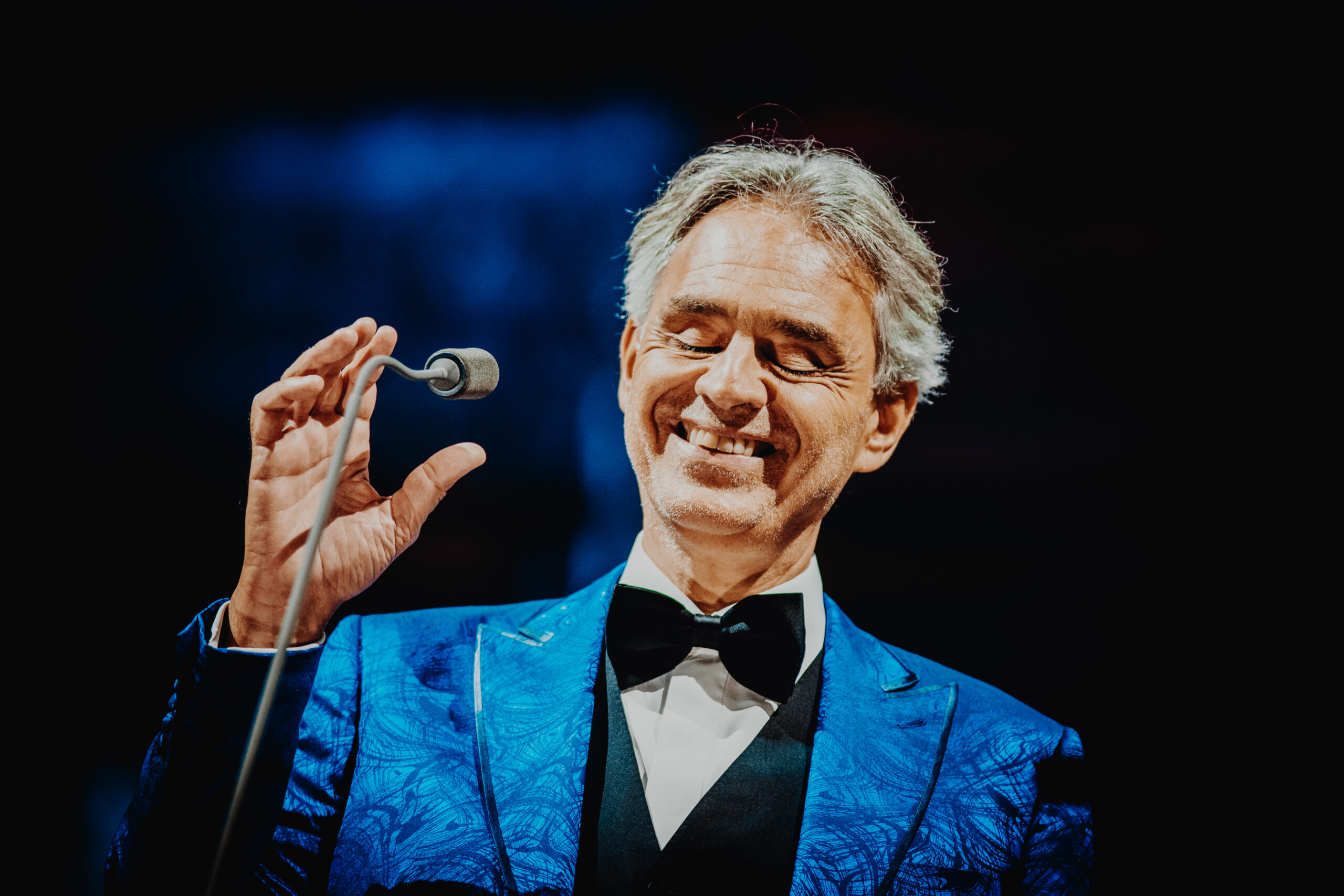
In April 2009, a quiet, unassuming woman from Blackburn, West Lothian, walked onto the stage of Britain’s Got Talent in a modest lace dress. When she announced her ambition to become a professional singer as grand as Elaine Paige, she was met with skeptical glances and smirks from both the judges and the audience. Seconds later, Susan Boyle began to sing “I Dreamed a Dream” from Les Misérables. Within bars, the room transformed from mockery to awe. That single performance became an international cultural phenomenon, amassing hundreds of millions of views online almost overnight and redefining global perceptions of talent, image, and overnight success.
Across the globe, another voice had already established itself as one of the most beloved and instantly recognizable instruments in modern music history. Decades earlier, Andrea Bocelli, born in the quiet Tuscan village of Lajatico, had captured the world’s heart with his crystalline tenor. Blinded at age twelve following a football accident, Bocelli persevered through law school before his sheer vocal power was discovered by Italian rock star Zucchero and legendary tenor Luciano Pavarotti. His breakthrough hit “Con te partirò” and its famed English duet version “Time to Say Goodbye” with Sarah Brightman cemented his place as a global superstar who bridged the gap between classical opera and popular music.
For music enthusiasts worldwide, the idea of these two extraordinary vocalists sharing a stage represents an intersection of two of the most compelling underdog stories in popular culture. Both artists conquered immense personal and physical challenges, built empires on raw talent rather than superficial stardom, and touched the hearts of millions across generations.
The phenomenon of Susan Boyle’s rise was unlike anything the modern entertainment industry had ever witnessed. Her debut album, I Dreamed a Dream, released in late 2009, shattered record sales records worldwide. It became the UK’s best-selling debut album of all time and debuted at number one on the Billboard 200 chart in the United States, staying at the top for six consecutive weeks. Suddenly, a woman who had lived a quiet, solitary life caring for her mother found herself performing for world leaders, royalty, and massive arena crowds.
Yet, despite her unprecedented rise to fame, Boyle remained deeply grounded in her Scottish roots. Rather than relocating to luxury estates in Los Angeles or London, she chose to stay in her family home in Blackburn, maintaining a sense of humility and authenticity that endeared her even further to her global fanbase. Over the years, she continued to release chart-topping holiday albums, inspirational records, and embark on successful international tours, proving that her viral sensation was not a fleeting moment, but the foundation of a long-lasting music career.
Meanwhile, Andrea Bocelli’s career continued its steady, historic trajectory. Performing at the world’s most prestigious opera houses, stadium venues, and royal galas, Bocelli earned a reputation as classical crossover royalty. His album Sì made history in 2018 by reaching number one on both the US Billboard 200 and the UK Official Albums Chart simultaneously, a rare feat for a classical artist. Bocelli’s ability to collaborate across genres—singing alongside pop titans like Celine Dion, Ed Sheeran, Ariana Grande, and Christina Aguilera—demonstrated his unique versatility and enduring relevance in modern popular culture.
When fans and music analysts discuss the possibility of a collaboration between Susan Boyle and Andrea Bocelli, the excitement stems from the profound vocal compatibility and shared emotional depth of both performers. Both singers possess voices capable of conveying deep vulnerability alongside soaring theatrical power. While Bocelli’s voice brings classic Italian warm phrasing, technical precision, and operatic resonance, Boyle’s rich tone delivers emotional honesty, storytelling depth, and dramatic power.
In the realm of classical crossover music, duet collaborations have long produced some of the most memorable moments in television and recorded history. The pairing of Andrea Bocelli and Celine Dion for “The Prayer” in 1998 remains a gold standard for vocal duets, celebrated for its soaring harmonies and spiritual resonance. Similarly, when Bocelli paired with Sarah Brightman for “Time to Say Goodbye,” the song became a global anthem, selling millions of copies and topping charts across Europe.
A duet featuring Susan Boyle alongside Andrea Bocelli carries that exact same potential for musical magic. For Boyle, performing alongside a legend of Bocelli’s stature represents the fulfillment of a lifelong musical journey—a testament to how far the humble singer from Scotland has come since her audition in 2009. For Bocelli, working with a singer whose story inspired millions aligns perfectly with his tradition of uniting powerful, soulful voices to create universal art.
Behind the scenes of high-profile classical crossover events, putting together a vocal duet of this magnitude requires careful preparation and artistic harmony. Selecting the right song is paramount: it must honor the operatic heritage of the tenor while providing the dramatic range and storytelling canvas suited to the mezzo-soprano’s voice. Arrangers often blend Italian and English lyrics, allowing both artists to perform in their natural expressive elements while weaving their distinct vocal textures together into a climax.
Beyond the technicalities of music production, the true power of such a performance lies in its emotional impact on the audience. In an era dominated by heavily auto-tuned production and fast-moving digital trends, live classical crossover music offers a rare sense of authenticity and timeless beauty. Audiences respond not just to the notes being sung, but to the genuine human emotion, years of dedication, and personal resilience embodied by the performers on stage.
As classical music fans look to the future, the enduring appeal of artists like Susan Boyle and Andrea Bocelli serves as a reminder of the unifying power of music. Their stories prove that true artistry transcends physical limitations, age, background, and social expectations. Whether performing in historic European piazzas, grand opera halls, or broadcast television studios, both singers continue to inspire audiences with the simple, profound truth that a passionate voice can touch the world. The prospect of their voices combining in harmony remains a shining beacon for fans everywhere, celebrating two lives defined by faith, perseverance, and unforgettable melody.