FIRST CONFESSION REVEALED? — Henry Nowak Killer’s Chilling Words Spark Fresh Attention The case surrounding Henry Nowak’s killing has drawn renewed attention after the killer’s first reported confession was revealed, including the words, “I am a fool.” The alleged admission has become one of the most closely examined moments in the investigation, raising fresh discussion about its significance in court. But one question remains: what happened in the moments before that confession—and why did those words become such a crucial part of the case?
THE CHILLING TRANSCRIPT REVEALED — The Eight Minutes That Became The Focus Of Henry Nowak’s Case
The release of a longer police transcript has brought renewed attention to the final moments of 18-year-old Henry Nowak’s life, revealing in greater detail how officers responded after arriving at the scene of the fatal stabbing. The newly disclosed record documents the crucial minutes before police realized Henry had suffered a stab wound, a timeline that has since become one of the most closely examined aspects of the case. The transcript, released by the Crown Prosecution Service after consultation with Henry’s family and first obtained by the BBC, has intensified scrutiny of the police response while also highlighting the deception investigators say unfolded immediately after the attack.
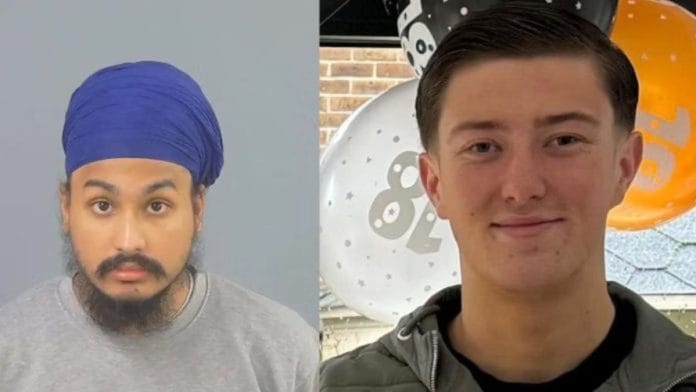
Henry, a finance student from Essex, was fatally stabbed in Southampton in December 2025. His killer, Vickrum Digwa, was later convicted of murder and sentenced to life imprisonment with a minimum term of 21 years. During the trial, prosecutors said Digwa falsely claimed to police that he had been the victim of a racist attack, a claim the jury ultimately rejected after hearing extensive evidence. That allegation shaped officers’ initial understanding of the incident when they first arrived, influencing the way they assessed the situation in the critical opening minutes.
According to the transcript, Henry repeatedly tried to tell officers that he had been stabbed. Body-worn camera footage captures him saying, “I’ve been stabbed,” but an officer initially responded that they did not believe he had suffered such an injury and asked where he had been stabbed. As Henry’s condition rapidly deteriorated, officers became increasingly concerned. Shortly afterward, one officer remarked that Henry was saying he had been stabbed and suggested checking him more carefully while another officer requested an ambulance after noticing that his pupils were not responding normally. The transcript paints a detailed picture of a rapidly evolving emergency in which officers were trying to understand exactly what had happened.
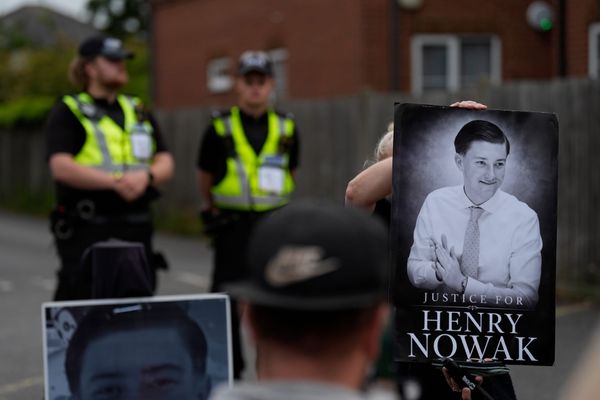
The most dramatic section of the transcript comes several minutes later. At just over three minutes into the recording, an officer reportedly stated that they were no longer sure Henry was breathing, prompting officers to remove his handcuffs and immediately begin CPR. As chest compressions continued, another officer requested a torch and scissors so Henry’s clothing could be examined more thoroughly. It was only after approximately seven and a half minutes that officers located the stab wound. The transcript records one officer saying, “Yes, he’s got a stab… there’s a mark there,” before another realized that CPR was being performed over the injury, dramatically changing their understanding of the medical emergency.
The recording ends after approximately eight minutes and forty-nine seconds, by which time paramedics had arrived and officers informed them that they had only just discovered the stab wound in Henry’s chest. Following widespread public reaction to the release of the footage, Hampshire Constabulary publicly apologized to Henry’s family. Temporary Deputy Chief Constable Robert France acknowledged the tragedy and said he was sorry Henry could not be saved and that he had been handcuffed during the final moments of his life. At the same time, he stated that responding officers had been misled by the false account given at the scene and that the wound would not have been immediately obvious.
The release of the transcript has also intensified scrutiny of the police response itself. The Independent Office for Police Conduct has been investigating Hampshire Police’s handling of the incident, while a future jury inquest is expected to examine whether any act or omission by police contributed to Henry’s death. Those proceedings are separate from the murder trial and are intended to determine whether lessons can be learned from the emergency response rather than revisit the criminal conviction. The newly released transcript is expected to form an important part of that examination because it provides a detailed minute-by-minute account of what officers knew and when they knew it.

Although the murder prosecution has concluded, the transcript has ensured that public attention remains firmly focused on the final minutes before Henry Nowak’s death. The document offers a clearer picture of the confusion officers faced, the misleading information they received, and the moment they finally discovered the life-threatening injury. It has become one of the most significant records associated with the case, not because it changes the murder conviction, but because it raises difficult questions about emergency decision-making during those critical moments. As further investigations and the inquest continue, one question remains at the center of public interest: could anything have happened differently during those eight minutes—and what conclusions will future proceedings ultimately reach?